

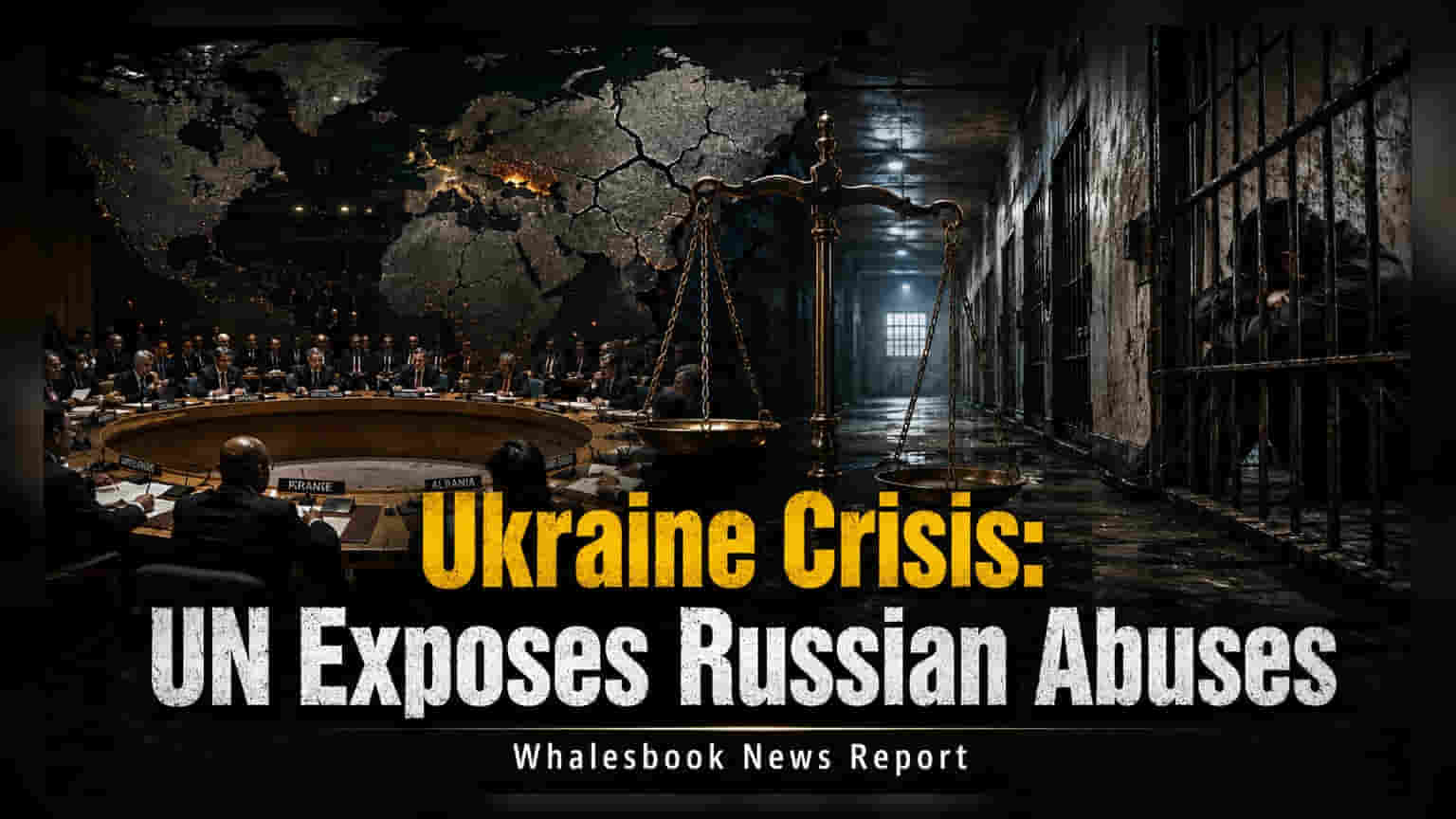
A new United Nations report estimates that Russia is holding over 16,000 Ukrainian civilians, with widespread evidence of torture and inhumane treatment. For Indian investors, this escalation in the conflict increases geopolitical risk, which may influence global commodity prices, particularly energy and food, directly affecting domestic inflation and market stability.
The United Nations has released a critical report detailing the unlawful detention of more than 16,000 Ukrainian civilians by Russia. UN officials highlighted systematic reports of torture, ill-treatment, and sexual violence occurring within detention facilities. Interviews with released prisoners of war and civilian detainees revealed that over 95% of prisoners of war and 85% of civilians experienced abuse, including severe deprivation of food, medical neglect, and, in some cases, execution. Russia has denied these allegations, describing the UN discussions as a disinformation campaign.
For Indian investors, the ongoing Russia-Ukraine conflict remains a significant macroeconomic factor. While this news is primarily a humanitarian matter, the escalation of geopolitical tensions often brings volatility to global financial markets. India relies heavily on imports for energy, particularly crude oil, and certain agricultural commodities like sunflower oil and fertilizers. Continued instability in the region creates a risk of supply chain disruptions and price shocks in global commodity markets, which can influence inflation trends within the Indian economy.
Energy prices are particularly sensitive to geopolitical developments. Any increase in global energy costs, driven by potential sanctions or supply concerns originating from the conflict, can pressure the Indian rupee and increase the import bill for oil marketing companies and related sectors. Investors often track crude oil benchmarks as a barometer for potential inflationary pressure on the domestic economy. While the direct link between this specific report and short-term stock market moves may be limited, it contributes to the broader risk environment that analysts consider when evaluating market volatility and foreign portfolio flows.
The conflict also impacts global shipping and logistics, which can affect the cost of trade between regions. Sustained geopolitical tension generally promotes a risk-off sentiment in equity markets, where investors may prefer safer assets until the situation stabilizes. For domestic investors, the key monitorable remains the potential for this humanitarian crisis to complicate international diplomacy, which in turn affects global commodity price stability and the input costs for Indian manufacturing and consumer goods companies.
Market experts generally evaluate such reports to assess whether they signal a further breakdown in diplomatic efforts, which could potentially lead to prolonged economic uncertainty. Investors will likely track upcoming statements from international bodies and major economies to see if there is any shift in the geopolitical stance that could impact global trade flows or energy security in the coming quarters.