

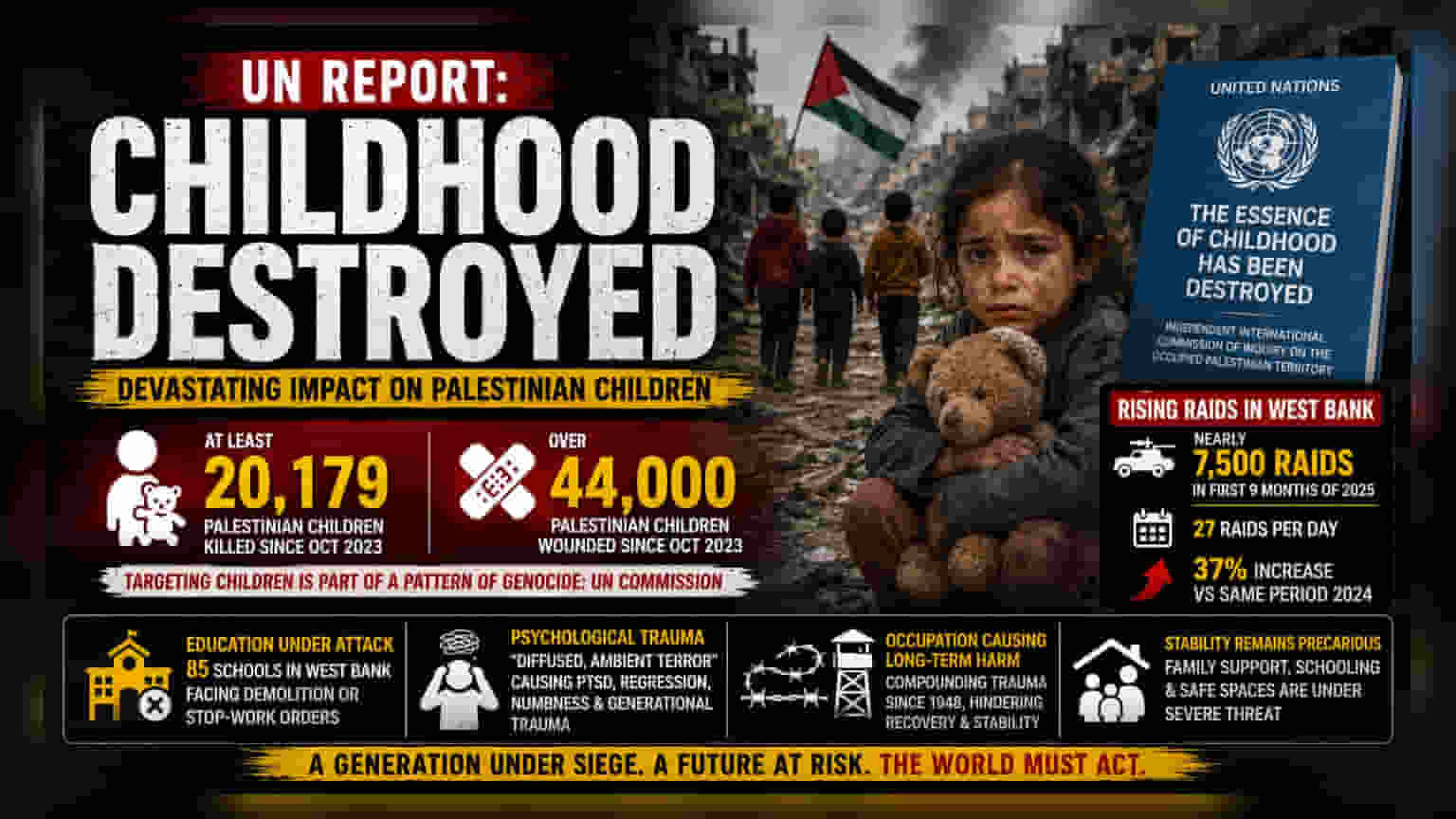
A new UN report documents the severe impact of military raids on Palestinian children in the West Bank and Gaza, citing a significant increase in operations since 2025. The findings highlight widespread psychological trauma, educational disruptions, and thousands of casualties recorded since October 2023.
What the UN Report Says
The Independent International Commission of Inquiry on the Occupied Palestinian Territory has released a report titled "The essence of childhood has been destroyed." The document details the profound effect of ongoing military operations on Palestinian children. According to the report, Israeli forces have killed at least 20,179 Palestinian children and wounded over 44,000 since October 2023. The commission characterized the targeting of children in Gaza as part of a larger pattern of actions that it describes as genocide.
Rising Intensity of Raids
The report highlights a significant escalation in military activity within the occupied West Bank. In the first nine months of 2025 alone, Israeli forces conducted nearly 7,500 raids. This averages out to 27 raids per day, marking a 37 percent increase compared to the same period in 2024. The commission noted that these operations often involve live fire, tear gas, and instances of detention without legal counsel or notification to parents, a practice the report likens to enforced disappearance.
Impact on Education and Daily Life
The findings point to severe disruptions in the daily lives of children in the region. Infrastructure essential for growth and development is under pressure, with 85 schools in the West Bank facing either demolition or stop-work orders. Beyond physical infrastructure, the commission reports that children are frequently caught in conflict zones while going about daily routines, leading to constant disruption of school attendance and extracurricular activities.
Psychological and Generational Trauma
The UN commission describes the situation as a state of "diffused, ambient terror" that persists even without constant bombardment. Psychologists consulted for the report, such as Lemis Farraj, distinguish between standard PTSD and the continuous traumatic stress experienced by these children. This condition stems from repeated and unending events. The report notes that younger children often exhibit regression and startle responses, while older youth may develop a sense of numbness. The commission further argues that the military occupation functions as a long-term mechanism of domination, suggesting that the resulting trauma is compounding generational issues dating back to 1948, which hinders long-term recovery and stability.
What to Watch Next
The commission’s report serves as a formal documentation of the current humanitarian situation. International observers will likely monitor whether these findings lead to changes in international policy, legal proceedings in global bodies, or adjustments in military conduct regarding the protection of children in conflict zones. The report emphasizes that stability—defined by family support, schooling, and safe spaces—remains precarious under current conditions.