

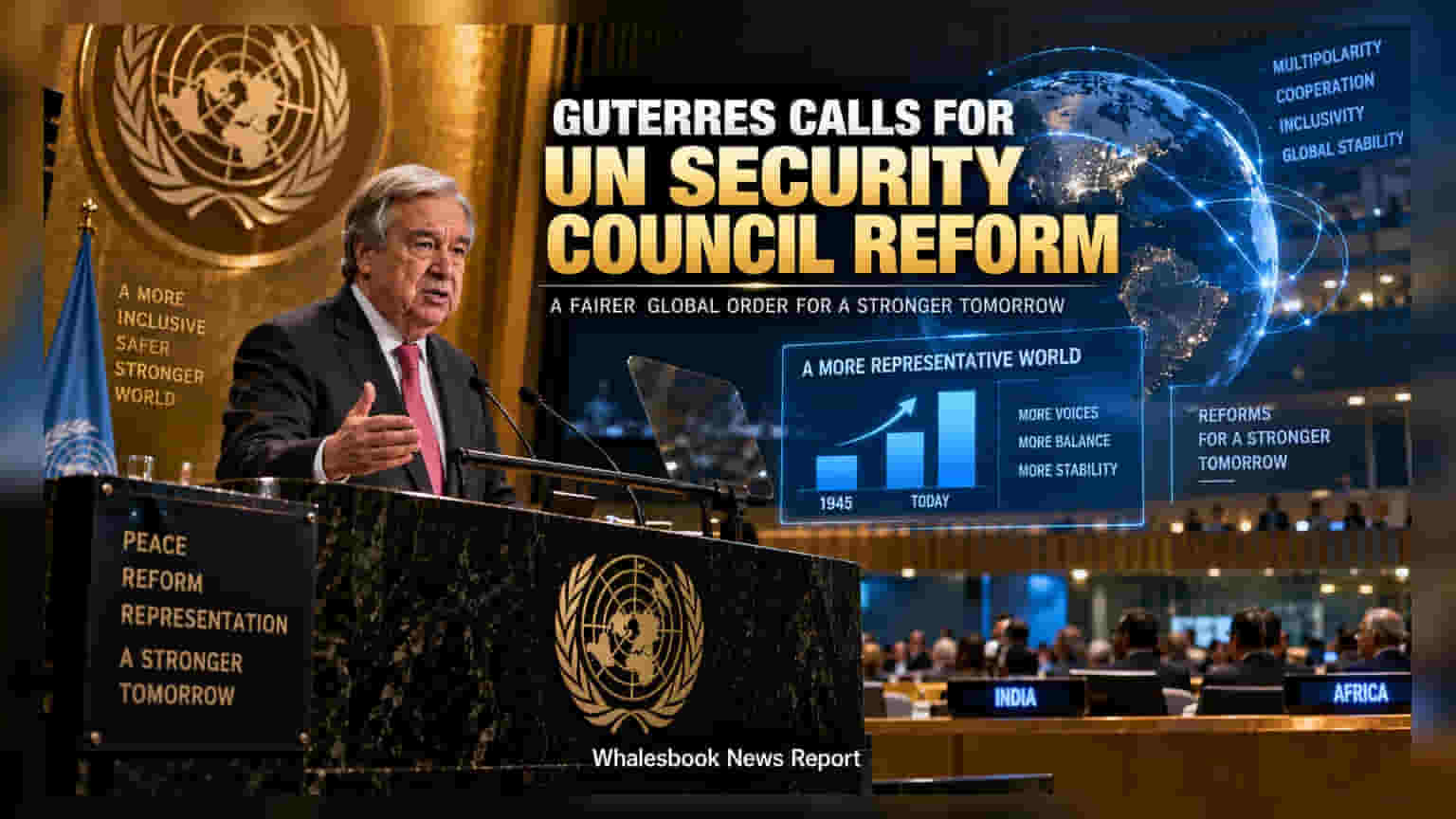
UN Secretary-General Antonio Guterres has called for urgent Security Council reform, labeling its 1945-era structure outdated. India, a long-time advocate for a permanent seat, remains focused on the issue as it prepares for elections in June regarding a non-permanent seat for the 2028-29 term. The push highlights the growing pressure to align global governance with modern power dynamics.
United Nations Secretary-General Antonio Guterres has delivered a pointed message regarding the global security order, calling for an urgent overhaul of the UN Security Council. During his final address at the General Assembly, Guterres described the current structure as an outdated relic established in the aftermath of World War II, arguing that it fails to reflect modern geopolitical realities. The UN chief specifically pointed to the lack of permanent representation for the African continent and the broader need for a system that accounts for the rise of new economic and political powers. This debate is of significant interest to India, which has been a consistent advocate for permanent membership on the Security Council, arguing that the existing framework ignores the current distribution of global influence.
For New Delhi, the issue is not just about diplomatic standing but also about the stability of the international environment in which the economy operates. A more representative council is seen as essential to mitigating the risk of a fractured global system, which Guterres warned could lead to rival economic blocs and zero-sum outcomes. India is currently focusing its diplomatic efforts on securing a non-permanent seat on the Council for the 2028-29 term, with elections for these spots scheduled for next June. While the momentum for reform is growing, progress remains difficult due to the entrenched positions of the current permanent members—the United States, Russia, China, France, and the United Kingdom—who hold veto power over structural changes.
The Secretary-General’s vision for a networked multipolarity—a system built on interdependence and established international rules—aligns with India’s long-standing calls for a more inclusive multilateral order. Investors and global observers often monitor these geopolitical discussions as they can impact international trade policies, conflict resolution mechanisms, and the stability of global supply chains. The next key updates will likely track the diplomatic negotiations surrounding the election process and any consensus-building efforts among the G4 nations and other supporting countries.