 Whalesbook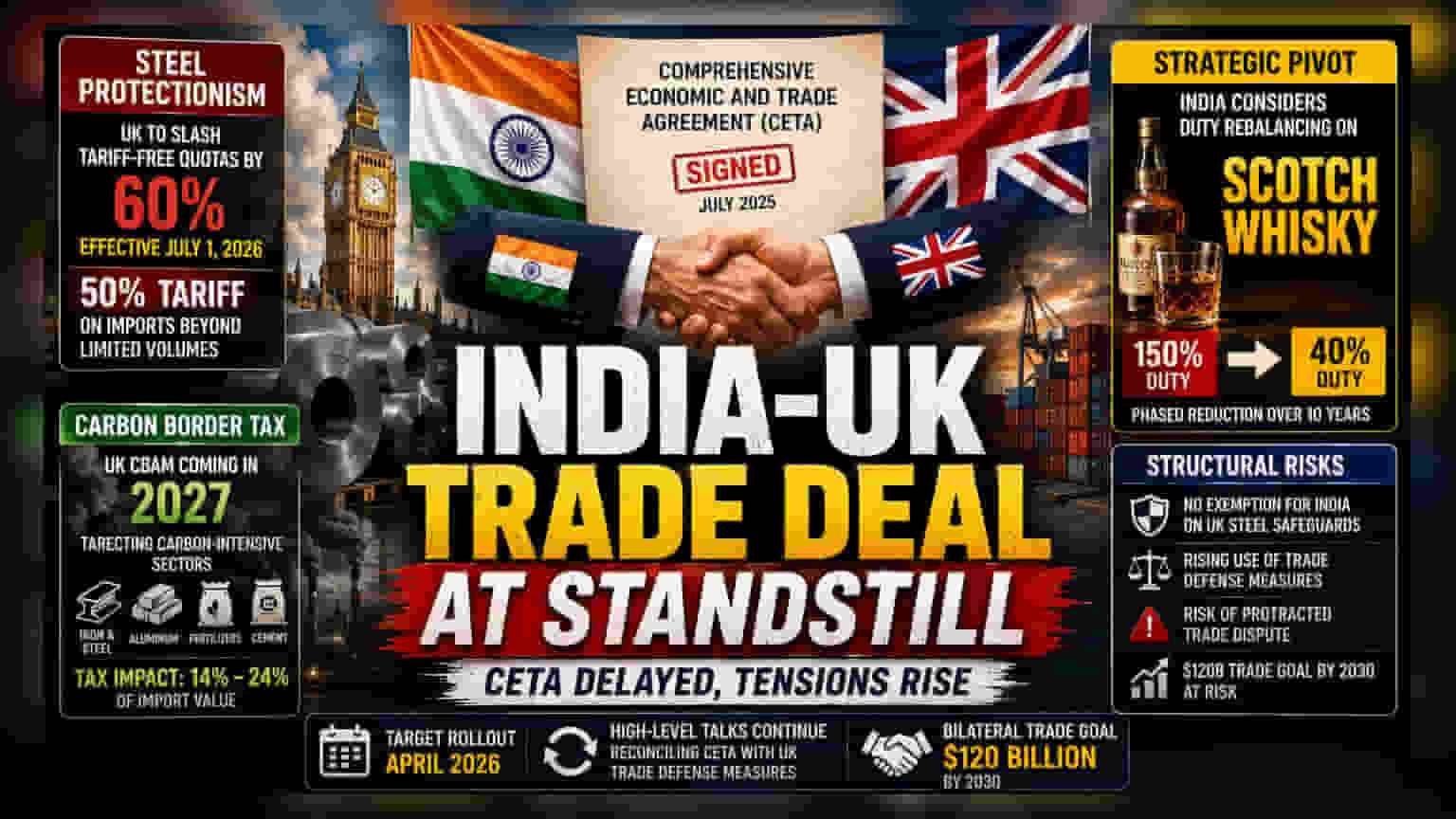


The Implementation Impasse
Despite the formal signing of the India-UK Comprehensive Economic and Trade Agreement (CETA) in July 2025, the pact has yet to reach operational status. High-level discussions between Indian Commerce Secretary Rajesh Agarwal and UK Permanent Secretary Amanda Brooks, alongside meetings between Commerce Minister Piyush Goyal and UK Business and Trade Secretary Peter Kyle, highlight an urgent struggle to reconcile the agreement with emerging British trade defense measures. While both nations aimed for an April 2026 rollout, these structural irritants have effectively sidelined the deal, creating an atmosphere of diplomatic friction that threatens to undermine years of bilateral negotiation.
Steel Protectionism and the Carbon Barrier
At the core of the friction is the UK’s aggressive pivot toward domestic industry protection. Effective July 1, 2026, London will severely restrict tariff-free steel imports by slashing quotas by 60% compared to previous safeguard frameworks. Imports exceeding these limited volumes will be subject to a 50% tariff, a policy aimed squarely at protecting British steelmaking from global overcapacity—an irony not lost on Indian exporters, who view these actions as a direct barrier to the market access promised under CETA.
Compounding this is the UK’s impending 2027 Carbon Border Adjustment Mechanism (CBAM). By targeting carbon-intensive sectors such as iron, steel, aluminum, fertilizers, and cement, the UK’s carbon pricing mechanism risks placing Indian exporters at a significant disadvantage. With the tax projected to range between 14% and 24% of the import value, the financial impact could be substantial. This move effectively positions the UK as the second major economy, following the European Union, to utilize environmental regulation as a fiscal trade barrier.
The Strategic Pivot: Retaliatory Rebalancing
In response to these developments, New Delhi is evaluating a tactical rebalancing of its trade commitments. A primary target for potential duty recalibration is Scotch whisky. Under the initial CETA terms, India had agreed to a phased reduction of import duties on Scotch from 150% to 40% over a decade. By threatening to walk back these concessions, India is signaling that its cooperation on British market access is contingent upon the UK’s flexibility regarding industrial safeguards. This posture reflects a broader, more assertive Indian stance in trade negotiations, where the focus has shifted from simple tariff reduction to protecting the domestic manufacturing base against shifting global trade defense standards.
Structural Risks and Future Outlook
The persistence of these hurdles suggests that the timeline for CETA’s full realization remains fragile. While the UK government maintains that steel safeguards are a necessary component of its long-term industrial strategy, the lack of an exemption for India complicates the narrative of a 'modern' economic partnership. As both nations navigate this impasse, the risk of a protracted trade dispute remains elevated. Observers note that without a compromise on quota volumes or a dedicated carve-out for Indian exports, the economic benefits originally projected—including the target of doubling bilateral trade to $120 billion by 2030—may remain aspirational.