

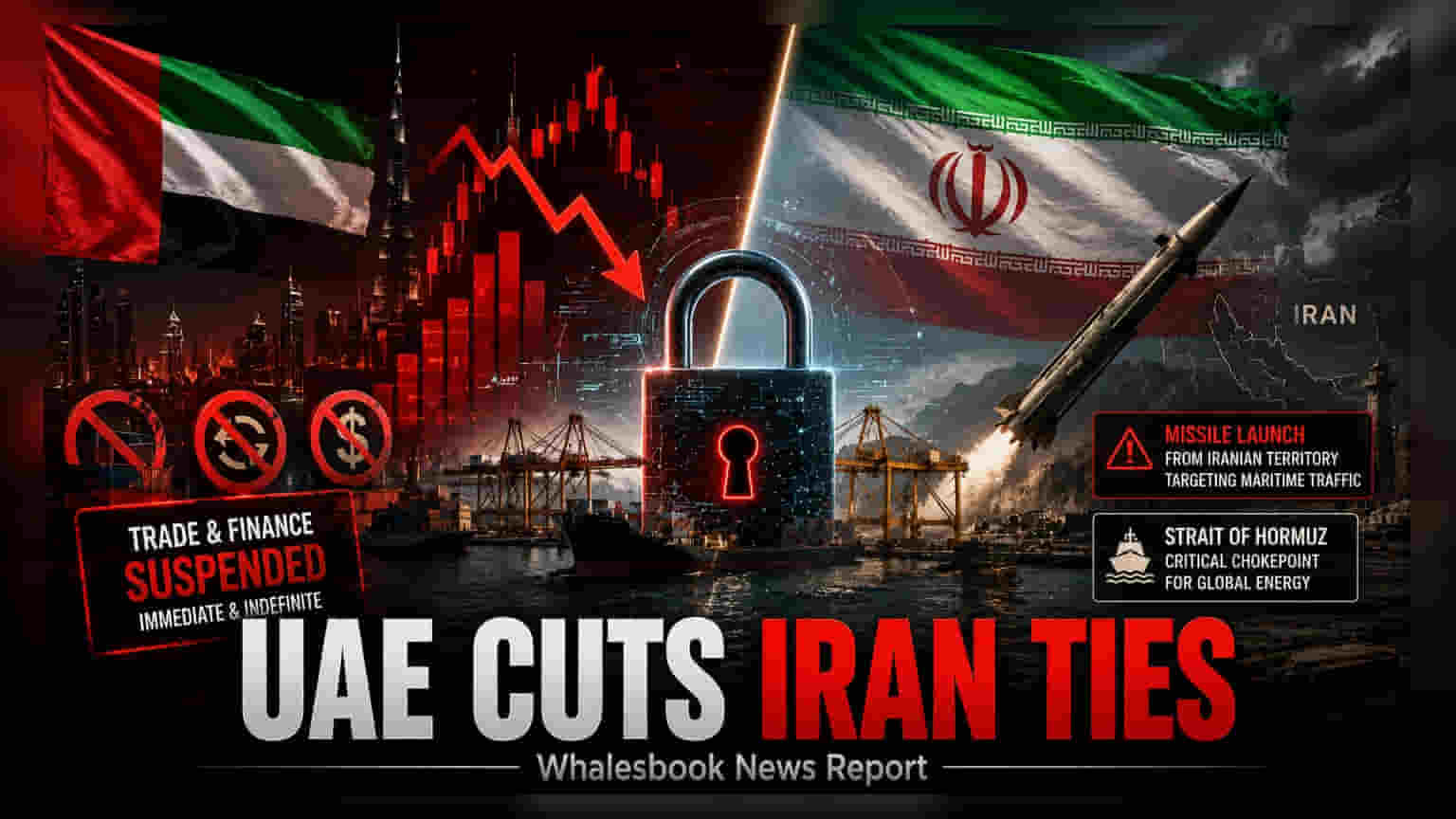
The United Arab Emirates has indefinitely suspended all trade and financial transactions with Iran after reporting a ballistic missile incident targeting maritime traffic. This escalation creates regional uncertainty, impacting energy shipping routes through the Strait of Hormuz. For Indian investors, the move raises concerns about potential volatility in global oil prices and supply chain stability.
The United Arab Emirates (UAE) has announced an immediate and indefinite suspension of all trade, commercial exchanges, and financial transactions with Iran. The decision, communicated by the UAE Ministry of Foreign Affairs on Wednesday, follows a security incident on Tuesday, August 18, where authorities reported that two ballistic missiles were launched from Iranian territory targeting maritime traffic.
While the UAE government described the event as an act of regional escalation that undermines peace and security, the Iranian Foreign Ministry has officially denied these claims, labeling them as baseless. No injuries or damage to maritime vessels were reported in the incident.
Strategic Importance of the Strait of Hormuz
For global markets and investors, the primary concern lies in the proximity of these tensions to the Strait of Hormuz. This narrow waterway is a critical chokepoint for global energy markets, as a significant portion of the world's crude oil and liquefied natural gas exports transit through this route daily. Any disruption or escalation in this region often leads to immediate volatility in global energy prices.
Energy-importing nations, including India, closely monitor stability in this region because fluctuations in oil prices directly impact domestic inflation, import bills, and the operating costs for transport and manufacturing sectors. The uncertainty surrounding trade and maritime security could lead to higher insurance premiums for cargo vessels navigating the area, potentially increasing supply chain costs.
Investor Perspective and Potential Risks
The immediate suspension of trade marks a sharp cooling of diplomatic and economic channels. Investors typically view such geopolitical escalations as a source of uncertainty, which can influence sentiment in energy-intensive sectors. If the situation leads to a prolonged supply disruption or conflict, it could pressure profit margins for companies that rely on fuel for logistics or raw materials, such as those in the shipping, refining, and aviation industries.
Furthermore, the halt in financial transactions adds a layer of complexity for businesses with cross-border operations in the region. While the UAE’s move is a specific reaction to the missile incident, the broader context of strained US-Iran relations and the expiration of peace talk windows adds to the unpredictability of the regional landscape.
What Investors Should Monitor
Market participants are likely to track diplomatic developments and official statements regarding the security of maritime routes. The key monitorable for the coming days is whether the situation de-escalates or whether trade and transport restrictions widen. Investors may also observe how global oil prices react to this news and whether there are any signals from major crude oil exporters regarding production and transport safety in the Gulf region. Any official updates on the status of the Strait of Hormuz or adjustments in maritime insurance rates will be critical indicators for assessing the potential economic fallout.