

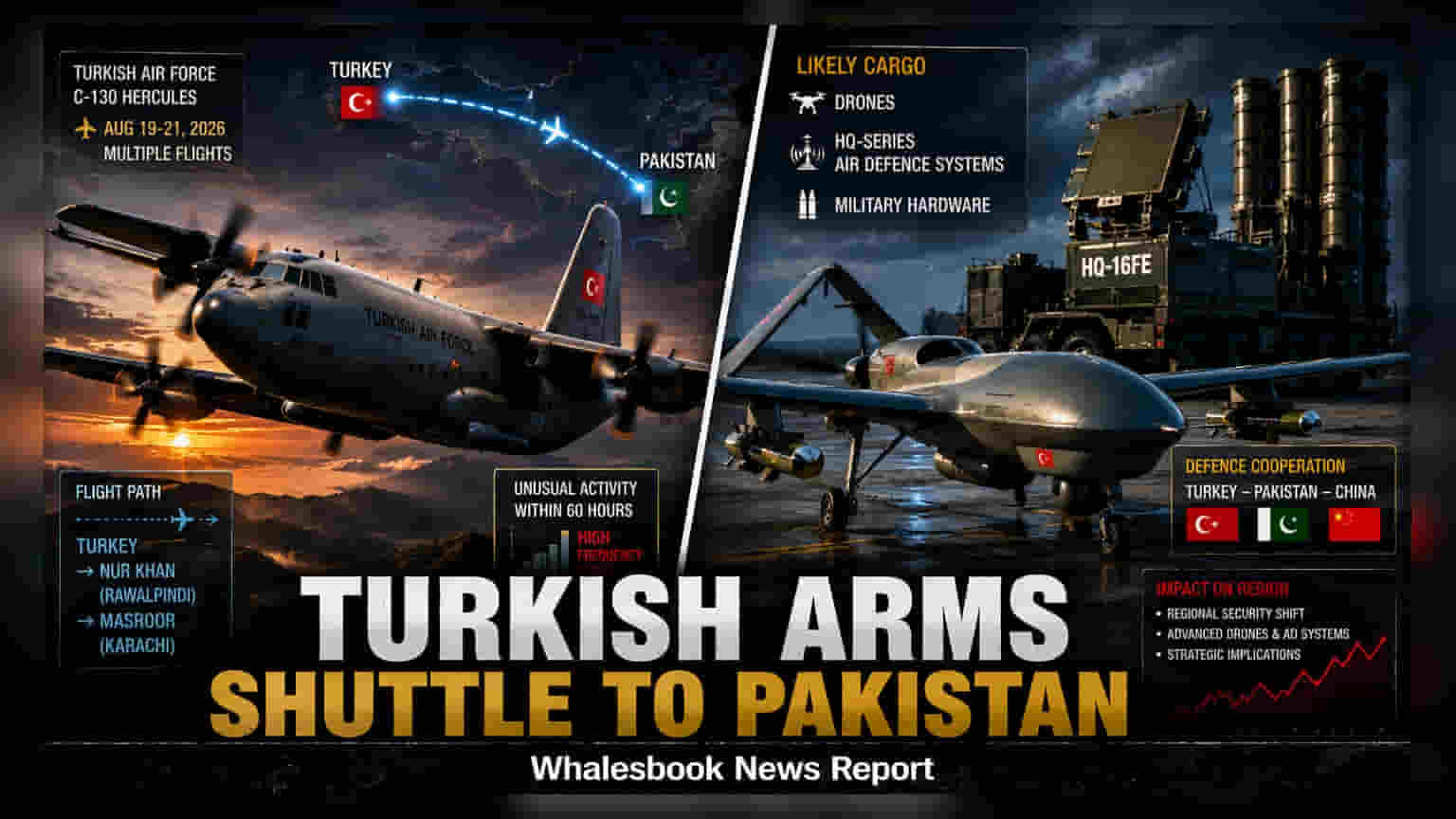
Between August 19 and 21, 2026, Turkish Air Force C-130s landed at key bases in Pakistan, with reports suggesting the delivery of advanced drones and air defense systems. This activity highlights a deepening defense partnership that analysts are monitoring due to its potential impact on regional stability and India's long-term defense preparedness.
Between August 19 and August 21, 2026, a series of flights by Turkish Air Force C-130 Hercules transport aircraft connected Turkey with Pakistan. The planes landed at the Nur Khan airbase near Rawalpindi and the Masroor airbase in Karachi. Security analysts noted that the frequency of these flights within a 60-hour period was unusual, drawing attention from regional observers.
Intelligence reports and defense analysts suggest that these shipments likely contained military hardware, including drones and potentially HQ-series air defense systems. While there has been no official statement from the governments of Turkey, China, or Pakistan confirming the nature of the cargo, the activity aligns with a trend of closer defense cooperation between these nations, particularly in the fields of aerospace and unmanned systems.
For those tracking the defense sector, this development is significant due to its impact on regional security. Pakistan’s push to modernize its military, despite its ongoing domestic economic constraints, suggests a sustained prioritization of defense spending. This geopolitical shift influences the strategic environment in South Asia. As countries in the region upgrade their defense capabilities—specifically through the induction of advanced drones and air defense networks—it often impacts the long-term capital allocation of governments toward domestic security infrastructure and defense manufacturing.
The reliance on foreign suppliers for high-end military technology can create potential vulnerabilities in supply chains. Furthermore, the integration of new unmanned systems into the military increases the complexity of regional conflict scenarios. Investors monitor these situations because changes in the regional balance of power often drive shifts in defense procurement policies, which can have long-term consequences for the defense industry in India.
Moving forward, the primary factor to watch is any official communication regarding the nature of these shipments. Additionally, any policy changes or responses from the Indian government regarding defense preparedness and border security budgets will be relevant for long-term strategic planning.