

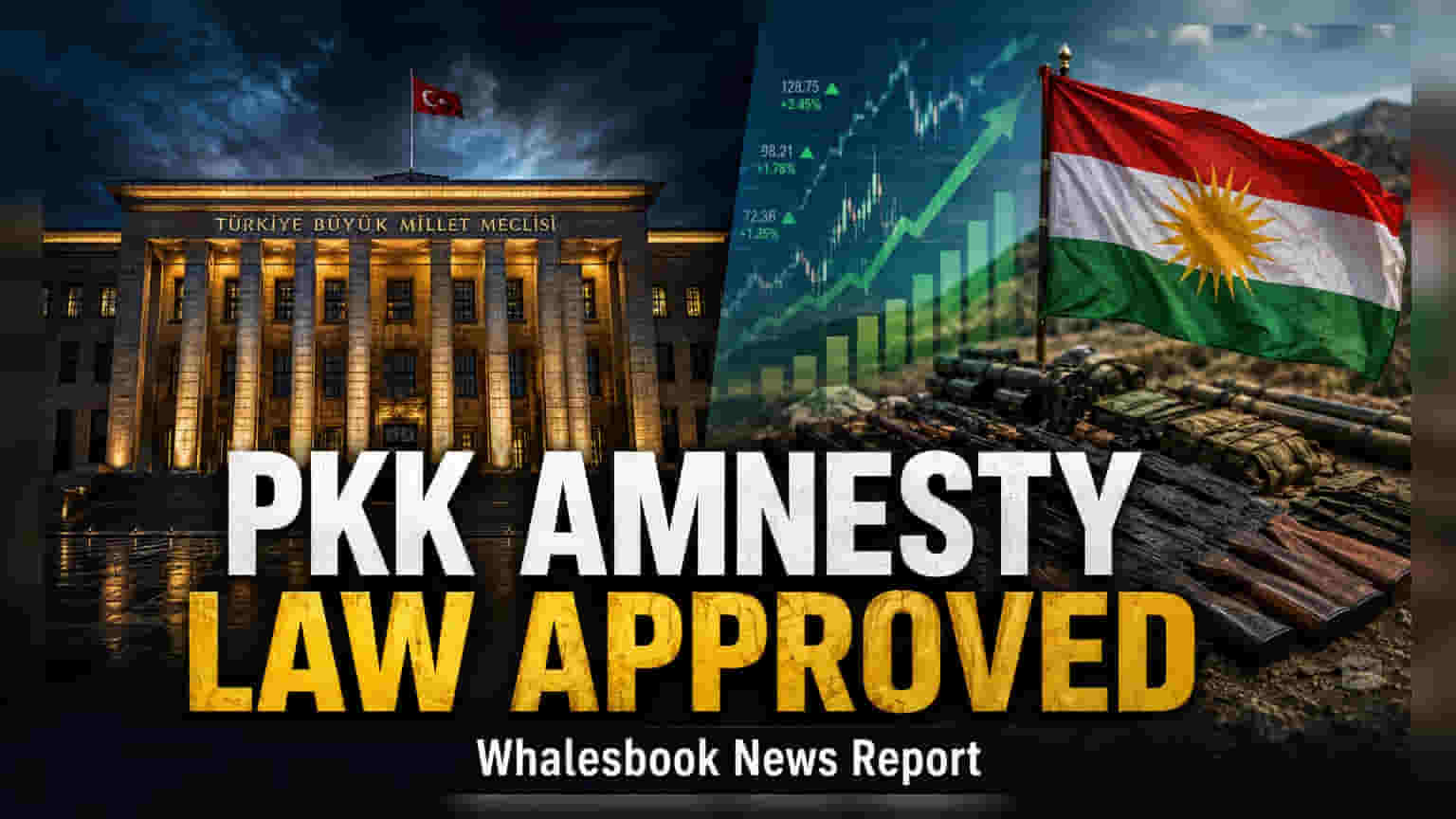
The Turkish Parliament has approved a new law offering conditional amnesty to PKK militants, contingent on their full disarmament. The move, aimed at resolving a decades-long conflict, has triggered a positive response in financial markets, with the Borsa Istanbul index gaining 4.3%. However, the exclusion of senior leaders from the pardon remains a potential hurdle for the peace process.
The Turkish Parliament has officially approved a landmark legislative package, the "Law on Strengthening National Solidarity and Social Integration," marking a significant attempt to resolve the long-standing conflict with the Kurdistan Workers' Party (PKK). The bill, which passed with a vote of 468 to 88, offers a pathway for conditional amnesty to thousands of militants. This development was received positively by the markets, with the Borsa Istanbul index climbing 4.3% as investors reacted to the potential for improved regional stability.
Under the 12-article legislation, militants may receive a suspension of prison sentences and a delay of ongoing investigations for a period of five to ten years. These legal benefits are not immediate; they are entirely dependent on the Turkish National Security Council verifying that the group has fully disarmed and handed over its weapons. Once this verification is complete, eligible individuals will have a six-month window to apply for the program. The law specifically outlines that if a participant remains free of terror-related offenses during the suspension period, their cases will be formally dropped.
Despite the legislative progress, the plan faces significant challenges that could affect its long-term viability. A critical point of contention is the exclusion of individuals convicted of intentional killings and those serving life sentences imposed before June 2005. This clause prevents key figures, including imprisoned PKK leader Abdullah Öcalan, from benefiting from the amnesty. The PKK has already voiced dissatisfaction, labeling the law insufficient and maintaining that a genuine peace process must include greater freedoms and the ability for its leadership to engage in politics without the threat of prosecution.
For investors and market observers, the primary interest lies in the potential for reduced geopolitical risk. Prolonged stability in the region could lower security costs and improve the overall investment climate, which explains the initial positive movement in local equity markets. However, the success of this peace initiative is far from guaranteed. The path ahead involves delicate negotiations regarding disarmament and potential political pushback from groups that remain skeptical of the government's approach.
The next major phase for the country will be the verification process by the National Security Council. Markets will likely monitor whether the PKK agrees to the government's terms of disarmament or if the current political friction leads to a stalemate. If the peace process stalls, the temporary optimism in the financial markets could face pressure, making the government's management of the disarmament timeline a key monitorable in the coming months.