 Whalesbook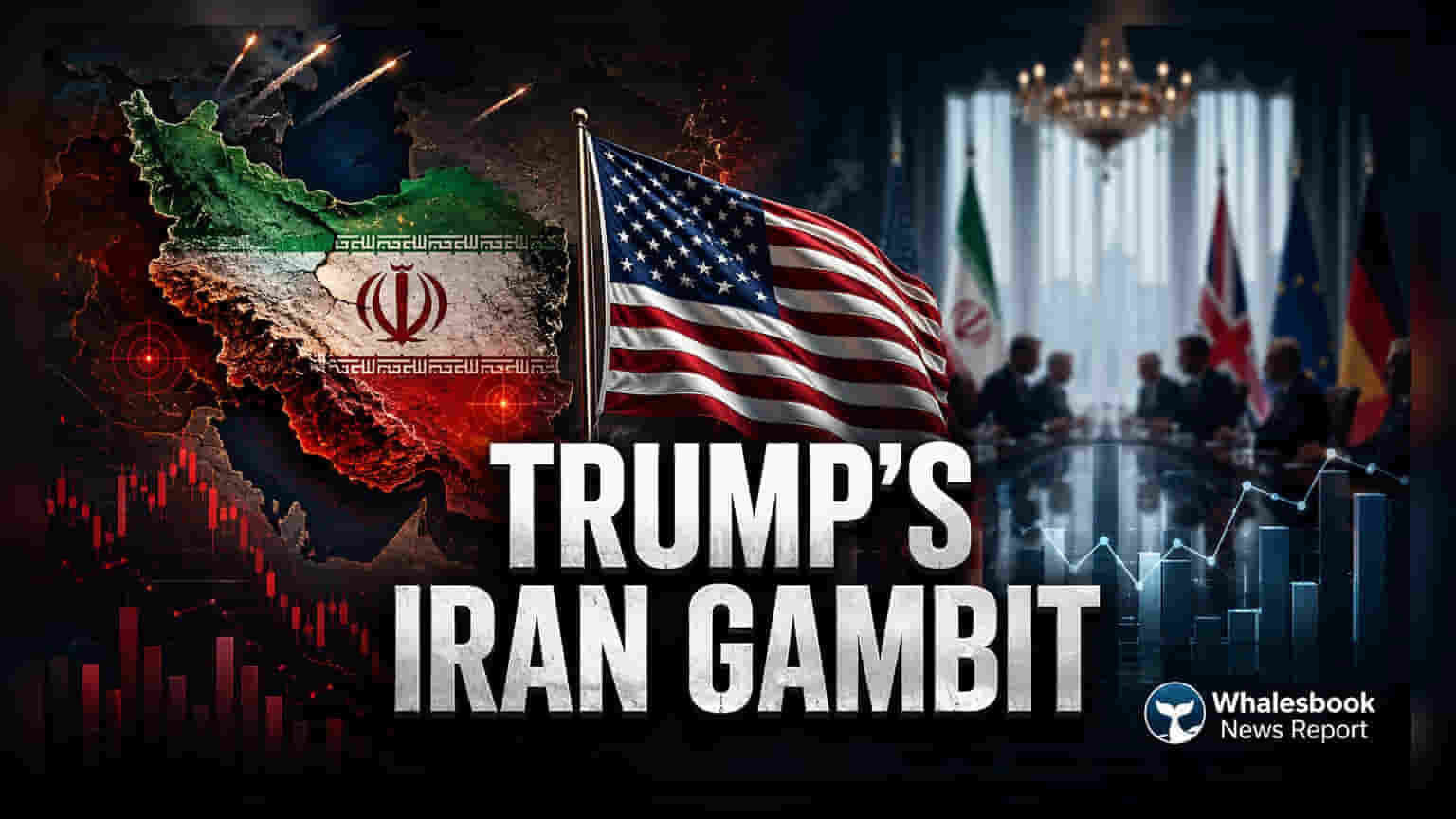


Former President Donald Trump's recent social media post, superimposing the American flag onto a map of Iran with the caption 'United States of the Middle East?', has introduced a volatile element into ongoing, albeit fragile, ceasefire negotiations. This action, disseminated via Truth Social, occurred as U.S. and Iranian officials were reportedly on the cusp of finalizing a memorandum of understanding. The timing has raised significant concerns among international relations experts about its potential to derail delicate diplomatic efforts. Vali Nasr, a professor of international affairs at Johns Hopkins University, stated that such 'grotesque behavior' not only undermines ongoing diplomacy but also risks consolidating Iranian national sentiment against perceived U.S. expansionist intentions. The White House has yet to issue a formal statement regarding the post.
Geopolitical Undercurrents and Unresolved Issues
While the inflammatory rhetoric casts a shadow, both U.S. and Iranian representatives have indicated that diplomatic progress is being made. Trump himself commented that both sides were 'getting a lot closer' to an agreement. An Iranian Foreign Ministry spokesperson confirmed efforts to finalize a memorandum of understanding, with converging viewpoints noted. However, substantial obstacles remain, including the future of Iran's nuclear program, its enriched uranium stockpile, and its strategic control over the Strait of Hormuz. This juxtaposition of inflammatory public statements with behind-the-scenes negotiations highlights the complex and often contradictory nature of international diplomacy. The potential impact on regional stability remains a significant concern, as such provocations can quickly shift the geopolitical dynamics. It is unclear how this specific incident will affect international perceptions of the U.S. negotiating stance or the internal dynamics within Iran leading up to a potential agreement.
The 'Middle East USA' Proposition: Historical and Comparative Context
The concept of a 'United States of the Middle East' has been floated in various political discussions, often met with skepticism and resistance due to the region's complex ethnic, religious, and political diversity. This particular assertion, framed by Trump, can be seen through the lens of his past rhetoric and policy approaches, which often favored direct, assertive, and sometimes confrontational public pronouncements. Unlike past diplomatic initiatives that focused on multilateral cooperation and respect for national sovereignty, this framing suggests a more unilateral and potentially hegemonic ambition. It also stands in contrast to the cautious diplomatic language typically employed during sensitive negotiations, where de-escalation and mutual understanding are paramount. The lack of a formal White House response suggests a potential strategy of allowing space for negotiation or a deliberate ambiguity in the administration's official stance concerning such provocative statements from a former president.