

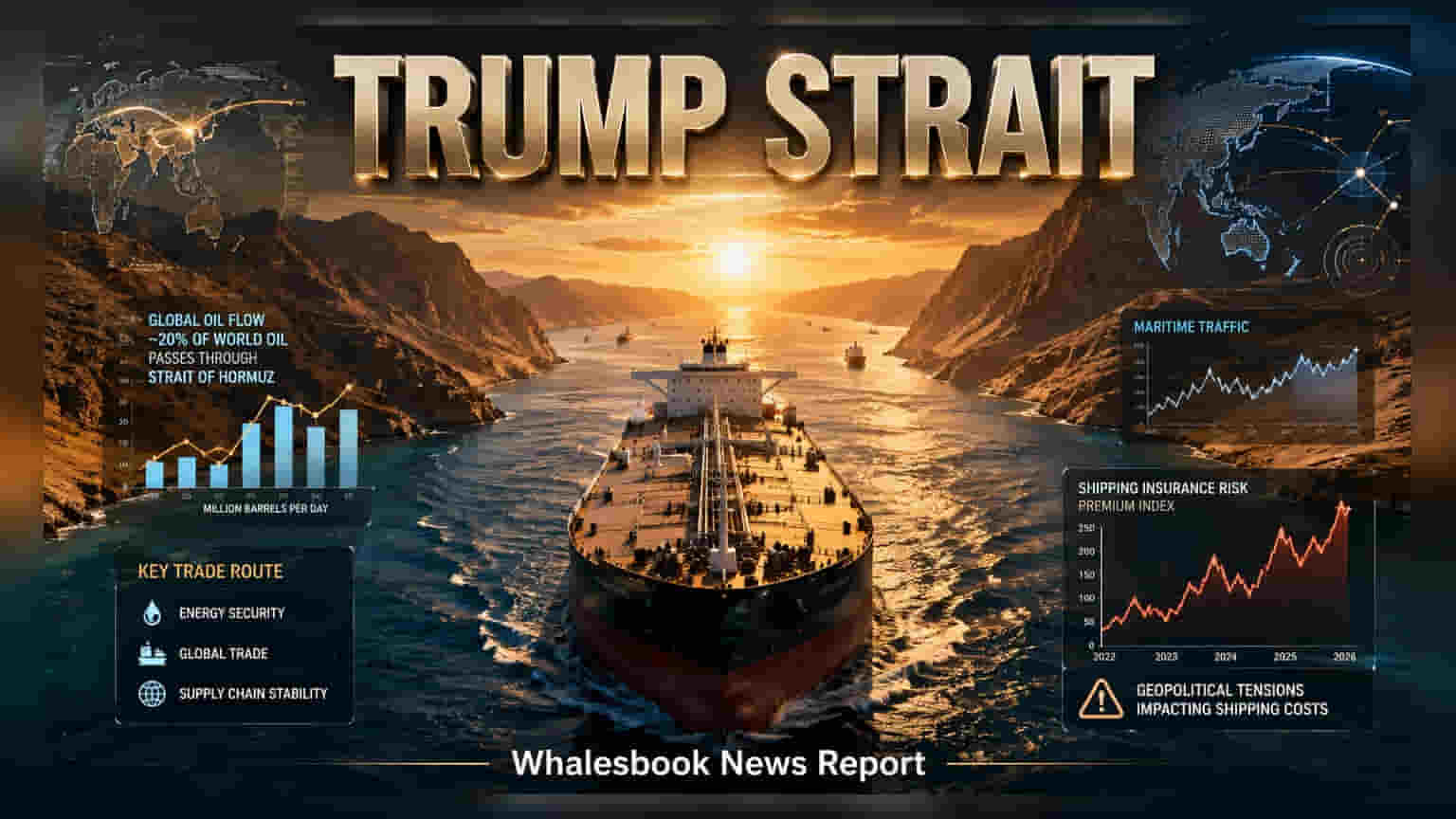
US President Donald Trump has proposed renaming the globally vital Strait of Hormuz to 'Trump Strait,' citing US military control. While primarily a political statement, the proposal brings attention to a critical maritime chokepoint that facilitates nearly 20% of global oil consumption. For Indian investors, the focus remains on potential volatility in crude oil prices, shipping insurance costs, and overall energy market stability.
President Donald Trump announced on September 2, 2026, a proposal to rename the Strait of Hormuz to 'Trump Strait,' claiming that the United States maintains military control over the waterway. This assertion of authority comes amid ongoing tensions in the region and follows a series of similar geographic naming initiatives by the US administration, including the 'Gulf of America' and 'Lake America.' While the administration characterizes the move as an exercise of control, the strait remains an international waterway located between Iran and Oman, governed by established maritime conventions.
The Strait of Hormuz is a critical artery for the global energy sector, with approximately one-fifth of the world’s daily oil consumption passing through the narrow passage. Because of its strategic importance, any diplomatic or military rhetoric surrounding the region is often watched closely by energy traders and global supply chain managers. For India, which relies heavily on energy imports, stability in this region is a key factor in managing fuel costs and overall inflationary pressure.
From a market perspective, the proposal raises questions about the stability of transit routes rather than direct corporate impact. Shipping companies and insurers operate based on established international laws and safety assessments. If commercial operators perceive that the legal status or safety of the strait is changing due to unilateral assertions of control, there is a risk of increased volatility in shipping insurance premiums. Higher insurance costs can lead to increased freight rates, which eventually influence the landed cost of commodities, including crude oil and other essential goods imported through these routes.
Investors may monitor the situation for any actual change in maritime operations or diplomatic responses from regional stakeholders. To date, the renaming proposal remains a geopolitical statement rather than a shift in maritime law or transit rules. The primary monitorable for market participants is not the name of the waterway, but whether this rhetoric leads to tangible disruptions in trade, fluctuations in global crude oil prices, or changes in transit insurance costs for commercial vessels. As of now, global shipping remains subject to existing international maritime protocols.