

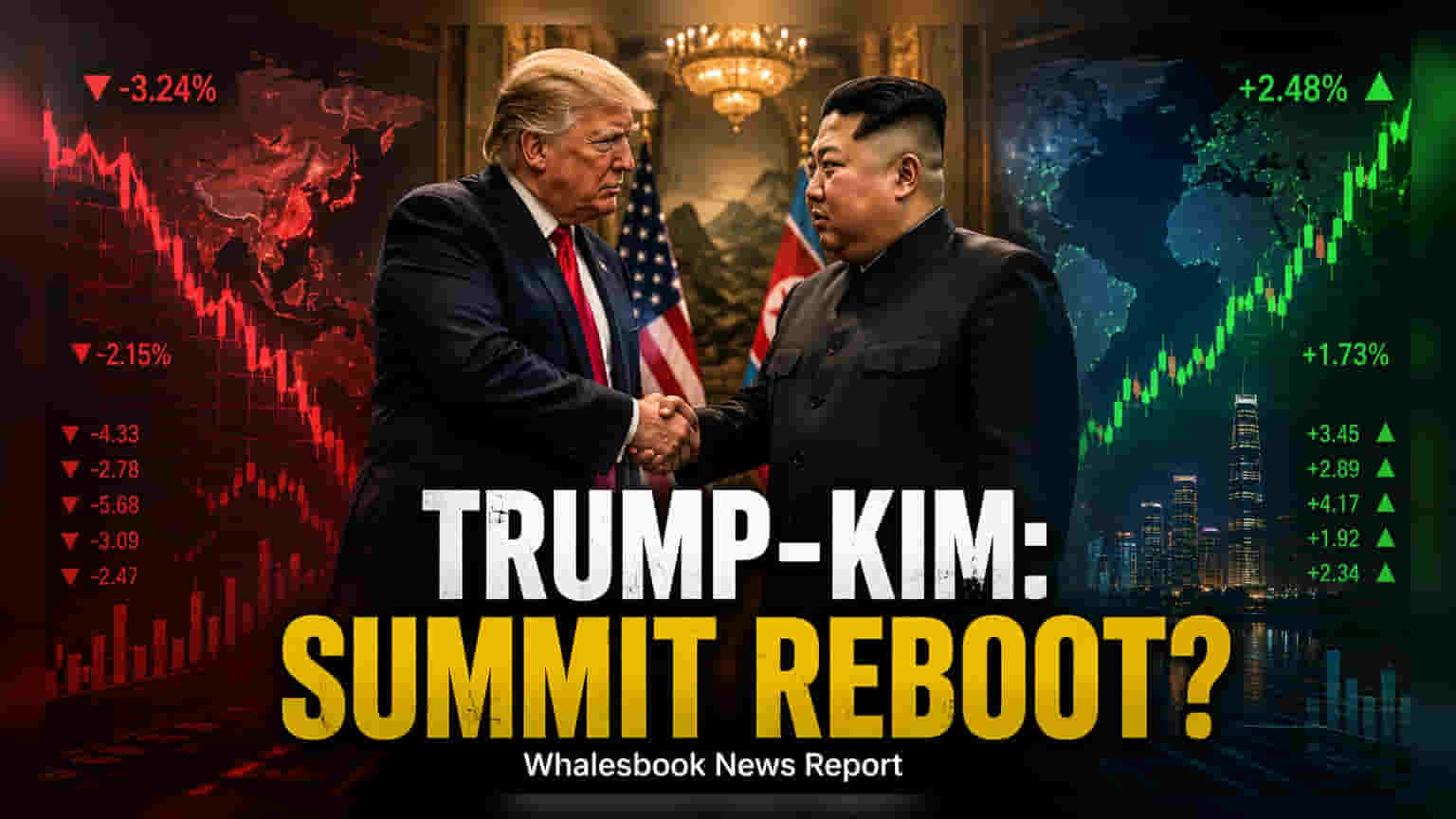
U.S. President Donald Trump is reportedly seeking a new summit with North Korean leader Kim Jong Un, potentially in November 2026 during the APEC summit. This diplomatic overture has triggered interest in regional markets, where stocks linked to inter-Korean cooperation historically experience high volatility based on news cycles.
U.S. President Donald Trump is pushing for a fresh in-person meeting with North Korean leader Kim Jong Un, according to recent reports. The proposal, if it proceeds, could align with the upcoming Asia-Pacific Economic Cooperation (APEC) summit scheduled for November in Shenzhen, China. While no formal plans or official dates have been confirmed by either side, the news has drawn attention to the potential for a thaw in diplomatic tensions.
Geopolitical Context and Market Sentiment
This diplomatic push comes shortly after the U.S. government announced a reduction in the scale of its joint military exercises with South Korea. President Trump has publicly linked these decisions to his working relationship with the North Korean leader, aiming to create an environment more conducive to renewed dialogue.
For investors monitoring regional markets, news of such summits often leads to immediate, though frequently speculative, reactions. In South Korea, for instance, share prices of companies associated with inter-Korean economic cooperation—typically in sectors like construction, infrastructure, and tourism—often experience sharp swings. These companies are viewed as 'proxy' stocks that may benefit from the easing of regional tensions or the reopening of trade corridors. However, these price movements are often driven by sentiment rather than confirmed business fundamentals.
Historical Precedents and Risks
Investors should consider the track record of previous engagements when assessing the potential impact of such news. There have been three major summits between the two leaders since 2018. While these meetings initially generated optimism, they have historically struggled to produce concrete, long-term results regarding denuclearization or the permanent lifting of international sanctions.
Because the geopolitical situation remains sensitive, the risk of market disappointment is significant. If negotiations fail to materialize or if the summit results in a stalemate similar to past meetings, stocks that were bid up on speculation can face rapid corrections. Additionally, the broader geopolitical climate involves complex security considerations, and markets can react negatively to any sudden escalation or breakdown in communication between the involved nations.
What Investors Should Monitor
The next major milestone to track will be any official confirmation from the White House or North Korean state media regarding the schedule for the APEC summit or a separate meeting. Investors in globally exposed markets or companies with significant operations in the Asia-Pacific region may track these developments, as geopolitical stability remains a key factor in regional risk assessment. The key monitorable remains whether this initiative moves from an informal proposal to an official, structured diplomatic schedule.