 Whalesbook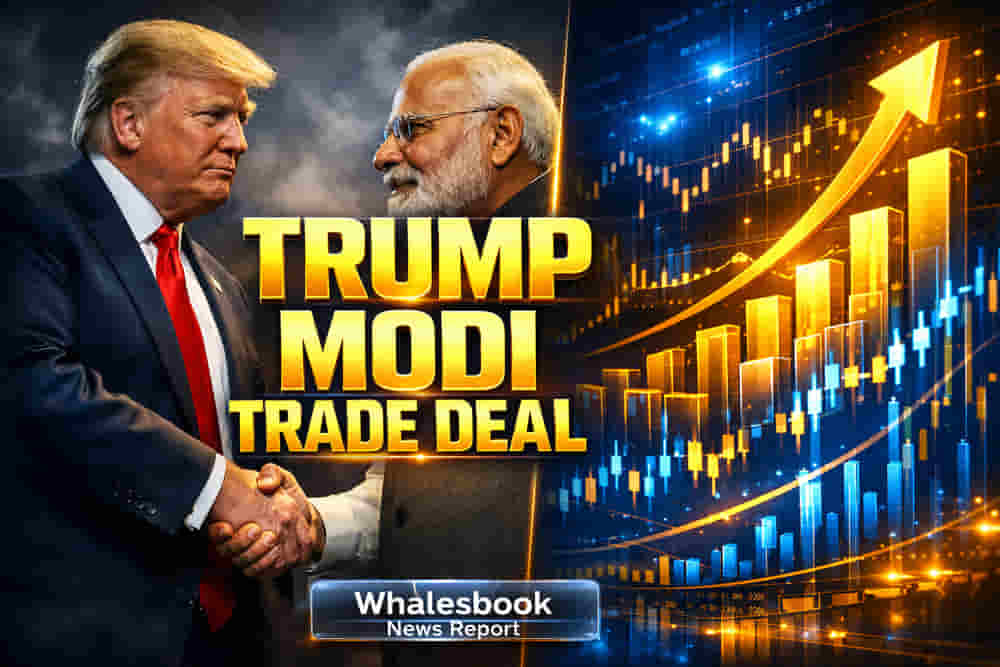


US President Trump Affirms Strong US-India Trade Prospects
During his participation at the World Economic Forum in Davos, Switzerland, on Wednesday, January 21, 2026, US President Donald Trump offered positive assessments of the bilateral relationship with India and the progress of trade talks. He specifically praised Indian Prime Minister Narendra Modi, referring to him as a "fantastic man" and a "friend," and voiced optimism that a "good deal" would be reached regarding a trade agreement between the two nations. These statements were made in an interview with Moneycontrol following his address at the WEF's 56th Annual Meeting.
Context of US-India Trade Negotiations
President Trump's remarks come at a time when the United States and India are engaged in complex trade negotiations. While the personal relationship between President Trump and Prime Minister Modi is frequently emphasized as a positive factor, trade discussions have faced challenges. These include significant US tariffs imposed on Indian goods, reportedly reaching up to 50%. The proposed Bilateral Trade Agreement aims to substantially increase bilateral trade, with a stated goal of reaching $500 billion by 2030. Despite periodic friction, such as conflicting statements from US officials regarding negotiation progress, both sides have reiterated their commitment to reaching a mutually beneficial trade agreement. India's Union Minister Ashwini Vaishnaw also underscored India's position at Davos, describing the nation as a "trusted partner to the world".
Market Sentiment and Future Outlook
Indian equity markets were positioned to potentially react to President Trump's optimistic commentary on the trade deal. While the positive tone from the US President offers encouragement, the absence of a specific timeline for the trade agreement's finalization means that investors will likely monitor future developments closely for concrete progress. The ongoing trade discussions remain a critical element in the economic relationship between the two countries, with potential implications across various sectors reliant on bilateral trade.