

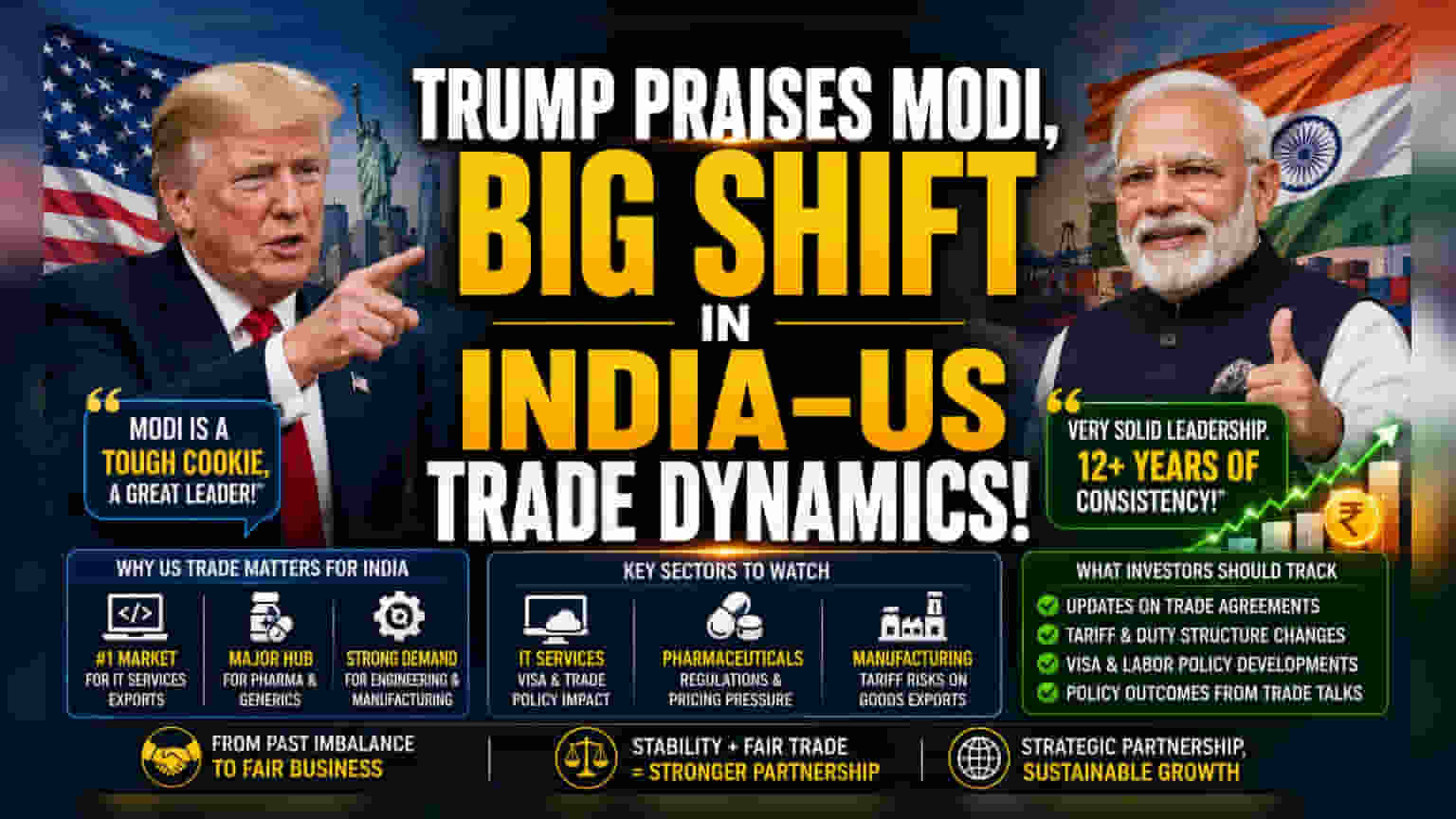
US President Donald Trump recently praised PM Narendra Modi for his consistent leadership and geopolitical handling. While the comments reinforce diplomatic ties, his emphasis on "fair business" practices suggests a possible shift in US-India trade dynamics. For investors, this rhetoric serves as a signal to watch for future changes in tariff policies and export conditions, which could impact major sectors like IT and pharmaceuticals.
What Happened
US President Donald Trump offered public praise for Indian Prime Minister Narendra Modi during the recent G7 Summit, calling him a "tough cookie" and a "great leader." Trump commended the Prime Minister's ability to maintain a consistent leadership tenure of over 12 years and praised India’s approach to navigating complex global conflicts. Beyond the diplomatic appreciation, Trump highlighted a change in the economic relationship, noting that his administration is pushing for "fair business" practices with India, contrasting this with his view of past, less favorable trade outcomes.
Why Investors Focus On Trade Relations
For the Indian stock market, the US is a critical economic partner. It remains the largest destination for India's service exports, particularly in the Information Technology (IT) sector, and a massive market for Indian pharmaceuticals and engineering goods. Trump’s specific mention of moving away from past trade practices that he deemed unfavorable to the US is a signal of a more transactional approach to international trade. Investors often view political rhetoric about "fair business" as a potential precursor to trade adjustments, such as tariff revisions or stricter compliance requirements for exporters.
The Impact On Key Sectors
Indian exporters are sensitive to US trade policies. If trade relations shift toward a more protectionist stance—often referred to in policy circles as "fair trade" or "reciprocal tariffs"—it could create pressure on companies with high revenue exposure to the US.
- IT Services: Indian IT firms rely heavily on US clients. Any major change in visa regulations or trade agreements could affect operating costs or project pipelines.
- Pharmaceuticals: As a major supplier of generics to the US, the Indian pharma sector stays sensitive to regulatory changes and pricing pressures originating from American trade policies.
- Manufacturing: Any new tariff barriers could impact the competitiveness of Indian textile and engineering exports to the North American market.
The Stability Factor
Trump’s comment on the "very solid" nature of Modi’s long tenure touches upon a factor that foreign investors often track: policy continuity. Markets generally favor political stability because it allows for long-term economic planning, consistent regulatory frameworks, and predictable tax environments. While trade protectionism poses a risk, the assurance of a stable counterpart in negotiations is often viewed as a positive for long-term investment flows and Foreign Portfolio Investment (FPI) stability.
What Investors Should Track
Investors should look beyond the political headlines and monitor official trade dialogues between the two nations. Key monitorables include any updates on trade agreements, discussions regarding tariff structures on specific goods, and changes in visa or labor regulations. While personal rapport between leaders is positive for diplomacy, the actual impact on stock prices will depend on the concrete policy changes that emerge from these trade negotiations in the coming months.