

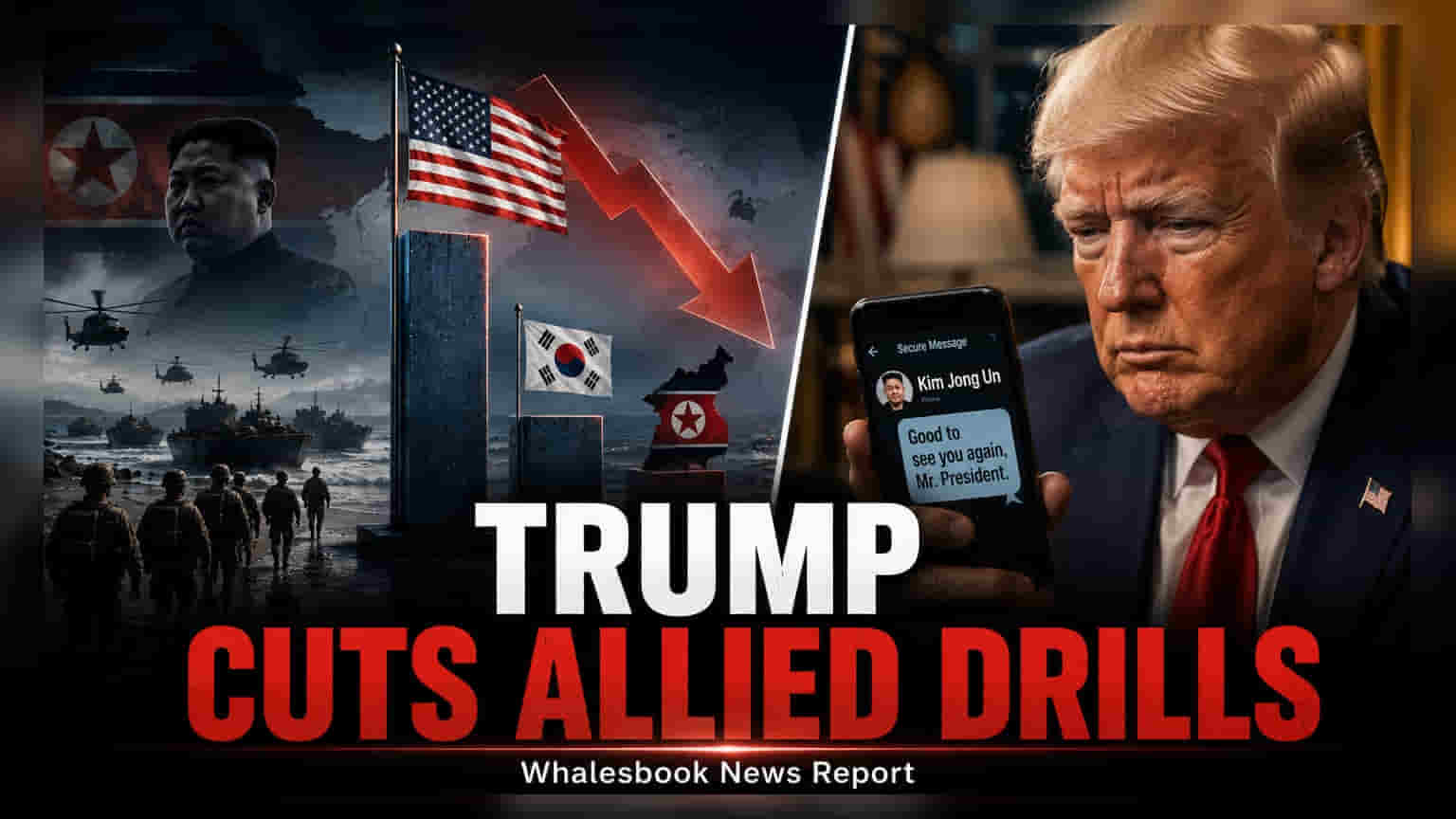
U.S. President Donald Trump has ordered a reduction in joint military exercises with South Korea, citing costs and diplomatic friction. Despite the directive, the exercises are proceeding as planned. This development has sparked global uncertainty, as investors monitor how shifts in U.S. alliance commitments could impact regional security and market stability.
President Donald Trump directed a "substantial reduction" in U.S. participation in the annual Ulchi Freedom Shield military exercises with South Korea on August 16, 2026. Despite this directive, the South Korean defense ministry confirmed that the 11-day drills, which began on August 17, 2026, are continuing as originally scheduled. The U.S. Pentagon has officially stated there are no changes to announce regarding the ongoing exercises at this time.
Trump linked the decision to the high costs associated with the drills, his personal relationship with North Korean leader Kim Jong Un, and dissatisfaction with South Korea's refusal to join U.S. initiatives regarding the denuclearization of Iran. This approach reflects a transactional style of foreign policy that contrasts with traditional alliance management.
For Indian market participants, the event highlights a period of potential volatility in international relations. Global markets often react to shifts in U.S. foreign policy, particularly in the Indo-Pacific region, which is central to global trade routes. Any increase in geopolitical uncertainty typically leads to concerns about market stability, fluctuations in currency markets, and potential impacts on crude oil prices.
Security experts and analysts are closely monitoring the situation to see if this move weakens the long-standing military deterrence against North Korea. There is concern that such signals could undermine the reliability of U.S. security commitments. Some analysts suggest this might eventually compel allies like South Korea to re-evaluate their own national security strategies, including the possibility of pursuing independent defense capabilities, though no such policy shift has been announced.
The immediate focus for investors remains on whether this directive signals a permanent change in defense posture or a temporary diplomatic friction. The key monitorable will be any future communication from the U.S. administration or the South Korean government that confirms a shift in operational reality. For now, the disparity between the President's order and the ongoing exercises leaves room for interpretation, which is why markets may remain sensitive to further developments regarding the stability of U.S. alliances in Asia.