

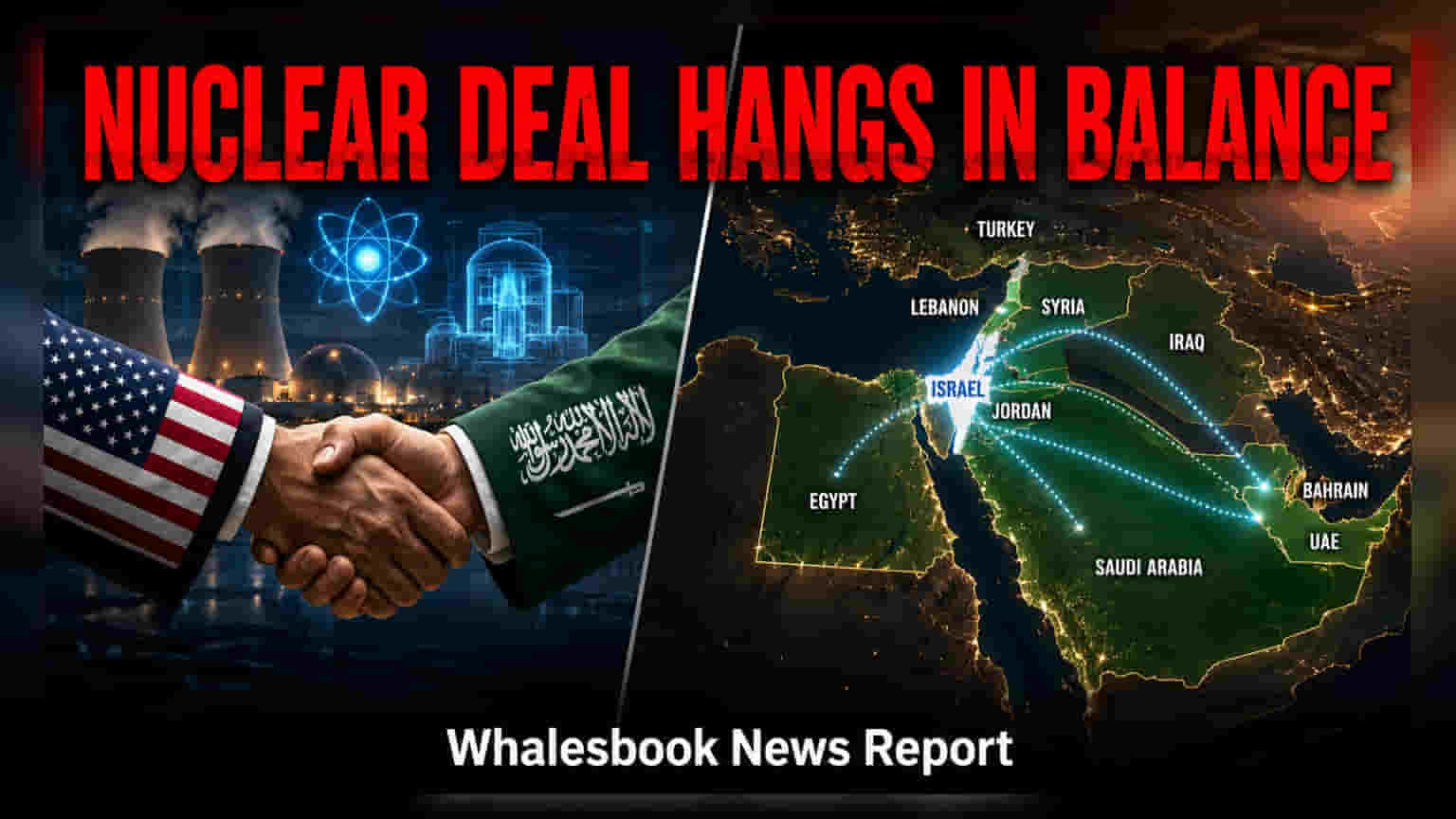
President Donald Trump has conditioned a U.S.-Saudi civilian nuclear agreement on Riyadh joining the Abraham Accords. This geopolitical linkage introduces uncertainty for the energy deal and raises concerns regarding international nuclear non-proliferation standards.
Detailed Coverage
President Donald Trump recently announced that the approval of a civilian nuclear agreement between the United States and Saudi Arabia is now conditional on Riyadh joining the Abraham Accords. This development creates a significant intersection between international energy policy and regional diplomatic normalization. The Abraham Accords, which initiated the formal recognition of Israel by several Arab nations, have been a focal point of U.S. foreign policy in the Middle East.
The new conditionality marks a shift in the expected path of this nuclear deal. Saudi Arabia has traditionally maintained a stance that supports the creation of a Palestinian state, and the ongoing regional instability following the October 2023 conflicts has made official normalization with Israel a complex diplomatic objective. By tying a major industrial and energy agreement to this political framework, the prospects for the deal's timeline and final structure have become less certain.
Non-Proliferation and Oversight Standards
The proposed nuclear cooperation agreement has faced scrutiny from security analysts and non-proliferation experts even before this latest announcement. A primary concern for international observers is the potential absence of stringent safeguards. Specifically, critics have pointed to the necessity of clear commitments from Saudi Arabia to refrain from enriching nuclear fuel for military purposes and the importance of allowing comprehensive international monitoring.
Reports indicate that previous discussions regarding the deal may have favored bilateral inspections between the U.S. and Saudi Arabia, rather than relying on the International Atomic Energy Agency (IAEA). The potential exclusion of the IAEA is a significant point of concern, as it is the global body responsible for verifying that nuclear programs remain strictly civilian. Independent experts argue that allowing such a program to proceed without robust, independent oversight could set a dangerous precedent, particularly given the ongoing efforts to address nuclear proliferation concerns involving Iran.
Geopolitical and Industry Impacts
From a geopolitical perspective, the linkage may have unintended consequences. Analysts suggest that it could embolden hardline factions in Iran, who may view the potential deal as a double standard in U.S. nuclear policy. Furthermore, there are broader implications for the global nuclear industry. While American companies may benefit commercially from the expansion of nuclear energy infrastructure in the region, the deal could influence how other global powers, such as China and Russia, approach their own nuclear exports. If international standards regarding enrichment and inspections are perceived to be weakening, it may encourage similar, less-regulated deals globally.
For investors and market observers, the primary monitorable remains the formal structure of any final agreement. Clarity on whether Saudi Arabia accepts these political conditions, and whether the U.S. will insist on IAEA-standard safeguards for nuclear facilities, will determine the viability of the deal. Any further developments regarding official filings, diplomatic agreements, or changes in nuclear policy oversight will be critical indicators of how this major energy project proceeds.