

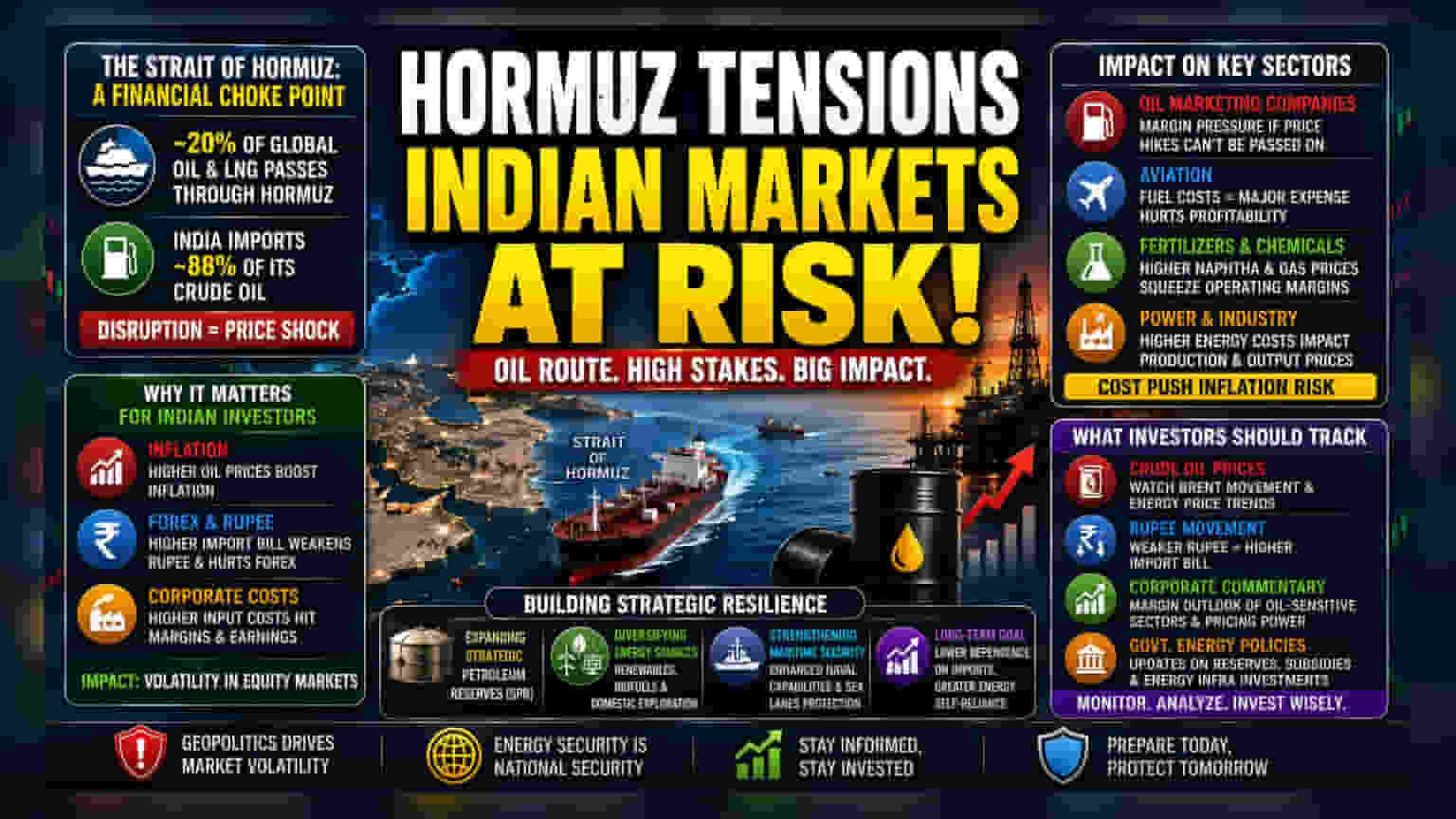
Geopolitical risks in the Strait of Hormuz, a critical energy transit route, continue to influence global oil prices. As India imports over 85% of its crude oil, this volatility affects domestic inflation, input costs for manufacturing, and the margins of sensitive sectors like aviation, fertilizers, and chemicals. Investors are tracking how these supply chain pressures impact corporate profitability.
The Strait of Hormuz: A Financial Choke Point
Geopolitical tensions near the Strait of Hormuz are not just a diplomatic concern but a critical economic factor for Indian markets. The Strait is one of the world's most vital maritime chokepoints for energy, with a significant portion of global crude oil and liquefied natural gas (LNG) passing through these narrow waters. For an economy like India, which relies on imports for nearly 88% of its crude oil requirements, any disruption or threat to this route can lead to immediate volatility in global energy prices.
Why This Matters For Indian Investors
The financial impact of tensions in this region is often transmitted through three main channels: inflation, foreign exchange (forex) reserves, and corporate input costs. Higher crude oil prices increase the country’s import bill, which can put pressure on the rupee and widen the current account deficit. For the average investor, this translates into potential volatility in equity markets, as energy is a primary input cost across major sectors of the Indian economy.
Impact on Key Sectors
When energy prices rise due to supply uncertainty, the immediate impact is felt by sectors that use oil or its derivatives as raw materials.
Oil Marketing Companies (OMCs) often face margin pressure if they cannot pass on global price hikes to consumers immediately. The aviation industry is another sector where fuel costs represent a massive portion of operating expenses, directly impacting profitability. Additionally, the fertilizer and chemical industries, which rely on naphtha and natural gas as feedstocks, can see their operating margins squeezed when global energy prices climb. Investors typically watch these sectors closely during periods of heightened Middle East instability to see if companies can manage cost inflation through efficiency or pricing power.
Building Strategic Resilience
To reduce vulnerability to global shocks, India has been strengthening its energy infrastructure. This includes expanding Strategic Petroleum Reserves (SPR), which act as a buffer during supply disruptions. Furthermore, the push toward diversifying energy sources—such as increasing investment in renewable energy, biofuels, and domestic exploration—is a long-term strategy to lower dependence on imported crude. On the defense front, the focus has been on enhancing maritime domain awareness and upgrading naval capabilities to protect critical sea lines of communication that support India's energy trade.
What Investors Should Track
Investors looking to understand the risks and opportunities in this environment should focus on a few key monitorables. First, global crude oil benchmarks like Brent, as they directly influence the domestic inflation narrative. Second, the movement of the Indian Rupee, as a weaker currency increases the import bill for oil. Third, corporate commentary from oil-sensitive sectors regarding their ability to maintain margins despite volatile raw material costs. Finally, government policies related to energy security, including updates on reserve storage and investments in alternative energy infrastructure, provide insight into the long-term mitigation of these supply chain risks.