

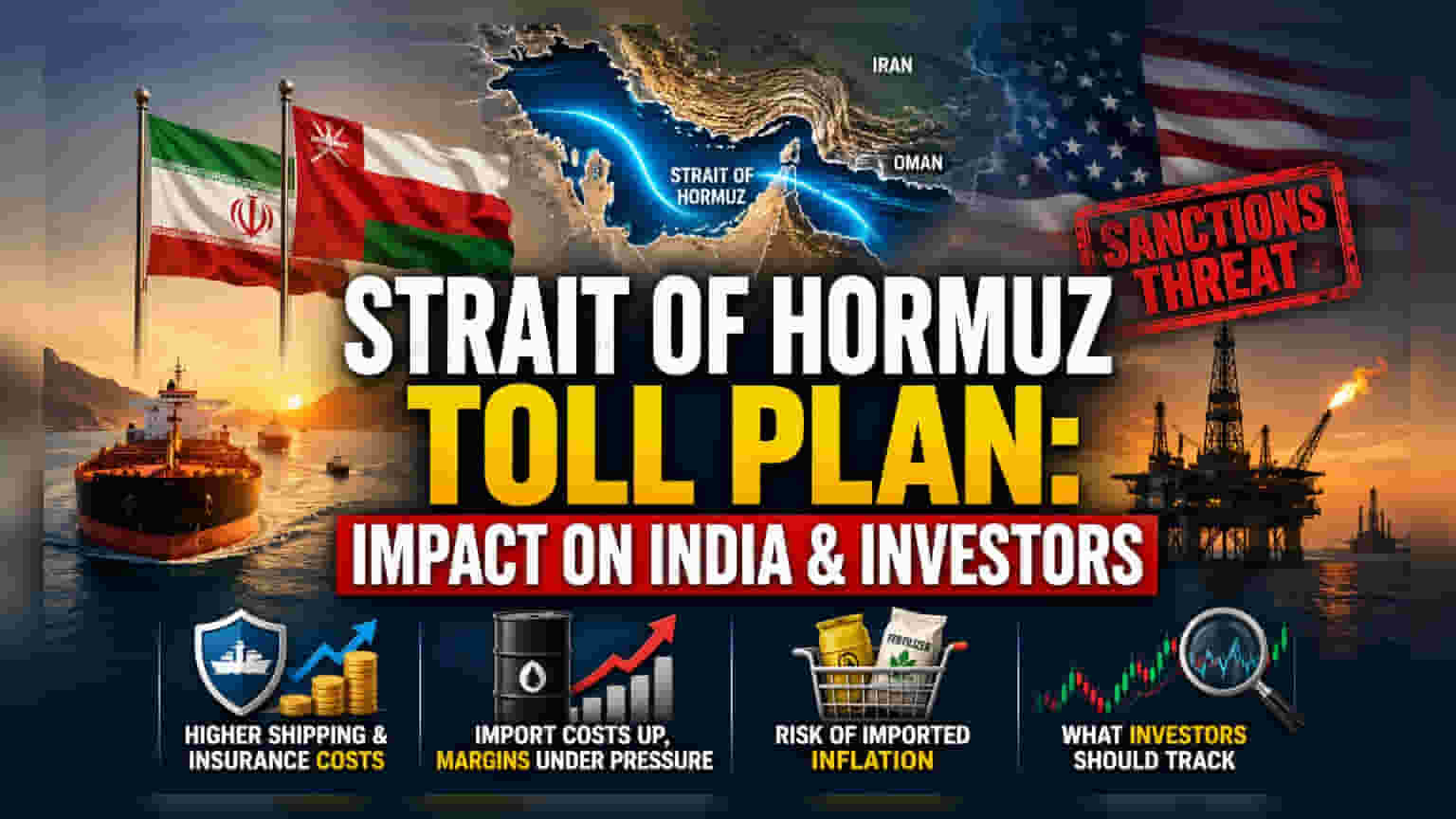
Iran and Oman are discussing the implementation of 'maritime service fees' for the Strait of Hormuz, drawing strong opposition and sanction threats from the United States. For Indian investors, the strait is a vital energy chokepoint; any potential increase in transit costs or shipping risks could impact energy import bills and domestic inflation, making it a critical monitorable for the economy.
What Happened
Iran and Oman have initiated discussions regarding the potential implementation of 'maritime service fees' for vessels navigating the Strait of Hormuz. Following high-level meetings in Muscat involving Iranian officials and Omani leadership, the two nations indicated they are forming a joint working group to define the future administration of the waterway. While officials from both countries have framed these as charges for essential navigation, security, and environmental services, the proposal has faced immediate and stern pushback from the United States. The US administration has threatened to impose sanctions on any entity involved in establishing a tolling system, labeling the move as a disguised attempt to control a critical international trade route.
Why It Matters for India
The Strait of Hormuz is widely considered the world’s most significant energy chokepoint, with roughly 20% of global oil consumption passing through its narrow waters. For India, which relies heavily on the Persian Gulf for its crude oil, liquefied natural gas (LNG), and fertilizer imports, any disruption in this corridor is significant. Even if a formal 'toll' is not implemented, the uncertainty surrounding the transit adds to the 'risk premium' for shipping companies.
This means that ships passing through the region may face higher insurance premiums, which are often passed on to importers. For India’s oil marketing companies—such as Indian Oil Corporation (IOCL), Bharat Petroleum (BPCL), and Hindustan Petroleum (HPCL)—higher shipping and insurance costs directly increase the landed cost of crude oil. When import costs rise, it can put pressure on profit margins if domestic fuel prices are not adjusted accordingly.
The Inflation and Supply Risk
Beyond just shipping fees, the broader risk is supply chain instability. The Strait of Hormuz is not only for oil; it is a primary route for petrochemical feedstocks and agricultural inputs like fertilizers. Indian companies in the chemical and manufacturing sectors are sensitive to the pricing of these raw materials.
Geopolitical tension in the region acts as a multiplier for volatility. Historically, when shipping costs rise due to security concerns or the threat of new fees, it often leads to 'imported inflation.' This can indirectly affect the broader Indian economy by putting pressure on the Current Account Deficit (CAD) and potentially influencing domestic price stability. While India has been actively diversifying its energy sources—sourcing more crude from Russia and other regions—the concentration of global shipping routes means that global oil price shocks remain a direct risk.
What Investors Should Track
The situation remains fluid, and the primary monitorable for investors is the status of shipping insurance premiums. If insurers view the Strait of Hormuz as a high-risk zone due to new fees or threats of sanctions, premiums could spike, regardless of whether a 'toll' is officially collected. Investors may also want to monitor official statements from India's Ministry of Petroleum and Natural Gas, as any shift in import strategy or emergency reserve management often follows major geopolitical developments in the Gulf. Finally, the daily movement of Brent Crude prices will remain the key indicator of how the global market is pricing these logistical uncertainties.