
Markets Climb on Diplomacy and Jobs Data, But Risks Linger
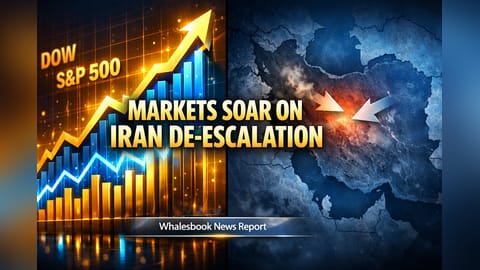
US stock markets opened higher, extending recent gains as investors reacted positively to signs of de-escalation in the Iran conflict and strong US employment figures. The S&P 500 advanced 0.6%, the Nasdaq Composite gained 0.7%, and the Dow Jones Industrial Average climbed 0.8%. These movements were significantly influenced by statements from Iranian President Masoud Pezeshkian expressing a "necessary will to end this war" and US President Donald Trump indicating a possible timeline for ending American involvement.
As equities climbed, oil prices experienced a dip, reflecting expectations of reduced supply disruptions should tensions ease. Brent crude fell over 1.2% to around $103 per barrel, and West Texas Intermediate traded below $100 before recovering some ground. However, the Strait of Hormuz remains a significant strategic risk factor, preventing a complete collapse in energy prices.
Supporting market sentiment were US economic reports. Private sector employment increased by 62,000 in March, exceeding forecasts. Retail sales also saw a 0.6% month-on-month rise. While positive, these figures suggest an economy with distinct sectoral strengths rather than uniform growth.
International markets largely mirrored the upward trend. European equities rose approximately 2%, with major indices like the DAX and FTSE 100 gaining. Markets in Japan and South Korea also reported strong advances. However, this broad optimism is tempered by some conflicting reports, and analysts caution that market gains might be premature given ongoing risks originating from the Middle East.
A deeper analysis of economic data reveals underlying concerns. The ADP National Employment Report showed job growth heavily concentrated in healthcare services, while sectors like trade, transportation, and utilities experienced declines. US retail sales data for January 2026, released in early March, showed a contraction, raising questions about the robustness of consumer spending beyond specific categories.
The market's current upward trajectory relies heavily on fragile diplomatic progress. Statements from US and Iranian leadership outline conditions and timelines that are subject to rapid change and potential misinterpretation, leaving the geopolitical situation inherently unstable. The persistent threat to the Strait of Hormuz is a strategic vulnerability that has demonstrably impacted energy markets, creating an ongoing risk premium that affects global inflation and business costs.
This economic data suggests an economy that is not uniformly healthy and is vulnerable to disruptions. Unlike periods of clear recovery, sectors reliant on stable energy prices or global trade, such as transportation and manufacturing, currently face challenges. The market's swift rally also raises the possibility of a rapid reversal if diplomatic efforts falter or new geopolitical issues emerge, particularly given current high valuations in some sectors, like technology. The idea of a broad economic recovery remains unconvincing against these structural headwinds.
Looking ahead, market sentiment will likely remain sensitive to developments in the Iran conflict and energy price movements. While diplomatic signals offer a temporary reprieve, underlying geopolitical instability and uneven economic recovery suggest volatility could persist. Investors will be closely watching for confirmation of sustained de-escalation, broader economic data trends, and their impact on inflation and corporate earnings before committing to a sustained upward trajectory.