

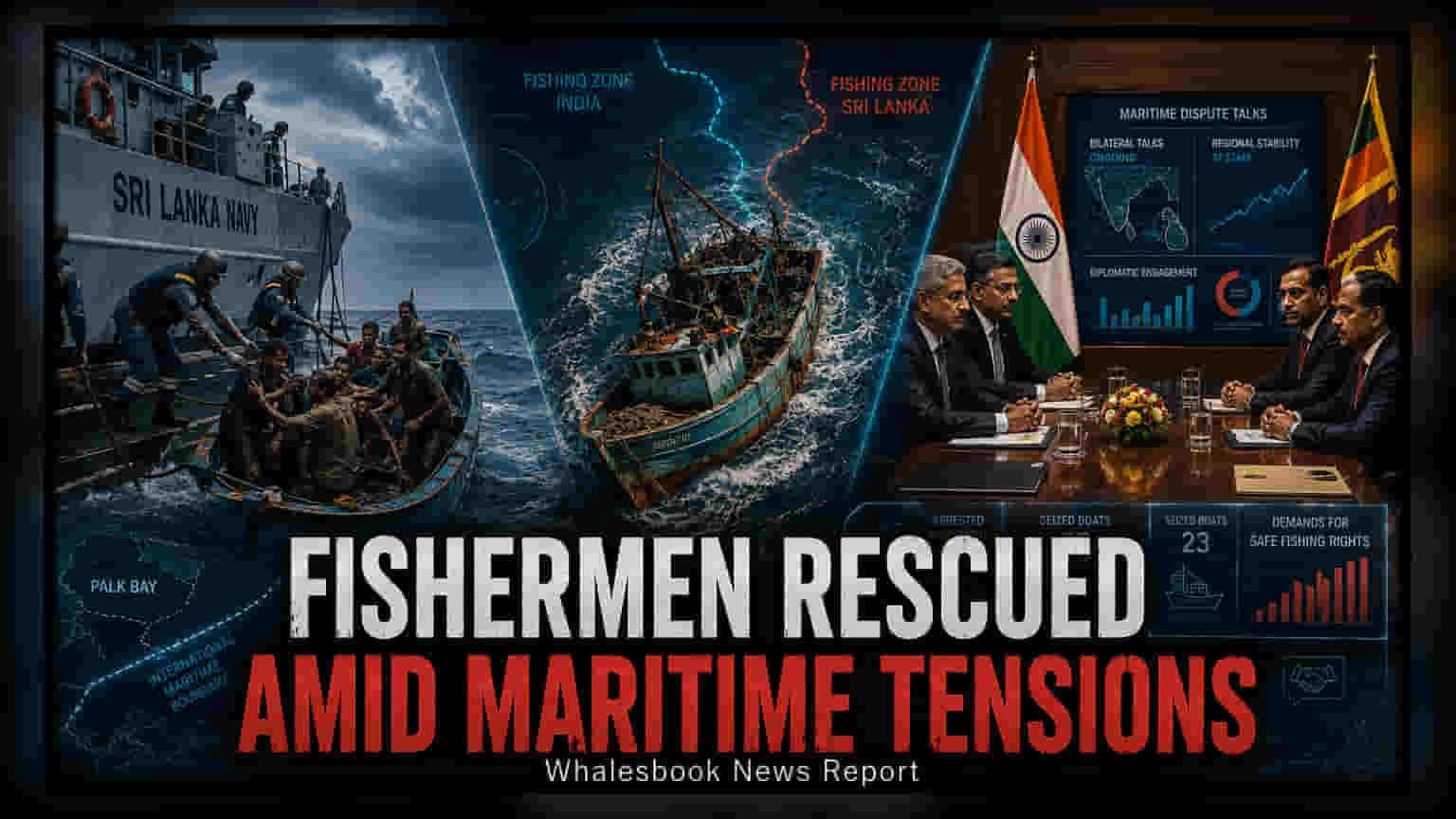
On August 6, 2026, the Sri Lanka Navy rescued 11 Indian fishermen after their trawler ran aground on a coastal reef off Delft Island. The vessel had reportedly entered Sri Lankan waters for bottom trawling before the accident. This event highlights the recurring financial and legal challenges faced by fishing communities operating near maritime boundaries.
The Sri Lanka Navy conducted a rescue operation on August 6, 2026, bringing 11 Indian fishermen to safety after their fishing trawler encountered trouble in the Palk Strait. The vessel reportedly ran aground on a coastal reef near Delft Island, also known as Neduntheevu, during the early hours of the day.
According to official statements from the Sri Lanka Navy, the trawler had crossed the International Maritime Boundary Line and was allegedly engaged in bottom trawling in Sri Lankan waters when the accident occurred. The vessel sustained structural damage, but all crew members on board were reported to be safe and were transferred to the island following the operation. The damaged vessel was later moved to the Myliddy fishing harbor.
While this incident does not involve a publicly listed company, it highlights the broader financial and operational risks faced by coastal fishing communities in India. Fishermen often face significant economic uncertainty due to the high cost of maintaining trawlers and the risk of losing equipment or facing legal action during border disputes. Incidents of this nature can lead to the seizure of vessels and loss of expensive fishing gear, which directly impacts the livelihoods of local families and the regional fishing economy.
This rescue follows high-level diplomatic discussions held in Colombo just a day earlier. Indian Foreign Secretary Vikram Misri had engaged in talks with Sri Lankan leadership, where the resolution of fishermen-related issues was a key topic of discussion. The bilateral talks aimed to address the long-standing challenges regarding the detention of fishermen and their vessels, which remains a sensitive point in the relationship between the two nations.
The situation is now being coordinated between the Sri Lanka Navy and the Department of Fisheries and Aquatic Resources. Investors and observers of the coastal economy often monitor these developments, as they reflect the ongoing complexities in maritime navigation and the enforcement of fishing regulations in the region. The next update will depend on any potential legal proceedings or repatriation processes involving the crew and their vessel.