

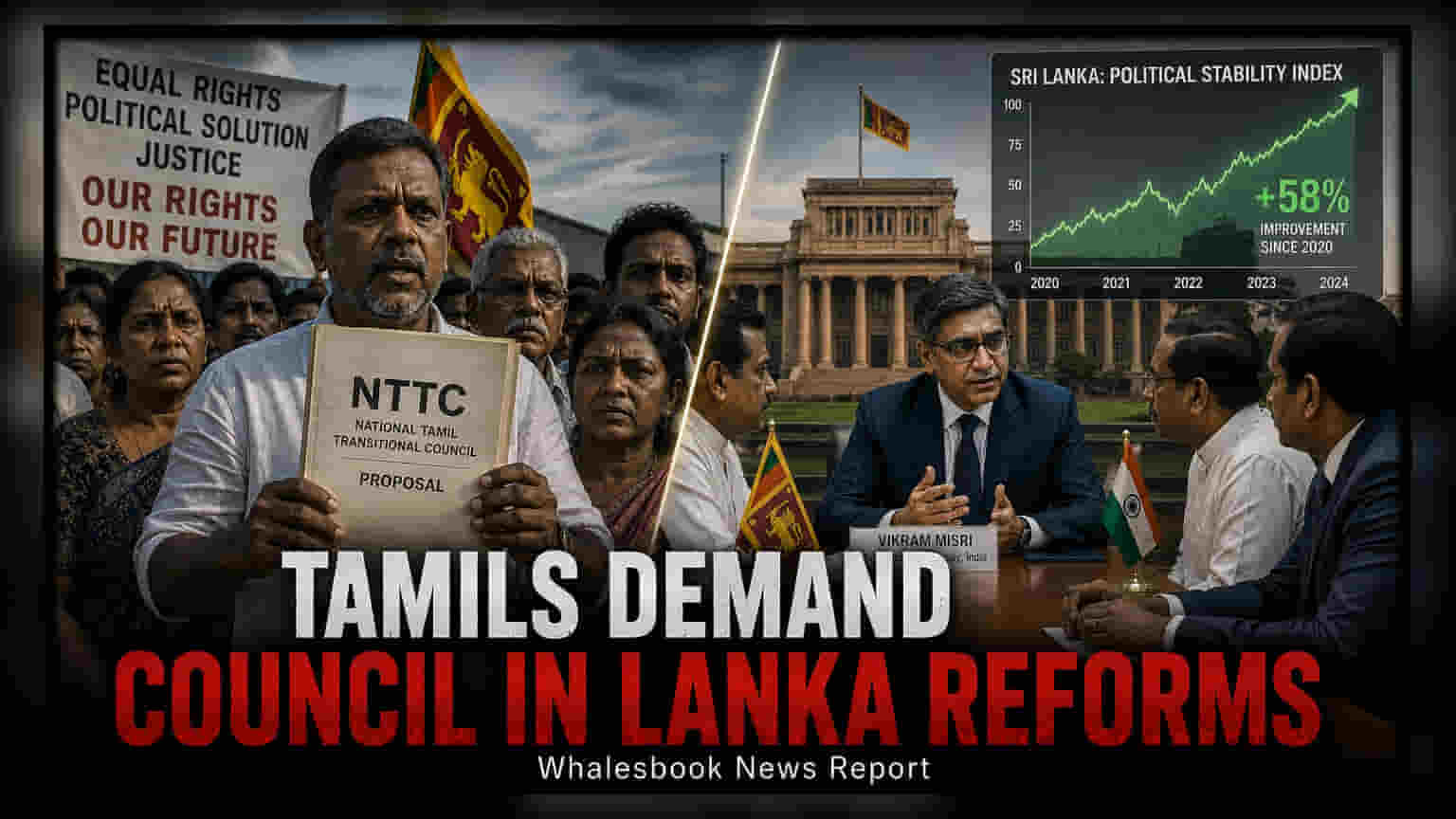
Indian-origin Tamils in Sri Lanka are pushing for a Non-Territorial Tamil Community Council (NTTC) as part of the nation's ongoing constitutional reforms. This advocacy coincides with India’s renewed diplomatic pressure to implement the 13th Amendment and hold long-delayed provincial elections, which are essential for regional political and economic stability.
Indian-origin Tamils in Sri Lanka, represented by the Tamil Progressives Alliance (TPA), have formally sought the creation of a Non-Territorial Tamil Community Council (NTTC) amid the island nation’s constitutional reform process. TPA leader Mano Ganesan emphasized that this council would provide constitutional recognition and democratic representation for the community, which has historically faced unique socio-economic challenges. The proposal was presented during high-level diplomatic discussions involving TPA leadership and India's Foreign Secretary Vikram Misri, highlighting the importance of the issue in bilateral relations.
The demand for the NTTC is tied to the broader debate over the 13th Amendment to the Sri Lankan Constitution. This amendment, which emerged from the 1987 Indo-Sri Lanka Accord, is designed to devolve power to provincial councils. For Indian investors and policymakers, this issue is a key monitorable because the successful implementation of these constitutional provisions is directly linked to internal stability and reconciliation in Sri Lanka. Regional stability in the island nation is a prerequisite for a predictable business environment, which impacts bilateral trade, logistics, and long-term economic cooperation between India and Sri Lanka.
India has consistently urged the Sri Lankan government to expedite the long-delayed provincial council elections. These elections have been postponed for years, with the current administration citing the need for electoral reforms before polls can be conducted. The ongoing deliberations in the parliamentary Select Committee regarding whether to retain the old proportional representation system or move to a hybrid model continue to cause uncertainty. This legislative impasse creates a challenging environment for local governance, which is a key factor that investors often track when assessing the country's political risk.
The push for the NTTC and the focus on the 13th Amendment underscore the delicate balance Sri Lanka must maintain between its domestic political agenda and its commitments under the 1987 agreement. President Anura Kumara Dissanayake has previously signaled an intent to resume the constitutional process, which keeps the door open for these demands to be addressed. As the constitutional reform process moves forward, the primary focus for observers will be whether the government can effectively navigate these legislative complexities while meeting the aspirations of minority communities, thereby fostering a more stable environment for both local and regional development.