

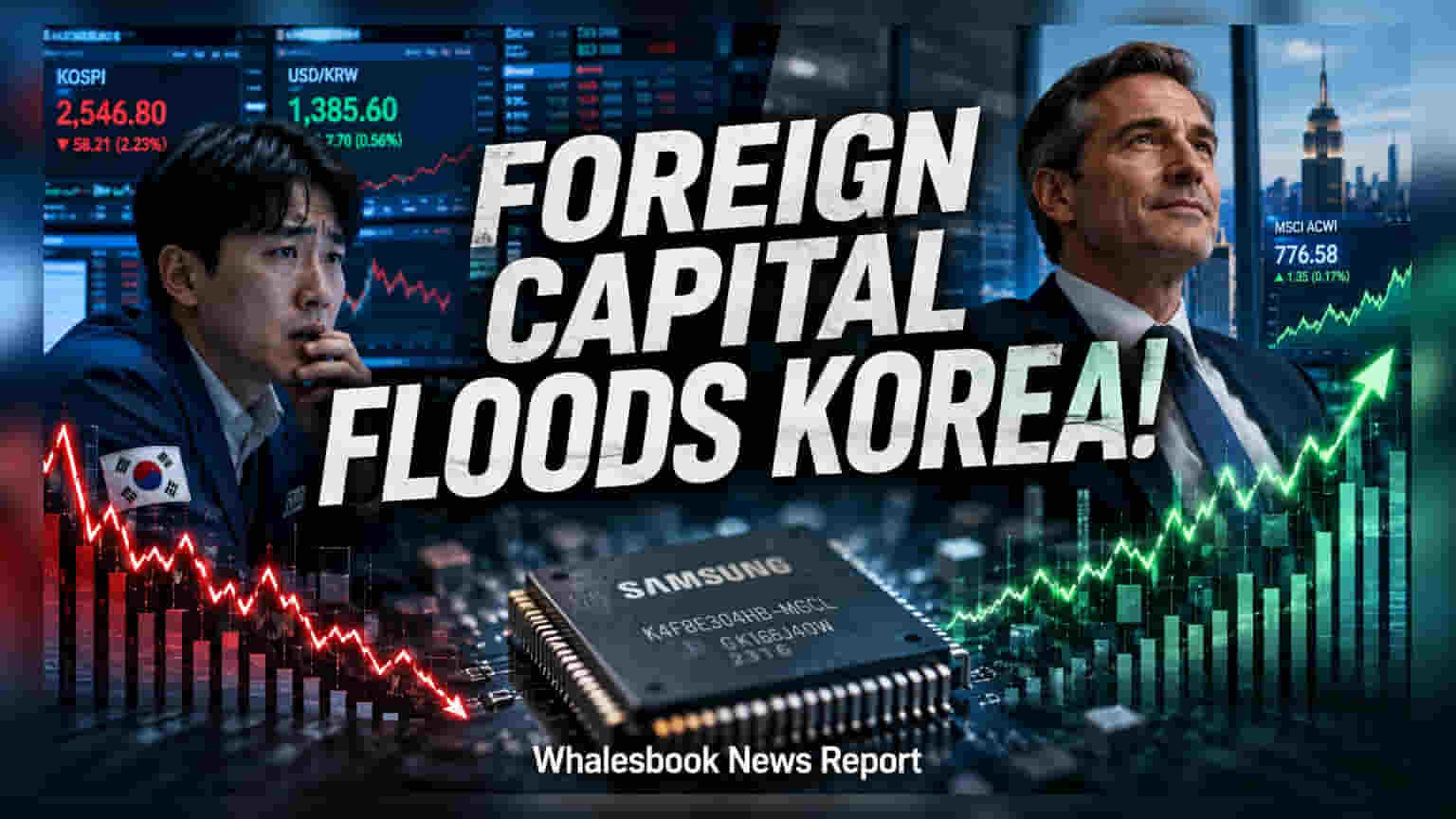
Foreign investors purchased 7.2 trillion won worth of South Korean shares on Friday, reversing a net-selling trend. The buying spree follows a volatile July period caused by a rapid unwinding of leveraged ETFs, which had dragged down major chipmakers. Investors now see value in companies like Samsung Electronics and SK Hynix, as the market shows signs of stabilizing after excessive forced selling.
South Korean equity markets saw a dramatic turnaround on Friday, driven by a record 7.2 trillion won (approximately $5 billion) inflow from foreign institutional investors. This massive buying activity marks a significant shift in sentiment following a turbulent July, where local retail investors faced substantial losses due to volatility in leveraged exchange-traded funds (ETFs). While the sudden 17.9% move in the KOSPI index has drawn attention, analysts suggest this rebound is primarily a correction of previous forced selling rather than a sudden shift in macroeconomic fundamentals.
The Impact of Leveraged ETF Unwinding
The market decline in July was largely fueled by a rapid 'deleveraging' event. Financial data indicates that the assets held in ETFs specifically tied to major chip manufacturers plummeted from $50 billion to $17 billion over recent weeks. This contraction forced the liquidation of large positions, which disproportionately impacted heavyweights like Samsung Electronics and SK Hynix. Financial commentators have noted that this downturn was driven by technical factors related to market structure and borrowed positions, rather than a decline in the actual business performance or earnings capacity of these technology firms.
Regulatory Response and Market Stability
The volatility prompted immediate concern from South Korean authorities. Finance Minister Koo Yun-cheol publicly addressed the situation, acknowledging the issues caused by the rapid introduction of complex leveraged products and announcing new measures aimed at tighter oversight. The market's instability was further highlighted by the collapse of the hedge fund Situational Awareness, whose equity positions were subsequently acquired by Citadel. These events have contributed to significant pressure on retail portfolios, with estimates suggesting losses in the leveraged sector reached approximately $38.7 billion. Despite these challenges, the reduction in average short interest suggests that the most intense phase of bearish sentiment may be behind the market.
Investor Context for Chip Giants
For investors, the recovery of companies like Samsung Electronics and SK Hynix is a critical development. Both companies have continued to report strong demand for high-end memory chips, particularly from data center operators, even while their stock prices underwent deep corrections. The current interest from global investors suggests a move to accumulate these stocks at valuations that many now consider discounted relative to their long-term growth prospects in the artificial intelligence and data infrastructure sectors. As the market stabilizes, the key monitorable for investors will be the sustainability of this foreign inflow and whether the implementation of new regulatory measures successfully prevents similar technical liquidity shocks in the future. The transition from forced liquidation to institutional accumulation remains the primary factor currently shaping the KOSPI's trajectory.