

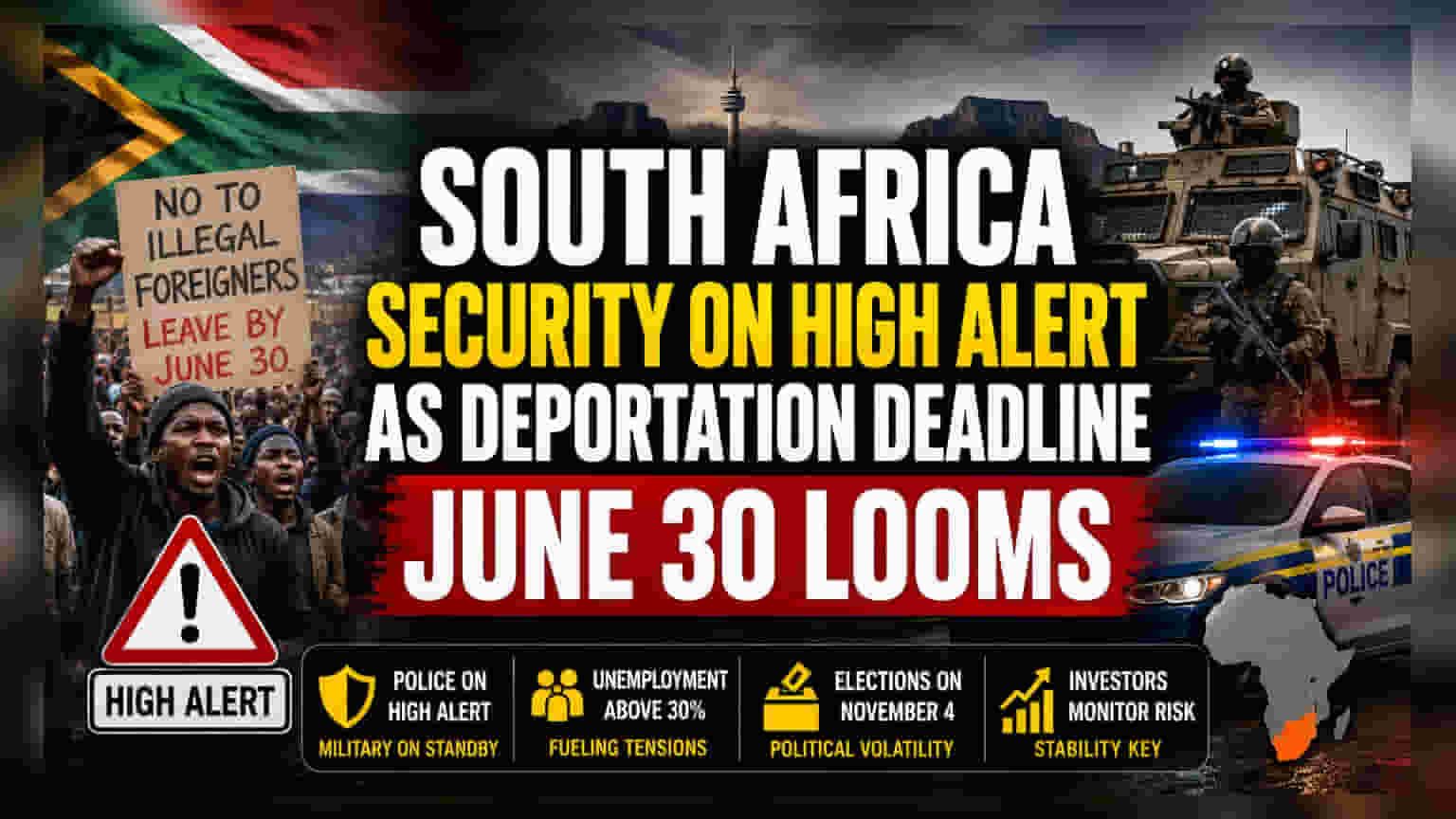
South African authorities have increased nationwide security ahead of an ultimatum for migrants to leave by June 30. Businesses and investors are monitoring the situation as rising xenophobic tensions, high unemployment, and upcoming November elections create a volatile environment.
What Happened
South African authorities have elevated security operations across the country in response to an ultimatum issued by protest groups demanding that undocumented foreigners leave by June 30. Acting Police Minister Firoz Cachalia announced that police operational readiness has been increased in all provinces. The government has confirmed that the military will be on standby to support law enforcement and protect key infrastructure, including airports, if the situation escalates. This move comes after several weeks of increased reports of xenophobic violence, which have already caused fatalities and led to the repatriation of citizens by other African nations.
Impact on Business and Operations
For companies with operations in South Africa, this situation creates significant operational risks. Historically, periods of unrest in the country have seen attacks on businesses, particularly those perceived as foreign-owned. The current tension creates a high-risk environment for staff safety, supply chain continuity, and physical assets. Security measures are currently focused on public spaces and critical sites, but firms operating in the country are typically monitoring the situation for potential disruptions to logistics and daily business activities.
The Socio-Economic Context
The root of these tensions is tied to South Africa's persistent economic challenges, primarily an unemployment rate that exceeds 30 percent. This high level of joblessness has fueled anti-migrant rhetoric, with various political parties—such as the Patriotic Alliance, ActionSA, and uMkhonto we Sizwe—increasingly framing migrants as direct competitors for limited jobs and public services. The Consortium for Refugees and Migrants in South Africa (CoRMSA) has noted that vigilante groups are exploiting this frustration, contributing to a cycle of instability that has been seen periodically in incidents dating back to 2008.
The Political Climate
The security situation is further complicated by the upcoming local government elections scheduled for November 4. The lead-up to these elections has already been volatile, with reports of violence during recent voter registration weekends, including fatal shootings of political party associates. The intersection of economic hardship, political campaigning, and social unrest makes the short-term outlook for stability challenging. For those observing the region, the combination of political rhetoric and social tension often increases the difficulty of predicting near-term stability.
What Investors Should Track
Investors and businesses with exposure to the region are generally watching for signs of stability or escalation following the June 30 deadline. Key monitorables include the government’s ability to maintain public order without further incidents, the tone of political rhetoric leading up to the November 4 elections, and any updates on economic policies aimed at addressing the 30 percent unemployment rate. These factors remain essential for understanding the long-term operational climate in South Africa.