

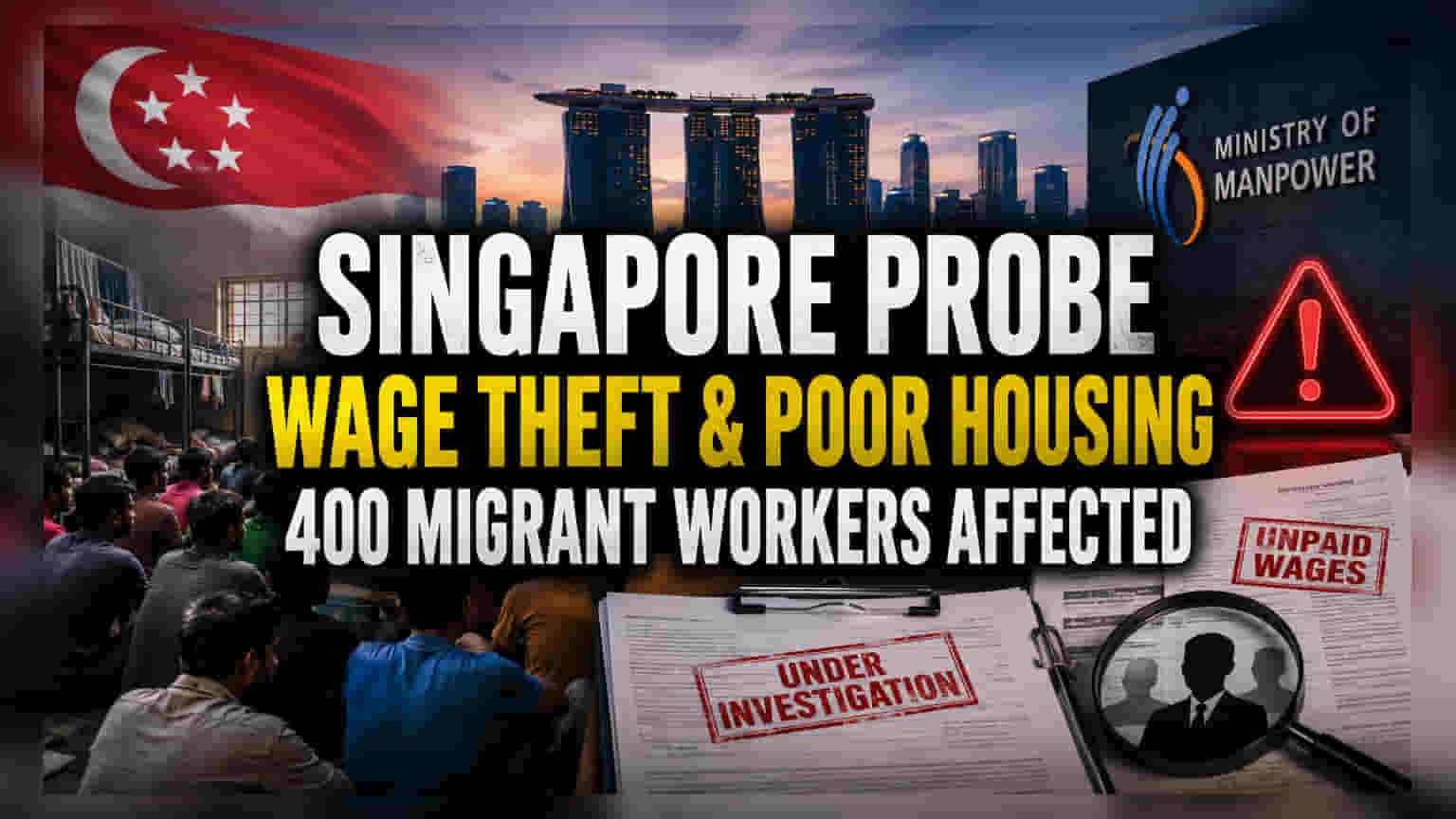
Approximately 400 migrant workers, mainly from India and Bangladesh, have alleged wage theft and poor housing against Singapore-registered KPA Engineering and SK Industries. The Ministry of Manpower is investigating the claims. This situation serves as a reminder for investors to monitor corporate governance and management accessibility in business entities.
What Happened
Singapore’s Ministry of Manpower (MOM) has launched an investigation into two Singapore-registered companies, KPA Engineering and SK Industries, following allegations of unpaid wages and poor housing conditions. Approximately 400 migrant workers, primarily from India and Bangladesh, have come forward with complaints. The companies are accused of withholding salaries, leaving many workers in financial distress. The situation escalated after initial reports from 100 workers grew as more individuals stepped forward to seek support from the Migrant Workers' Centre (MWC).
The Governance and Operational Red Flags
While KPA Engineering and SK Industries are private entities, the circumstances surrounding their operations highlight common governance risks that investors often encounter. Reports indicate that these companies share a common director, who is also linked to several other businesses in sectors like air conditioning, plumbing, and building services.
What stands out is the rapid pace of entity formation, with the common director reportedly registering three companies on a single day in 2025. When financial obligations—such as wages and creditor payments—went unmet, the directors became unreachable. For any business entity, such patterns of rapid expansion, coupled with a lack of management transparency when financial pressure rises, are significant warning signs regarding operational stability.
Why This Matters for Financial Oversight
For investors and market participants, this case underscores the importance of verifying management track records and business transparency. In both private and public markets, a business model that relies on multiple, thinly capitalized entities with common management can pose a high risk. When a company faces financial strain, the ability to trace accountability is crucial. In this instance, creditors—including food suppliers—have also faced difficulties in reaching management, further complicating the resolution process.
Regulatory and Legal Status
The Tripartite Alliance for Dispute Management (TADM) is currently managing the workers' complaints. To support the affected individuals, the alliance has confirmed that these workers are permitted to seek new employment in Singapore while their salary claims are being processed. They are typically issued a Special Pass, which grants them the necessary legal status to stay in the country to resolve these disputes.
What Investors Should Track
Investors looking at smaller, private, or emerging companies can learn from these events by tracking how companies handle their obligations. The key indicators of stable management include consistent financial reporting, accessible leadership, and a proven history of meeting commitments to employees and creditors. Future updates on this matter will likely come from the Ministry of Manpower regarding the outcome of the wage recovery process and whether any regulatory action is taken against the companies' directors.