 Whalesbook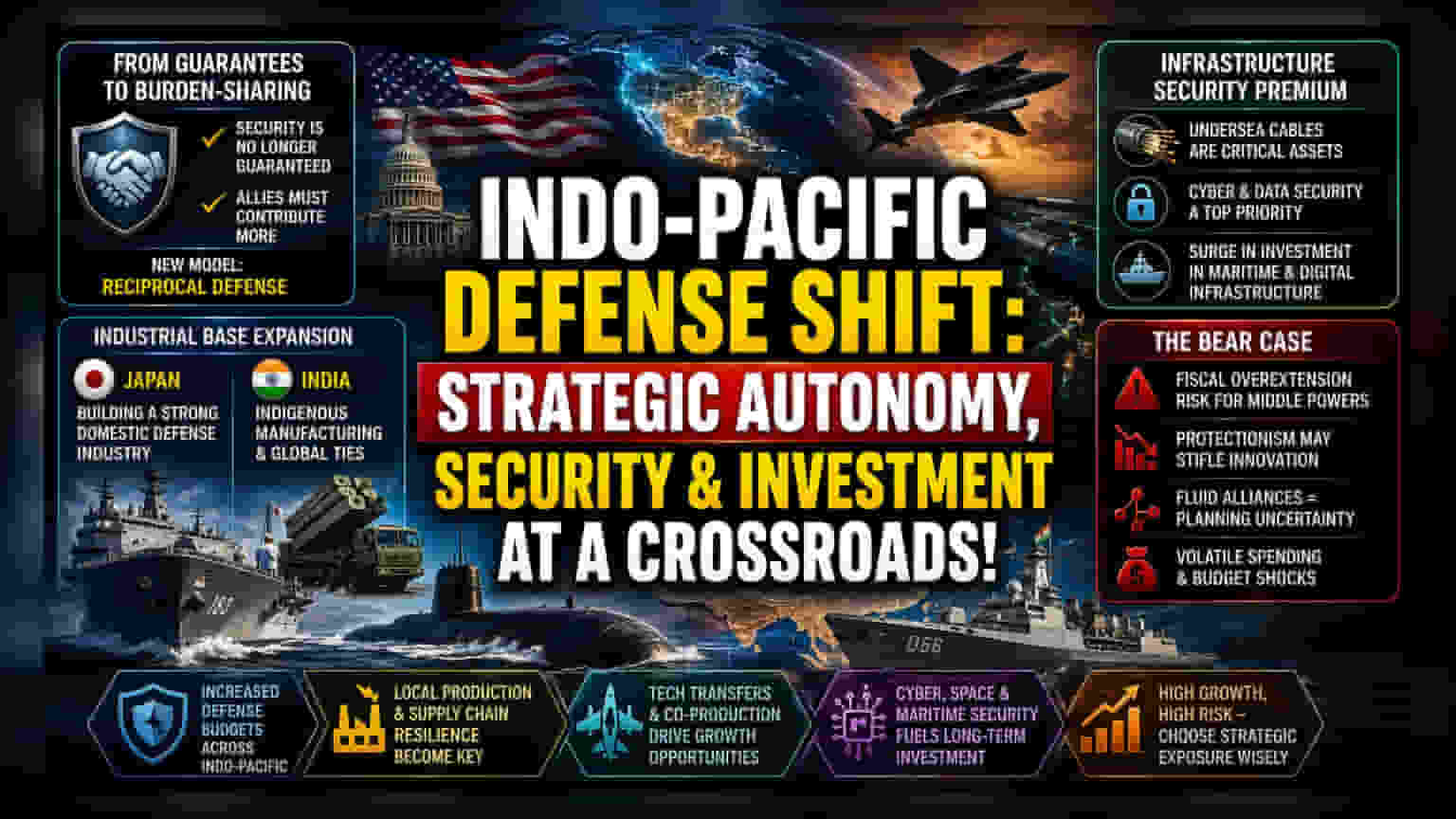


The Valuation of Strategic Self-Reliance
The pivot away from guaranteed US security toward a model of reciprocal burden-sharing represents more than a rhetorical shift; it is a fundamental transformation of defense economics. Washington’s insistence that allies move beyond reliance necessitates significant capital expenditure within the Indo-Pacific. For investors, this implies a long-term uptick in defense budgets across key regional players, as nations move from being passive consumers of security to active providers of localized deterrence.
Industrial Base Expansion and Localized Procurement
Recent shifts in regional defense strategy highlight a move toward domestic capability, particularly in Japan and India. Japan’s transition from a security consumer to an active regional provider necessitates a massive expansion in its homegrown military-industrial complex. This strategy aims to reduce reliance on fragile global supply chains by deepening domestic production of advanced naval and aerospace systems. Simultaneously, India continues to utilize its strategic autonomy to leverage technology transfers from Western partners while expanding its own defense manufacturing corridor. This multi-polar approach creates a fragmented yet high-growth market for defense contractors capable of navigating complex regulatory and indigenous procurement requirements.
The Infrastructure Security Premium
Beyond traditional weapon systems, the 2026 summit identified undersea infrastructure and cyberspace as the primary theaters for sub-threshold conflict. The vulnerability of global data conduits, specifically fiber-optic cabling, has transitioned from a technical nuisance to a top-tier security risk. This realization is triggering a surge in private-public investment toward hardened communication infrastructure and defensive cyber-security capabilities. Capital is increasingly flowing toward firms that provide monitoring, repair, and security for maritime and digital conduits, as nations prioritize the integrity of their data flow over mere physical presence.
The Bear Case: Structural Overextension
The push for increased strategic autonomy carries substantial fiscal risk for middle powers. Many nations in the region are currently balancing domestic social spending with the mounting costs of rapid military modernization. There is a tangible danger of fiscal overextension, particularly if the drive for regional security leads to protectionist defense policies that stifle technological innovation. Furthermore, the reliance on issue-based, non-formal alliances—as favored by New Delhi—creates a fluid security environment that complicates long-term defense planning. Without the rigid certainty of traditional security guarantees, the volatility of regional defense spending is likely to increase, potentially leading to budgetary shocks if regional tensions accelerate faster than economic growth can support.