

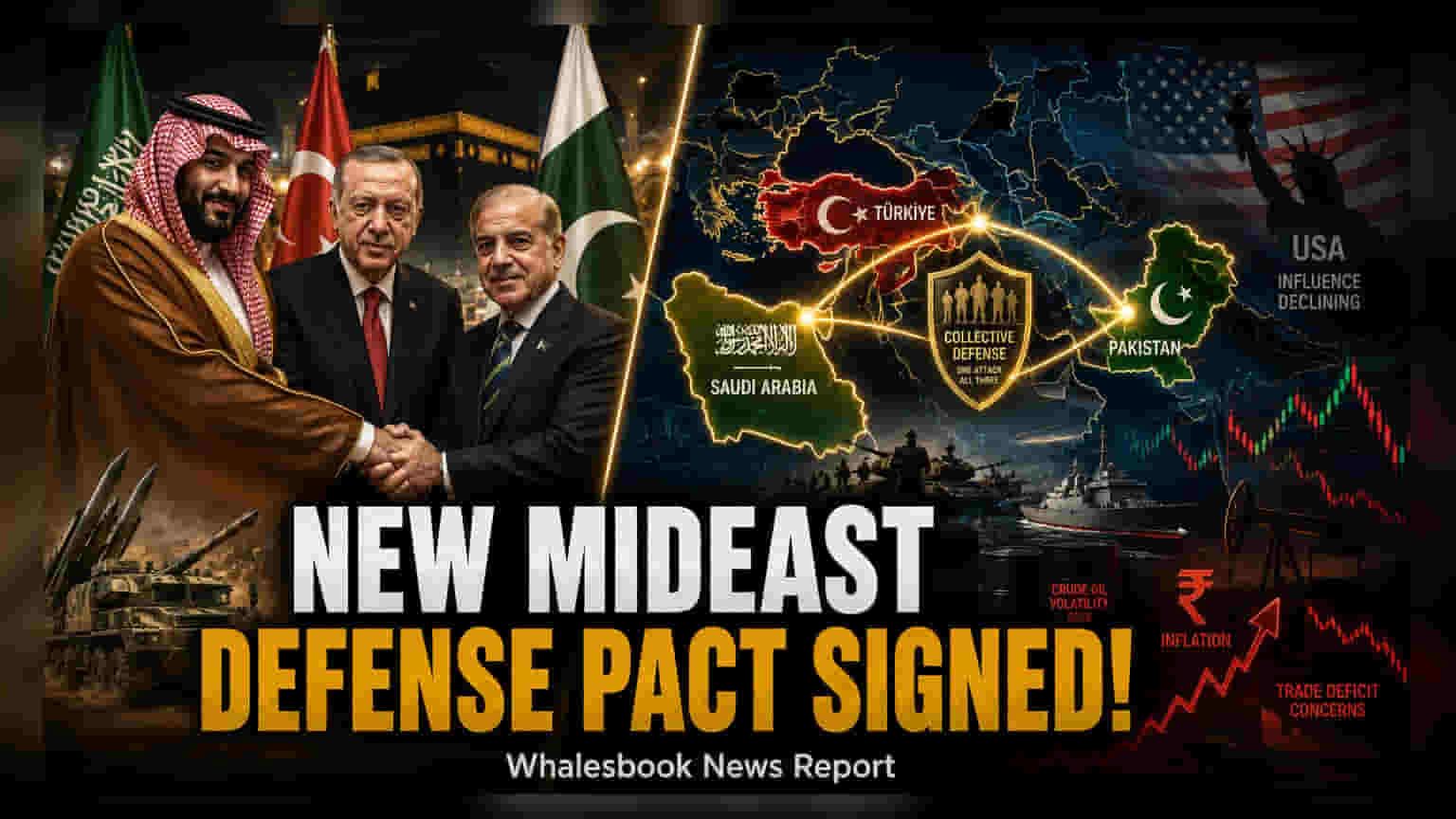
Saudi Arabia, Türkiye, and Pakistan formalized the Mecca Joint Defence Agreement on August 7, 2026. The pact features a mutual defense clause similar to NATO’s Article 5. For investors, this creates new geopolitical dynamics in West Asia that may influence regional stability and future crude oil price volatility.
Saudi Arabia, Türkiye, and Pakistan have formalized the Mecca Joint Defence Agreement, signed on August 7, 2026. This trilateral pact marks a notable shift in the regional security framework of West Asia. At its core, the agreement includes a collective defense clause, stipulating that an armed attack on one member country will be treated as an attack on all three. This language mirrors the structure of NATO's Article 5, intended to create a unified security front.
The agreement is designed to combine the specific strategic strengths of each nation. Saudi Arabia contributes its substantial financial capacity, Türkiye provides its advanced defense technology, and Pakistan brings significant military manpower and nuclear capabilities to the table. This consolidation of assets is viewed by analysts as a response to the shifting role of the United States in the region, as these nations look to create a security arrangement that functions independently of traditional western guarantees.
However, the practical application of this agreement remains a point of debate among experts. Unlike formal alliances such as NATO, this pact currently lacks a unified joint command, standing forces, or explicit trigger mechanisms that define how or when military action would be taken. These structural gaps have led to skepticism about the pact's ability to act as an immediate deterrent in a crisis. Furthermore, the history of the region is marked by complex, competing national interests and trust issues between signatories, which may challenge the long-term sustainability of the coalition.
For investors, the primary concern lies in the geopolitical implications rather than direct corporate impact. West Asia is a critical region for global energy markets. Any new security bloc that changes the balance of power, or potentially draws participating nations into localized conflicts, can introduce volatility into global crude oil prices. Since India is a significant importer of crude oil, fluctuations in global energy prices directly influence domestic inflation, the trade deficit, and currency stability.
Additionally, investors should note that this agreement does not entirely replace the existing U.S. security umbrella, which remains the dominant force in the region. The effectiveness of the Mecca Agreement as a stabilizer or a disruptive factor will depend heavily on its future implementation.
Looking ahead, market watchers will monitor for any official mechanisms established to operationalize the pact, such as a secretariat or joint military exercises. Any formal response from other regional powers or global stakeholders, including the U.S. and Iran, will also serve as a key indicator of how this new security arrangement affects the regional status quo.