

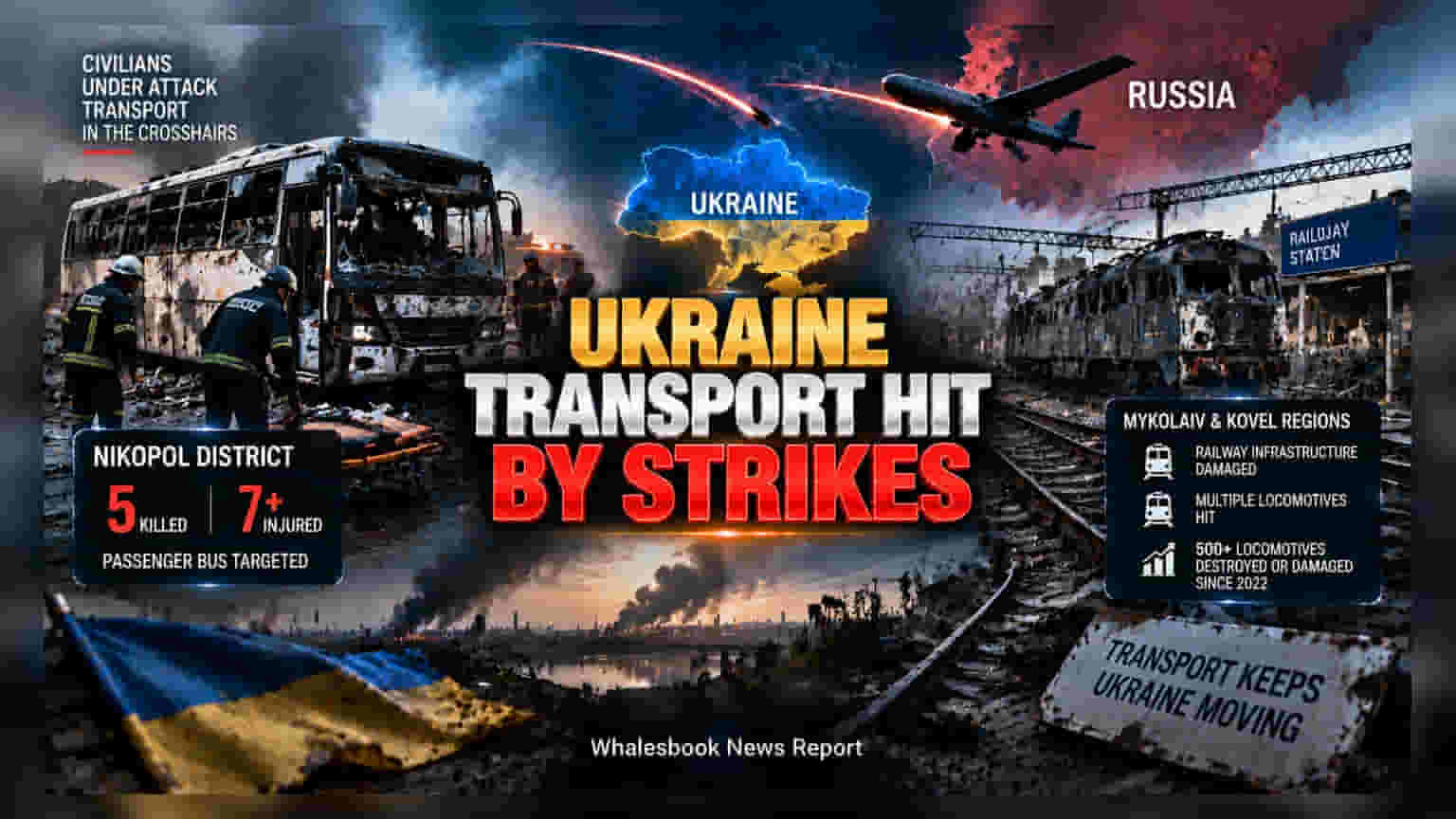
A Russian drone attack on a passenger bus in Ukraine’s Dnipropetrovsk region killed five civilians, while strikes also hit railway infrastructure in Mykolaiv and Kovel. The incident highlights the mounting risks to essential transit networks, with ongoing war-related infrastructure damage estimated at $10 billion for 2026.
A Russian drone strike in the Nikopol district of Ukraine’s Dnipropetrovsk region claimed the lives of five civilians and left at least seven others injured on September 16, 2026. The attack targeted a passenger bus, an incident Ukrainian officials have condemned as a deliberate strike on non-military logistics. In the same wave of hostilities, critical railway infrastructure in the Mykolaiv and Kovel regions also sustained damage, including hits to a railway station and multiple locomotives.
For the Ukrainian economy, the degradation of transport networks has become a significant source of systemic risk. Government data suggests that more than 500 locomotives have been destroyed or damaged since the conflict escalated in 2022. As the railway system serves as a primary artery for both civilian movement and commercial logistics, the frequency of these attacks forces the state to divert resources toward repairs and asset replacement rather than economic expansion.
Analysts have noted that the cumulative impact of such strikes on infrastructure, port blockades, and industrial facilities could lead to a GDP contraction of approximately 1.5% for 2026. Official estimates place the total damage to infrastructure and state assets at roughly $10 billion for the year. This fiscal burden is compounded by the loss of tax revenue from disrupted businesses and the high cost of maintaining operations under constant threat.
To mitigate these challenges, the Ukrainian government is seeking international cooperation to source replacement equipment and expand financial safeguards. A key focus is the implementation of a $1 billion war-risk insurance program designed to support businesses and keep supply chains operational. However, the success of such initiatives remains tied to the security of transport corridors.
The diplomatic and security environment remains volatile, with no confirmed agreements in place to pause strikes on energy or transport facilities. International observers and investors with exposure to the region continue to monitor the situation for potential escalations that could further disrupt logistics and agricultural export routes. The primary monitorable for the coming months will be the government's ability to maintain functional transit corridors and the effectiveness of international aid in replacing damaged logistics assets.