

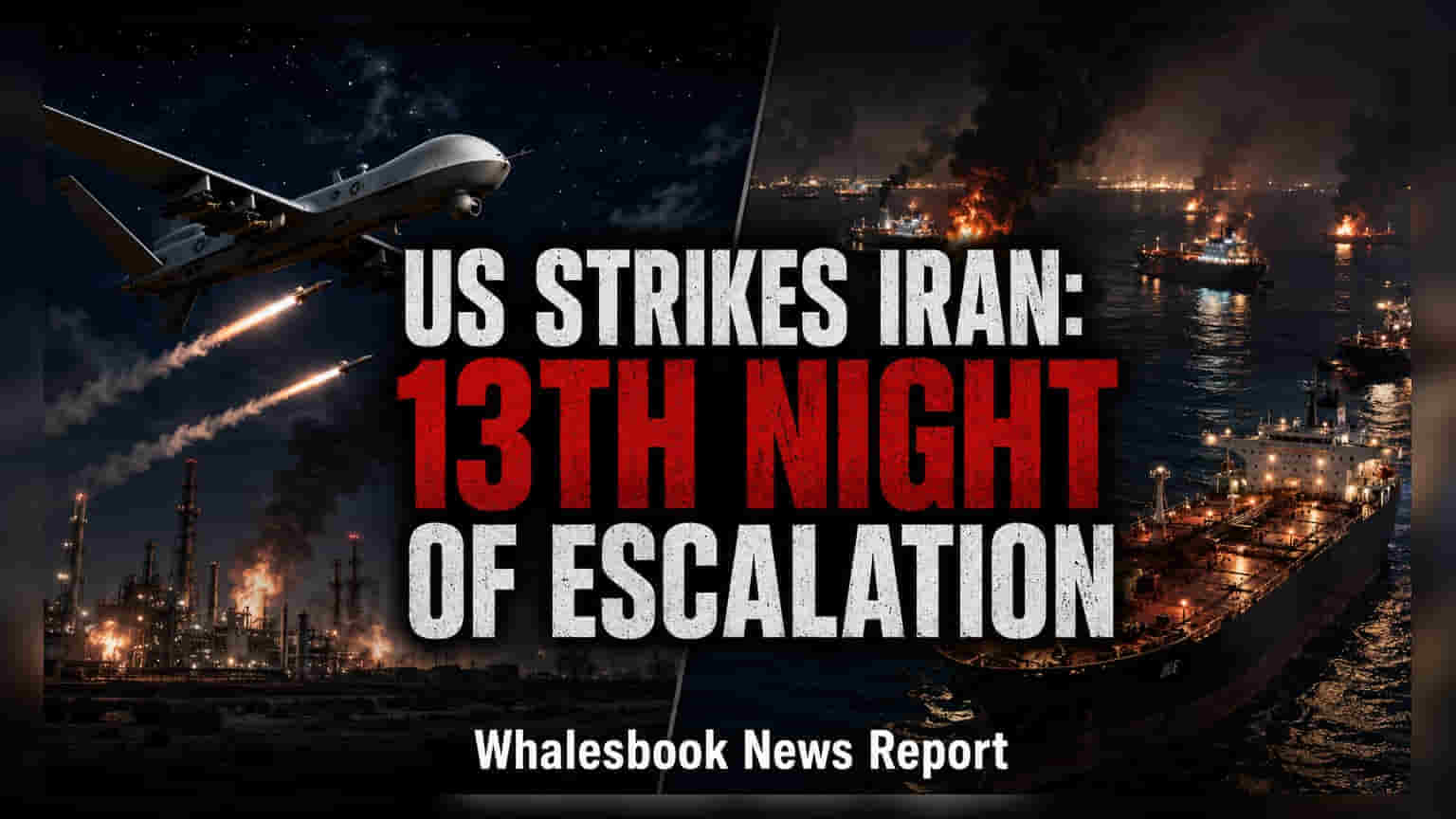
US military strikes against Iranian assets have continued for 13 consecutive nights, intensifying regional instability. The conflict now threatens critical energy infrastructure and commercial shipping lanes in the Strait of Hormuz, raising global concerns over potential supply disruptions for oil and gas.
Detailed Coverage
The ongoing regional confrontation between the United States and Iran has entered a high-stakes phase, with US Central Command (CENTCOM) confirming a 13th consecutive night of military operations. These strikes are targeted at weakening the Islamic Revolutionary Guard Corps' (IRGC) ability to interfere with commercial shipping, a vital artery for global energy trade. The escalation represents a sharp shift in the regional security situation, moving beyond previous localized tensions into a wider confrontation.
Impact on Energy Infrastructure and Shipping
The conflict has significantly heightened fears regarding the stability of energy supplies, particularly around the Strait of Hormuz. This narrow waterway is one of the world's most important transit points for global oil and liquefied natural gas (LNG) shipments. With both sides now targeting infrastructure, including reports of assaults on energy and desalination facilities in Kuwait, the risk of a sustained disruption to energy exports from the region has increased.
Iranian officials have explicitly warned that any further attacks on their civilian or energy facilities would trigger retaliation against regional oil and gas assets. This threat is particularly concerning for investors monitoring commodity prices, as any actual or perceived blockage of the Strait of Hormuz can lead to immediate volatility in global crude oil markets. Furthermore, Houthi forces have claimed attacks on Saudi oil tankers in the Red Sea, adding another layer of complexity to regional maritime safety.
Expanding Scope of Hostilities
The conflict has expanded geographically, with missile and drone attacks reported against US-linked assets in countries including Jordan, Bahrain, and Kuwait. Reports from Iranian media also indicate that strikes have occurred near Bushehr, the site of Iran's only commercial nuclear power reactor. The involvement of multiple regional nations suggests that the situation is no longer a isolated confrontation, which increases the difficulty of predicting the duration or intensity of the military campaign.
What Investors Should Monitor
For those tracking the impact on Indian financial markets, the primary concern remains energy import costs. India imports a significant portion of its crude oil requirements, and sustained regional conflict often leads to a rise in global oil prices. A prolonged spike in energy costs can pressure the trade deficit, increase inflation, and potentially impact the profit margins of sectors heavily reliant on fuel, such as aviation, logistics, and manufacturing. Investors may watch for official updates from energy authorities regarding tanker traffic and any fluctuations in global benchmark crude oil prices, as these will serve as the most immediate indicators of the potential economic impact.