

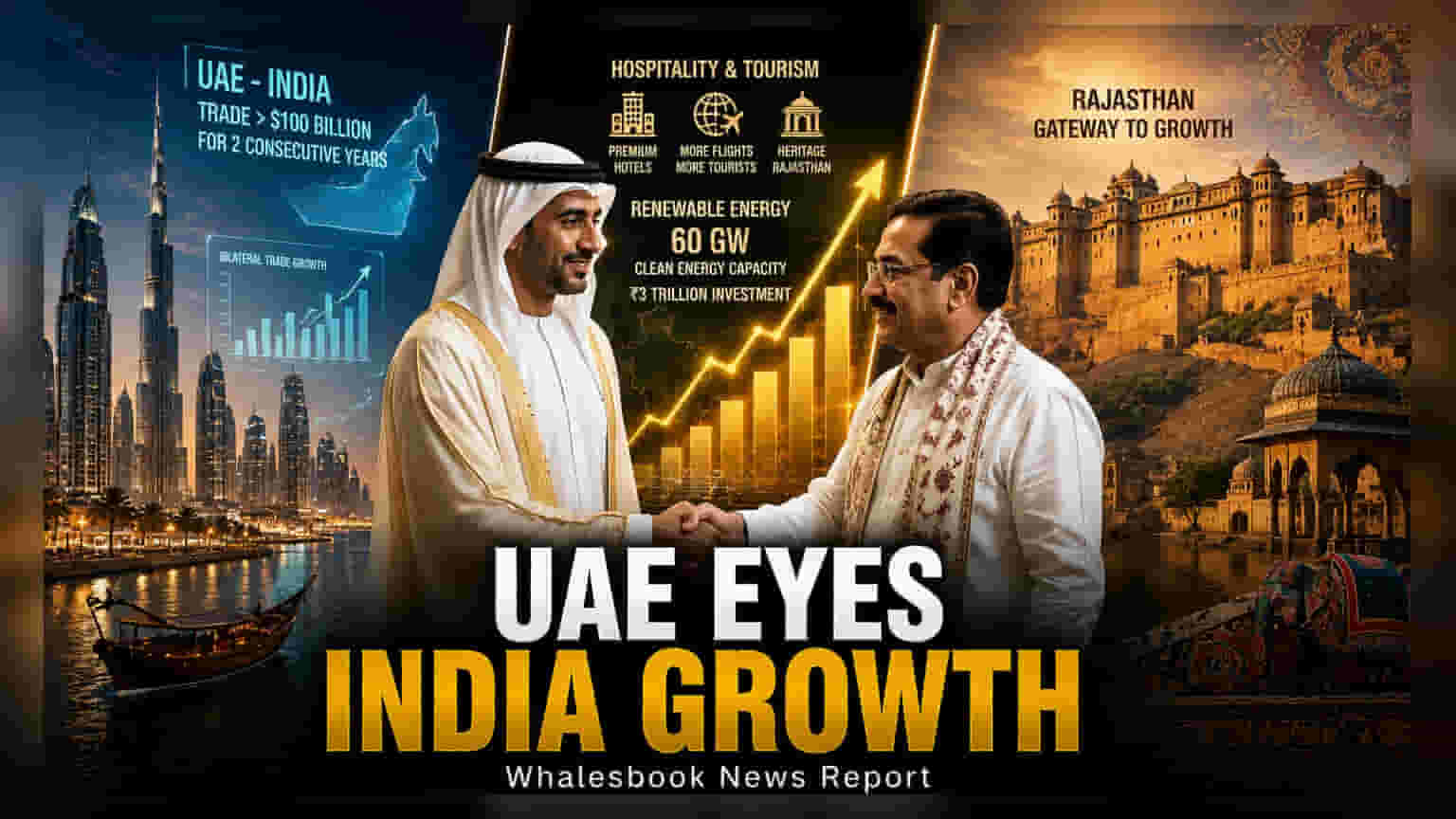
Rajasthan has invited UAE companies to explore investments in its hospitality and renewable energy sectors. This follows a previous ₹3 trillion renewable energy memorandum of understanding. Investors should note that while these meetings signal intent, the actual impact depends on policy execution and the conversion of these agreements into active projects.
Rajasthan’s Chief Minister recently hosted a delegation from the United Arab Emirates (UAE) in Jaipur to discuss potential investment opportunities within the state's hospitality and energy sectors. This meeting builds upon the strong bilateral trade relationship between India and the UAE, which has consistently exceeded $100 billion annually over the past two years.
Hospitality and Tourism Focus
The state government is actively showcasing its tourism potential, highlighting its heritage properties, wildlife sanctuaries, and cultural infrastructure. For the hospitality sector, this potential interest from UAE firms could lead to new projects, such as premium hotel developments or resort chains in high-traffic tourism zones. The discussion also touched upon plans to improve air connectivity between Jaipur and Dubai. Enhanced flight links generally support higher tourist footfall, which would be a positive signal for hotel companies and tourism-linked service providers operating in the region.
Energy Sector Opportunities
Energy remains a primary area of interest, supported by an existing memorandum of understanding (MoU) for a potential ₹3 trillion investment aimed at developing 60 gigawatts (GW) of renewable energy capacity. Rajasthan is positioning itself as a major hub for green energy in India, and large-scale UAE investment could help accelerate this transition. If these plans advance, they are likely to generate significant demand for infrastructure, benefiting companies involved in solar and wind power generation, equipment manufacturing, and engineering services.
What Investors Should Monitor
While these government-level meetings and MoUs reflect a shared goal of economic cooperation, investors should differentiate between statements of intent and actual capital expenditure. An MoU is a framework for future discussion and does not always guarantee immediate financial inflow. The real value for shareholders of companies in the energy or hospitality space will depend on how quickly these plans translate into binding contracts and ground-level project execution.
Key factors to watch include policy stability, the speed of land acquisition for energy projects, and the formal announcement of specific company-level partnerships. Investors may also track whether these large-scale renewable projects face any execution risks, such as delays in permitting or grid connectivity, which are common in the energy sector. Until specific project timelines and developer names are confirmed, the market will likely view these developments as a long-term potential rather than an immediate driver of revenue.