 Whalesbook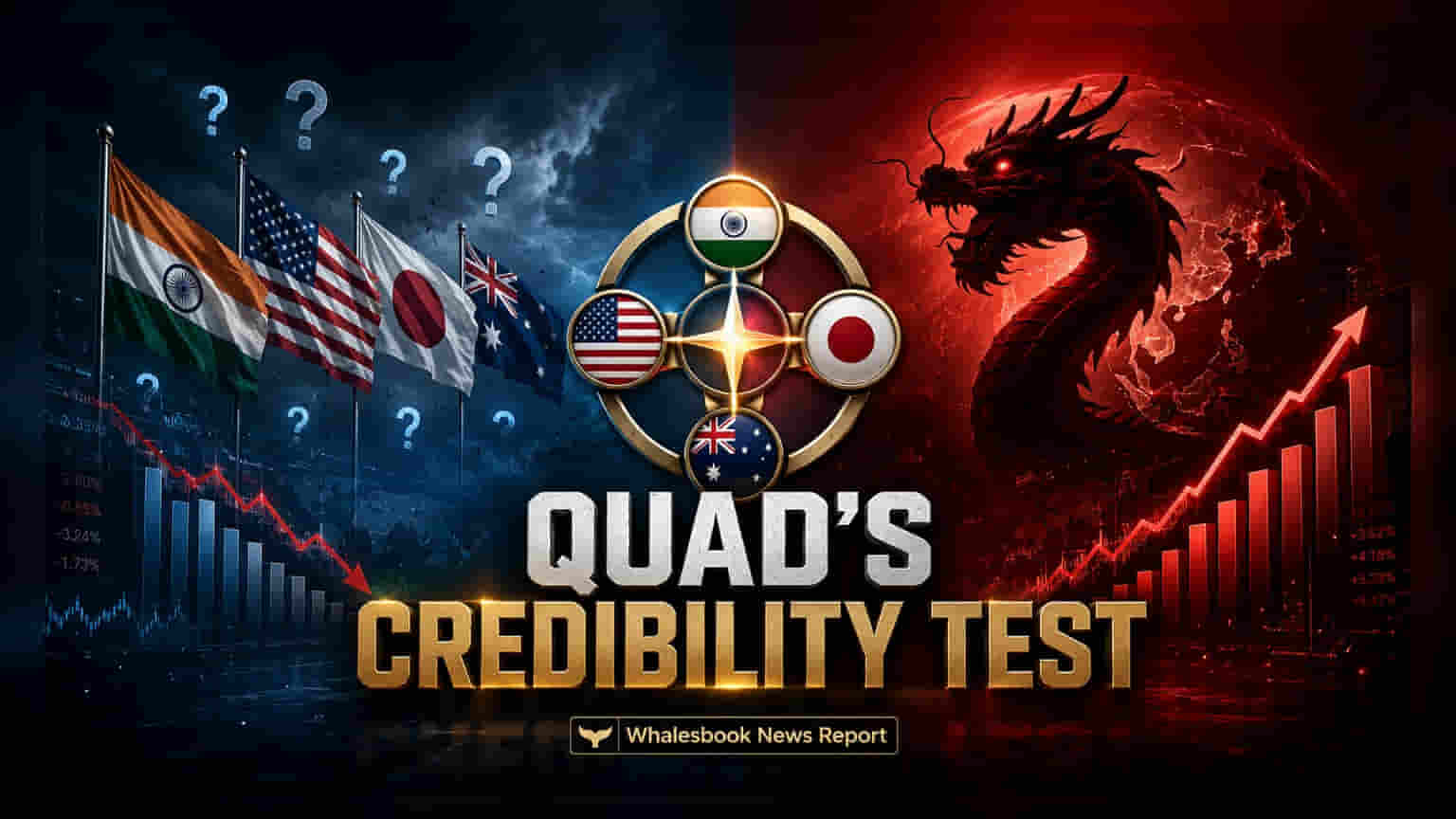


A New Push for Critical Minerals
The Quad alliance, composed of the United States, India, Japan, and Australia, has moved beyond discussions to concrete action with a new $20 billion framework for critical mineral supply chains. This initiative, formalized at a recent ministerial meeting in New Delhi, aims to secure essential resources like rare earth elements, lithium, and cobalt, vital for national security. The plan covers mining, refining, and recycling, seeking to establish a credible alternative to China's current dominance in processing these materials. However, the effort faces immediate challenges, including an estimated 8.3% industrial inflation that increases reshoring costs. The success of the pact will depend on how well member nations can coordinate permitting processes, develop infrastructure, and attract private investment.
Questions About US Focus
Despite tangible progress on the mineral pact and maritime security, the Quad's credibility is tested by perceptions of U.S. distraction. A recent high-profile U.S. presidential visit to Beijing, where talks touched upon a "G2" partnership, has raised concerns among allies in the Indo-Pacific that they might be sidelined by direct U.S.-China diplomacy. This anxiety is amplified by the lack of a formal leaders' summit since 2024. Such inconsistency in high-level engagement could lead to strategic confusion for a group that requires long-term policy alignment. India, Japan, and Australia, in particular, must carefully manage their security interests between Washington and Beijing.
Potential Pitfalls for the Alliance
The Quad's primary risk is overextending its reach and capabilities. While aiming for a united front, the U.S. is heavily involved in Middle Eastern conflicts, which critics suggest could limit its focus and deterrence in the Indo-Pacific. Furthermore, harmonizing industrial projects across the different regulatory environments of member nations presents significant execution hurdles. Unlike more centralized economic models, the Quad's democratic approach to industrial funding could result in considerable delays. If the $20 billion commitment does not lead to rapid project development, or if new trade tensions emerge between the U.S. and India, the alliance might fall into a pattern of superficial cooperation without addressing the core dependency on Chinese infrastructure.
Looking Ahead
Moving forward, observers will closely watch the implementation of the mineral initiative. The Quad's long-term effectiveness hinges on its ability to translate signed agreements into concrete assets, such as new port facilities and refining capacity. Without a leaders' summit scheduled soon, the group is likely to continue facing skepticism about its role as a significant counterweight in the region. This uncertainty means that private sector manufacturers will continue to navigate the complexities of a global supply chain that is both fragmented and undergoing diversification.