 Whalesbook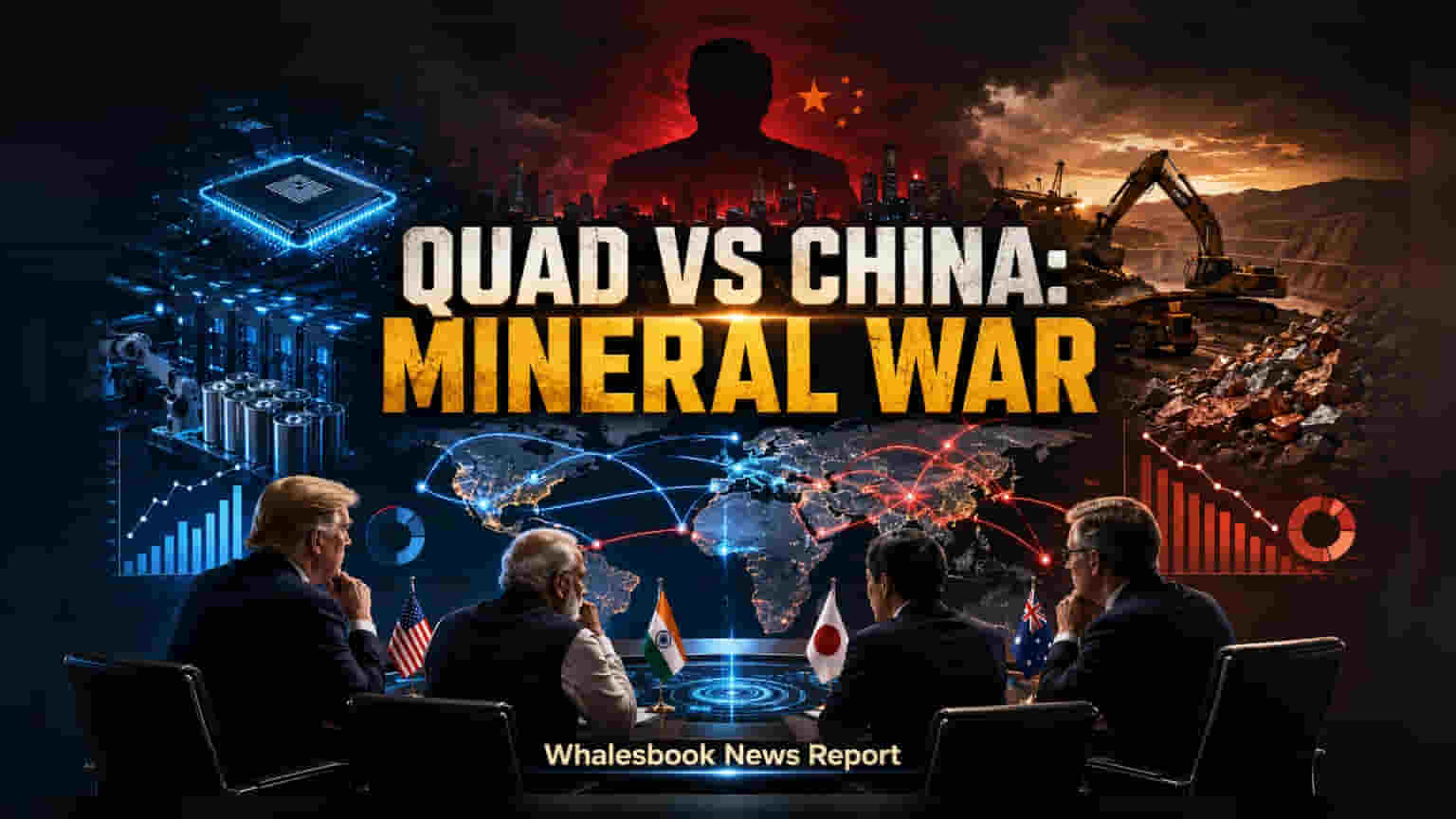


Quad Invests $20 Billion to Secure Critical Minerals
The Quad alliance, comprising the U.S., India, Japan, and Australia, has formally launched the Quad Critical Minerals Framework. This initiative, announced on May 26, 2026, in New Delhi, will deploy up to $20 billion in public and private capital. Its goal is to create new supply chains for critical minerals, reducing reliance on China, which currently dominates global pricing and supply for essential materials used in technology and defense.
Strategic Focus on 'Quad Nexus' Projects
The framework prioritizes projects with a strong connection to the Quad nations, meaning those located within member countries or run by companies headquartered there. The alliance will offer a range of financial tools, including export credit guarantees, equity investments, and infrastructure funding, to make these projects more viable. This is supported by separate agreements, like the U.S.-India rare earths cooperation, aiming to bolster processing capabilities.
Challenges in Building New Supply Chains
Despite the significant investment, establishing new mineral supply chains faces considerable challenges. The mining industry requires large capital and long development times, making it difficult to compete with China's established and efficient operations. Differences in priorities among Quad members, such as Australia's upstream production strength versus the U.S.'s refining gaps, and India's developing mining sector, could create hurdles. Past partnership attempts have also been hampered by trade disputes and subsidy disagreements, indicating that creating a cohesive, non-Chinese supply chain will be complex and potentially face protectionist friction.
Investment Implications for Critical Minerals
The Quad initiative is a clear signal for investors backing companies focused on 'friend-shoring' critical minerals. Firms that can improve mineral processing or advance recycling technologies are likely to benefit from this new source of state-backed capital. The increasing politicization of the mining sector suggests that geopolitical strategy, rather than just market prices, will heavily influence future corporate performance in this area.