 Whalesbook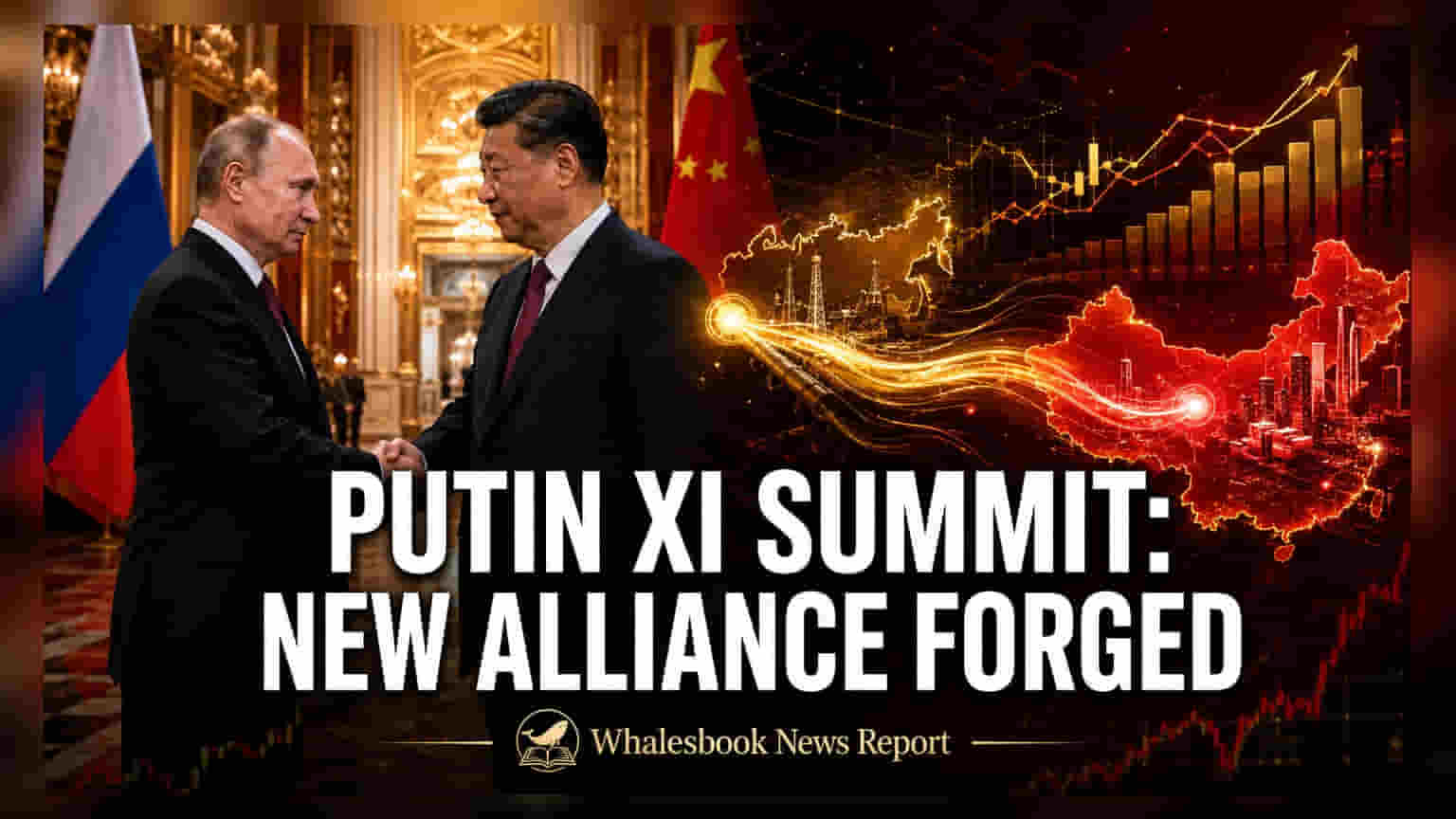


Russian President Vladimir Putin has arrived in Beijing for a two-day visit focused on talks with Chinese President Xi Jinping. This is their second meeting in less than a year and coincides with the 25th anniversary of a treaty that formalized ties between Russia and China.
Their growing partnership is heavily influenced by the ongoing war in Ukraine, rising tensions around Iran, and disruptions to vital shipping routes like the Strait of Hormuz, which have impacted global energy markets.
Strategic Alignment Amidst Global Uncertainty
Analysts note that unpredictable foreign policy from U.S. President Donald Trump has pushed Russia and China closer together. Both Moscow and Beijing are managing complex relations with Washington. Xi Jinping hosting both Trump and Putin within a week shows Beijing positioning itself as a steady force in a fragmented world.
Economic Interdependence and Imbalances
China has become a vital economic support for Russia, especially as Moscow's economy operates on a wartime footing. Trade between the two countries has more than doubled from 2020 to 2024, reaching $237 billion. Russia relies on Chinese technology and manufacturing, with over 90 percent of its sanctioned technology imports coming from China. China is also a major buyer of Russian oil and energy products, offering a crucial market as European countries cut imports.
However, the relationship shows a significant imbalance. Russia accounts for only about 4 percent of China's total international trade, while China is Russia's largest trading partner. This gives Beijing considerable leverage, allowing it to secure Russian resources at lower prices and influence Moscow's economic future.
Russia's Energy Security and China's Geopolitical Role
Despite this imbalance, Russia provides China with secure access to vast energy resources, which is a key advantage for Beijing given its reliance on maritime trade routes that are vulnerable to disruption. Concerns over energy security, amplified by the Iran crisis and issues in the Strait of Hormuz, have brought renewed attention to projects like the Power of Siberia 2 pipeline. This pipeline could potentially transport 50 billion cubic meters of Russian gas to China annually.
Beyond economic ties, China sees Russia as a crucial geopolitical partner. Both nations are permanent members of the UN Security Council and often align diplomatically to counter U.S.-led initiatives. While they have not formed a formal military alliance, they have strengthened their partnership through increasingly frequent joint military exercises, signaling strategic alignment without the obligations of a formal pact.