

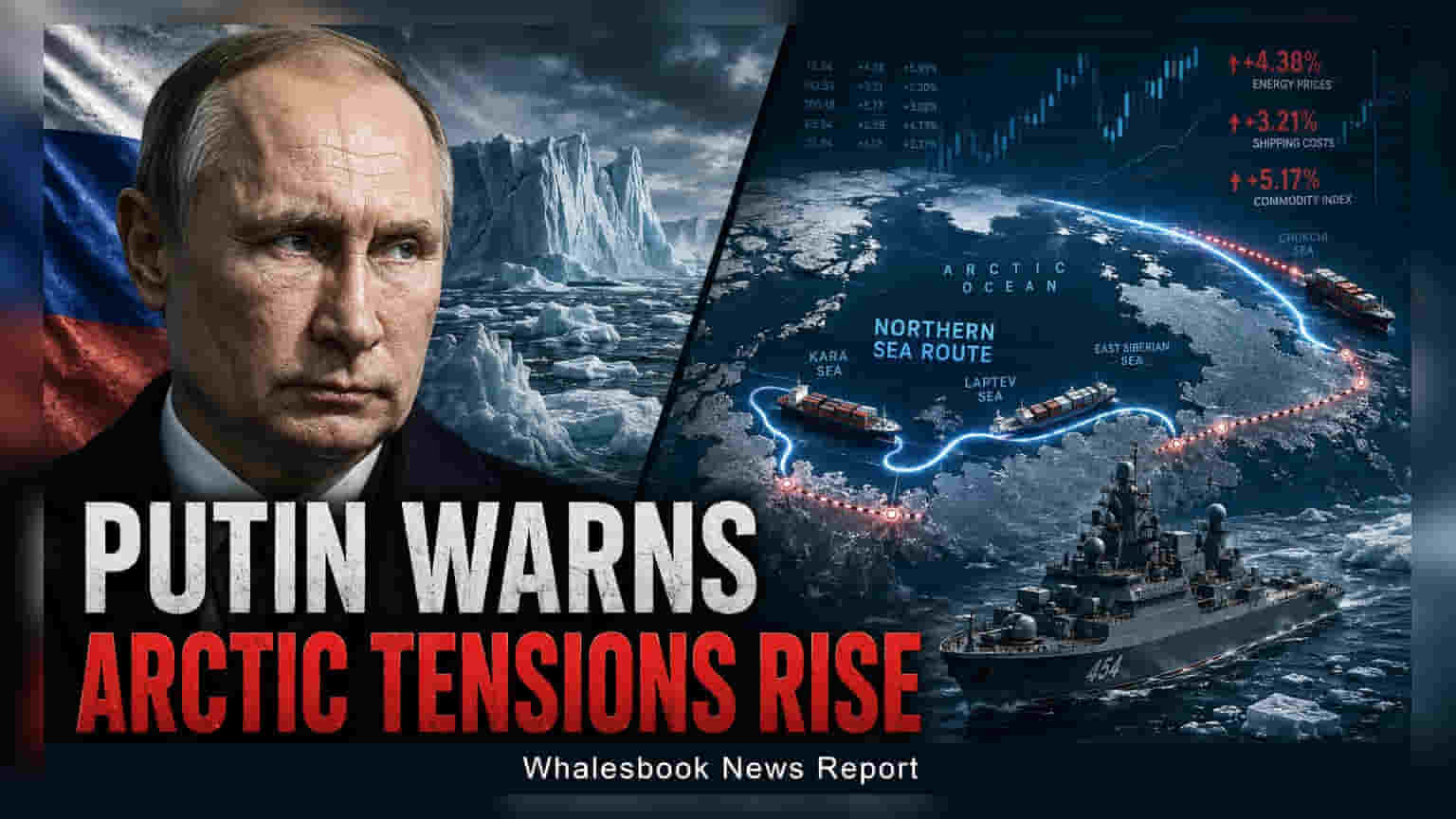
Russian President Vladimir Putin has highlighted growing interest from India and China in the Northern Sea Route, positioning it as a key alternative to traditional shipping corridors. Investors are monitoring the situation due to rising Arctic tensions, potential sanctions risks on merchant vessels, and the implications for global energy trade and shipping insurance costs.
Russian President Vladimir Putin recently emphasized the growing significance of the Northern Sea Route (NSR) as a viable trade corridor, specifically noting increased interest from major economies like India and China. Speaking to naval personnel, Putin described the Arctic route as a potential alternative to traditional paths between Europe and Asia, suggesting it could significantly reduce travel time for cargo, including energy shipments.
The Strategic Pivot to Arctic Shipping
The Northern Sea Route is being promoted by Moscow as a critical infrastructure project to move goods eastward. For India and China, the route offers a potential shortening of supply chain distances compared to the traditional Suez Canal passage. However, the operational reality of the NSR remains complex. While the route is being used for oil shipments, it is subject to severe seasonal weather, unpredictable ice conditions, and limited port infrastructure. These physical constraints mean that while the route has long-term potential, it currently operates with high volatility compared to established global maritime lanes.
Geopolitical and Operational Risks
The narrative around the NSR is increasingly intertwined with broader geopolitical friction. Putin cautioned against what he described as "artificial tensions" in the Arctic, attributing these to the expansion of NATO activities in the region. This geopolitical stance introduces significant uncertainty for commercial shipping.
Additionally, the Russian President issued a strong warning regarding the treatment of Russian merchant vessels by European nations. He stated that any impounding of ships would be viewed as an act of "piracy," vowing to respond in kind. This rhetoric follows recent European Union efforts to restrict the so-called "shadow fleet," which refers to vessels often used to transport Russian crude oil in an attempt to circumvent international sanctions. For global trade, this creates a tangible risk of increased maritime volatility. Companies involved in energy logistics or those dependent on Eurasian trade routes may face higher insurance premiums, disrupted shipping schedules, or the need to navigate complex regulatory and sanctions-related compliance requirements.
Investor Monitorables
Investors are keeping a close watch on how these geopolitical risks influence energy imports and shipping logistics. The primary monitorables include future changes in global maritime insurance rates, potential new sanctions or enforcement protocols affecting merchant vessels, and any official updates on infrastructure development for the NSR. Additionally, any escalations in the Arctic region could indirectly affect global supply chain stability and commodity pricing, particularly for crude oil and energy-related imports that are vital for the Indian economy.