

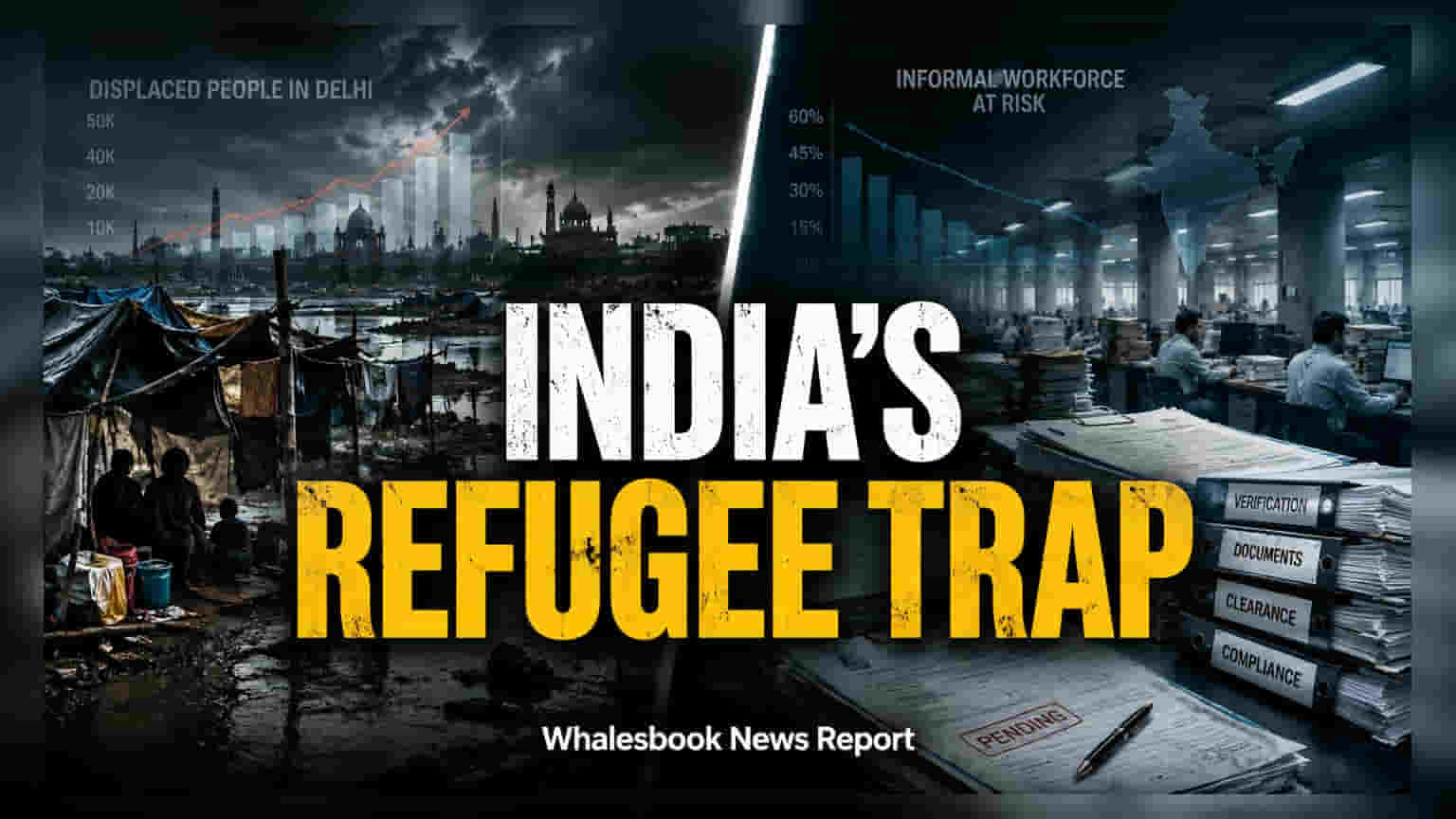
Hundreds of refugees, including Pakistani Hindus, face severe economic hardship in Delhi due to the lack of a specific legal framework for refugee status. This policy gap prevents access to formal employment, banking, and essential services, trapping families in a cycle of instability and financial uncertainty.
In New Delhi, over 200 Pakistani Hindus who fled religious persecution are currently living in precarious conditions. These families reside on a flood-prone area near the Signature Bridge, where they face annual displacement during the monsoon season. Their struggle highlights a broader issue concerning the lack of a domestic legal framework in India to recognize and support refugees.
The Legal and Administrative Vacuum
India is not a signatory to the 1951 Refugee Convention, which creates an administrative environment where refugees are often treated as illegal migrants. This classification results in UNHCR documentation remaining legally unrecognized within the country. The National Human Rights Commission has previously flagged this administrative vacuum, yet a formal legal framework remains pending. Consequently, refugees cannot obtain essential documents such as the Aadhaar card, which is the foundational document required for most formal financial and public services in India.
Economic Integration Challenges
Without legal documentation, these families face a significant integration gap. Accessing formal banking systems, obtaining legal employment, or enrolling in social safety nets becomes nearly impossible. As a result, many adults are forced to rely on informal labor, such as operating handcarts or selling snacks. These jobs offer no stability, leaving families financially exposed to illness, police scrutiny, or weather-related income loss.
Even for those seeking pathways to citizenship through mechanisms like the Citizenship Amendment Act, 2019, the process is complicated by administrative hurdles. Many applicants struggle to produce legacy documents such as land records or original border-crossing slips, which are often unavailable to those who fled abruptly.
Broader Context of Displacement
Globally, the scale of forced displacement is significant, with the United Nations reporting over 123 million people forcibly displaced by the end of 2024. Low- and middle-income nations currently host approximately 73% of this population, often operating under systems originally designed for voluntary migration rather than forced displacement. Experts suggest that a shift in policy—decoupling access to basic healthcare, schooling, and banking from citizenship status—could allow for greater economic participation based on residency alone. For the families in Delhi, the lack of such policies remains the primary barrier to achieving long-term economic stability and basic social security.