

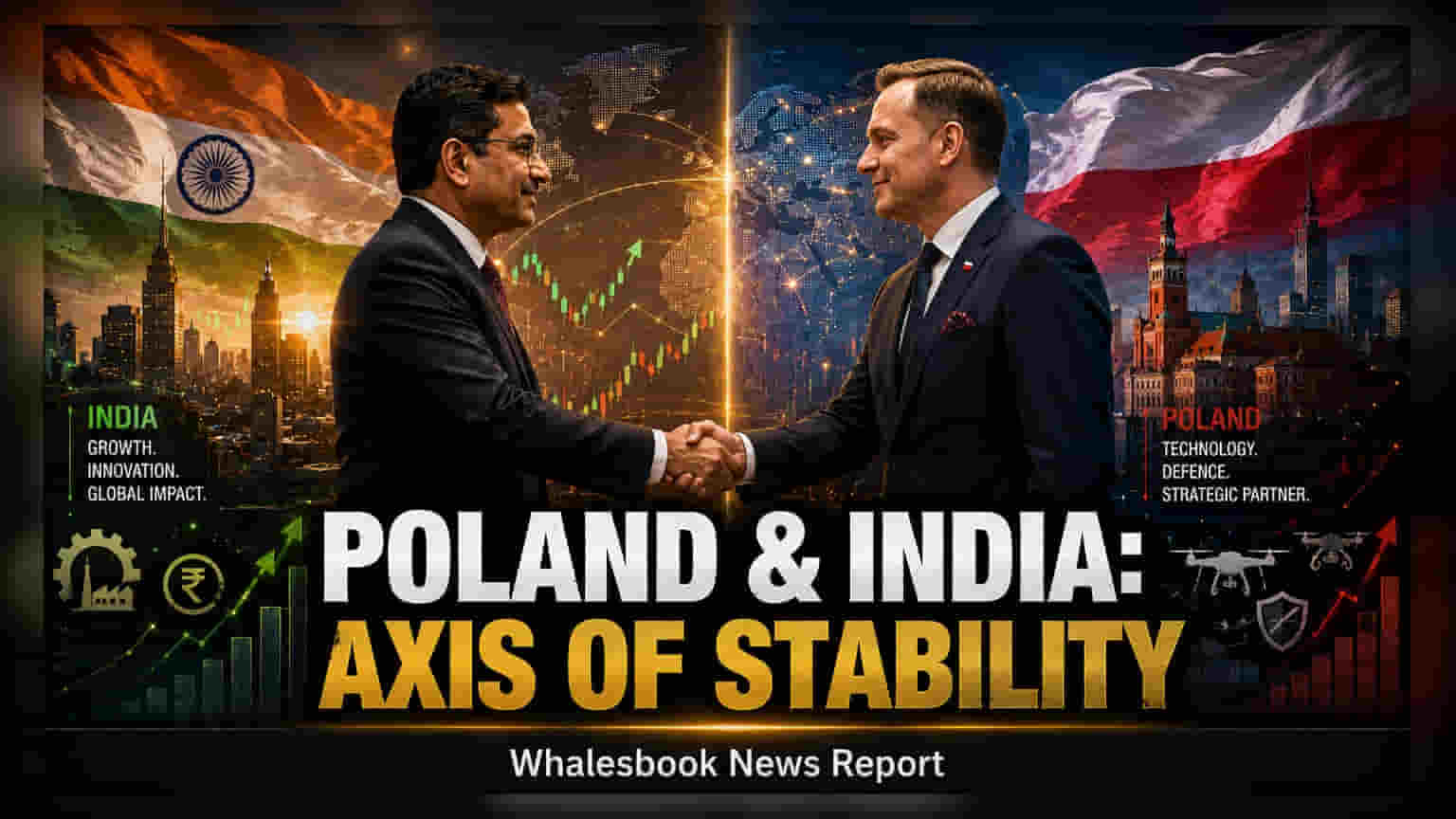
The Polish Ambassador to India has proposed an 'axis of stability' to deepen bilateral cooperation in defense, agriculture, and trade. For Indian investors, this diplomatic alignment signals potential long-term growth opportunities for firms looking to enter European markets or collaborate on defense manufacturing.
The Polish government has signaled a desire to strengthen its economic and strategic relationship with India, with the Polish Ambassador to India, Piotr Antoni Switalski, recently advocating for an 'axis of stability' between the two nations. This initiative is designed to address global volatility by fostering deeper integration in critical sectors like defense and agriculture. While this remains a diplomatic and policy-level development, it carries potential implications for Indian manufacturing and export-oriented businesses.
At the core of the proposal is the push for greater collaboration in defense production. Poland, which maintains significant defense procurement budgets, views India as a viable partner for joint ventures, particularly in areas like military equipment and drone technology. For Indian defense manufacturers, closer cooperation with a European Union (EU) member state could facilitate technology transfers and provide a smoother entry point into the broader European defense market.
Beyond defense, the Polish envoy highlighted the potential for deeper ties in the agricultural sector. Poland is pitching itself as a 'friendly gateway' for Indian companies to access the EU, a market consisting of over 500 million consumers. For Indian firms, this could theoretically lower the barriers to entry for product distribution and supply chain integration within the region. Several Indian companies are already operating in Poland, and this diplomatic push aims to encourage further investment.
However, investors should view these developments through a long-term lens, as the actual business impact depends on the execution of formal government-to-government agreements. The geopolitical landscape also adds complexity to this partnership. Historical diplomatic friction regarding India’s foreign policy engagements with Russia, and differing stances on regional security, remain factors that could influence the pace of implementation. Furthermore, both nations face shared challenges regarding their dependency on single-source suppliers for critical minerals and energy, which could impact the feasibility of large-scale, long-term industrial projects.
For those monitoring this sector, the key developments to track next include any formal Memorandums of Understanding (MoUs) between the two governments or specific announcements regarding joint ventures in defense and manufacturing. While this diplomatic initiative sets a positive tone for bilateral relations, the tangible financial benefits for Indian corporations will likely be determined by the speed and scale at which these strategic discussions translate into concrete trade policies and regulatory support for private industry.