

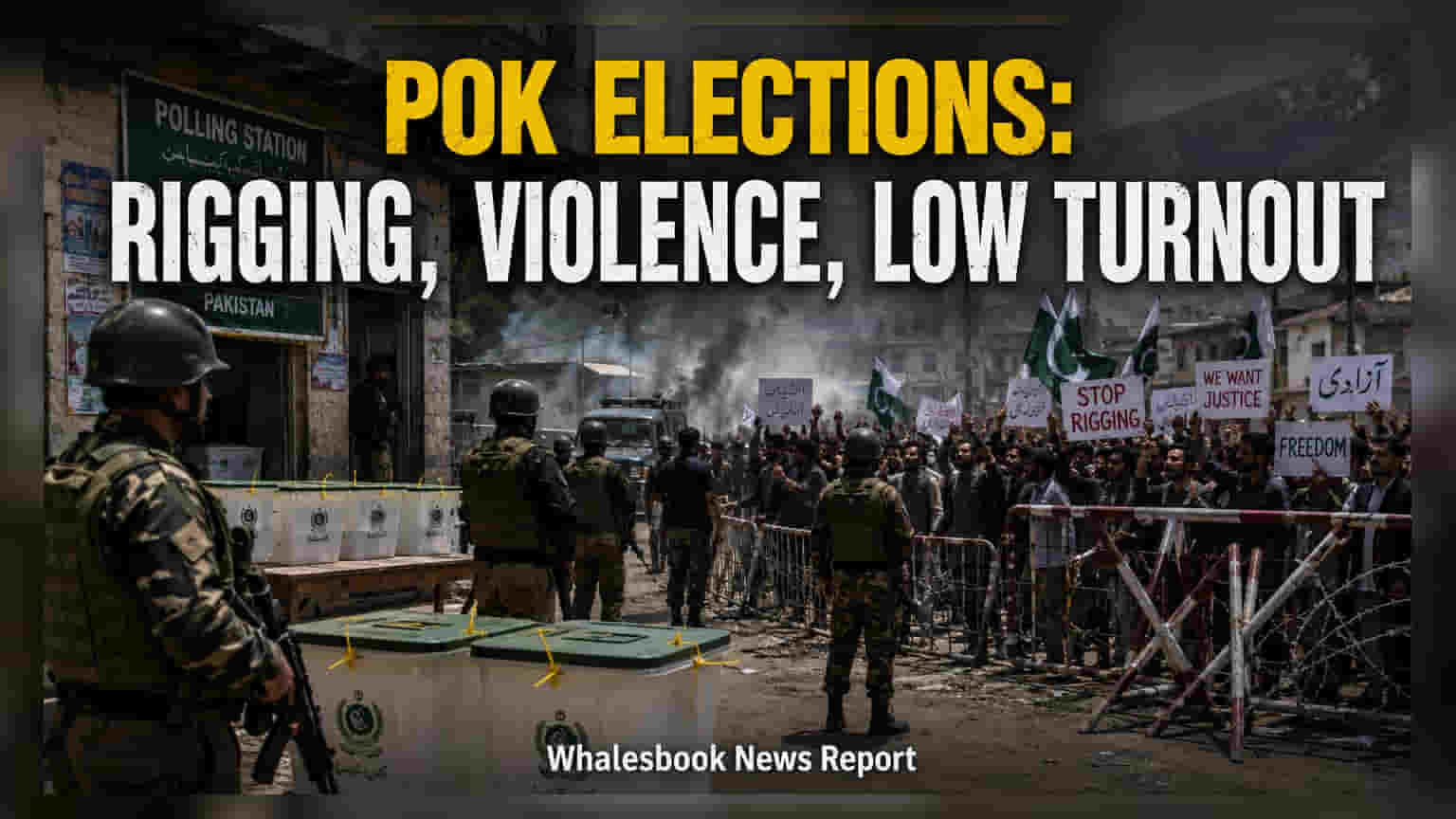
The second phase of legislative elections in Pakistan-occupied Kashmir (PoK) concluded Sunday under heavy security, marked by low turnout and widespread allegations of vote manipulation. The ongoing unrest has disrupted the three-phase election process, with major political parties reporting violence and demanding investigations into the fairness of the polling.
The second phase of assembly elections in Pakistan-occupied Kashmir (PoK) took place on Sunday, covering nine seats in Muzaffarabad and twelve refugee constituencies. The voting process occurred under strict security measures, as local authorities deployed officers from outside the region in an attempt to maintain order. Despite these efforts, the polling was significantly impacted by ongoing protests led by the Joint Awami Action Committee (JAAC), which has been active in the region for nearly two months.
Election day was defined by widespread accusations of electoral interference and violence. Various political factions, including the Pakistan Peoples Party (PPP), reported physical attacks on candidates and party workers. PPP chairman Bilawal Bhutto-Zardari alleged that the ruling Pakistan Muslim League-Nawaz (PML-N) was behind the reported rigging and violence, warning that such actions threaten the credibility of the entire electoral process. Furthermore, PPP leader Raja Pervez Ashraf stated that the party has presented evidence of manipulation to the election commission, though they expressed dissatisfaction with the commission's response.
The election for the 45-seat assembly is being held in three distinct phases, a schedule necessitated by the persistent unrest. The first phase, held on July 27 for 13 seats in the Mirpur division, resulted in the PML-N winning nine seats and the PPP taking four. The third and final phase, involving nine seats in the Poonch division, is currently set for August 10. Beyond the immediate electoral results, the region is facing intense public anger, with many residents expressing disillusionment toward mainstream political parties and the perceived lack of representation.
India has consistently maintained its official stance that all of Jammu and Kashmir, including areas under Pakistan's control, is an integral part of its territory. New Delhi has described these elections as a maneuver to legitimize an unlawful occupation and mask the human rights situation in the region. Meanwhile, concerns over the stability of the region continue to grow, as regional leaders like Jamiat Ulema-e-Islam-Fazl chief Maulana Fazlur Rehman have publicly condemned the use of force against civilians, citing high casualties during the extended period of protest.
Investors and observers are monitoring the situation to see if the unrest escalates or impacts the scheduled final phase of the elections on August 10. The stability of the administration that eventually emerges from these three phases, and how it manages the ongoing public protests, remains the key factor to watch.