

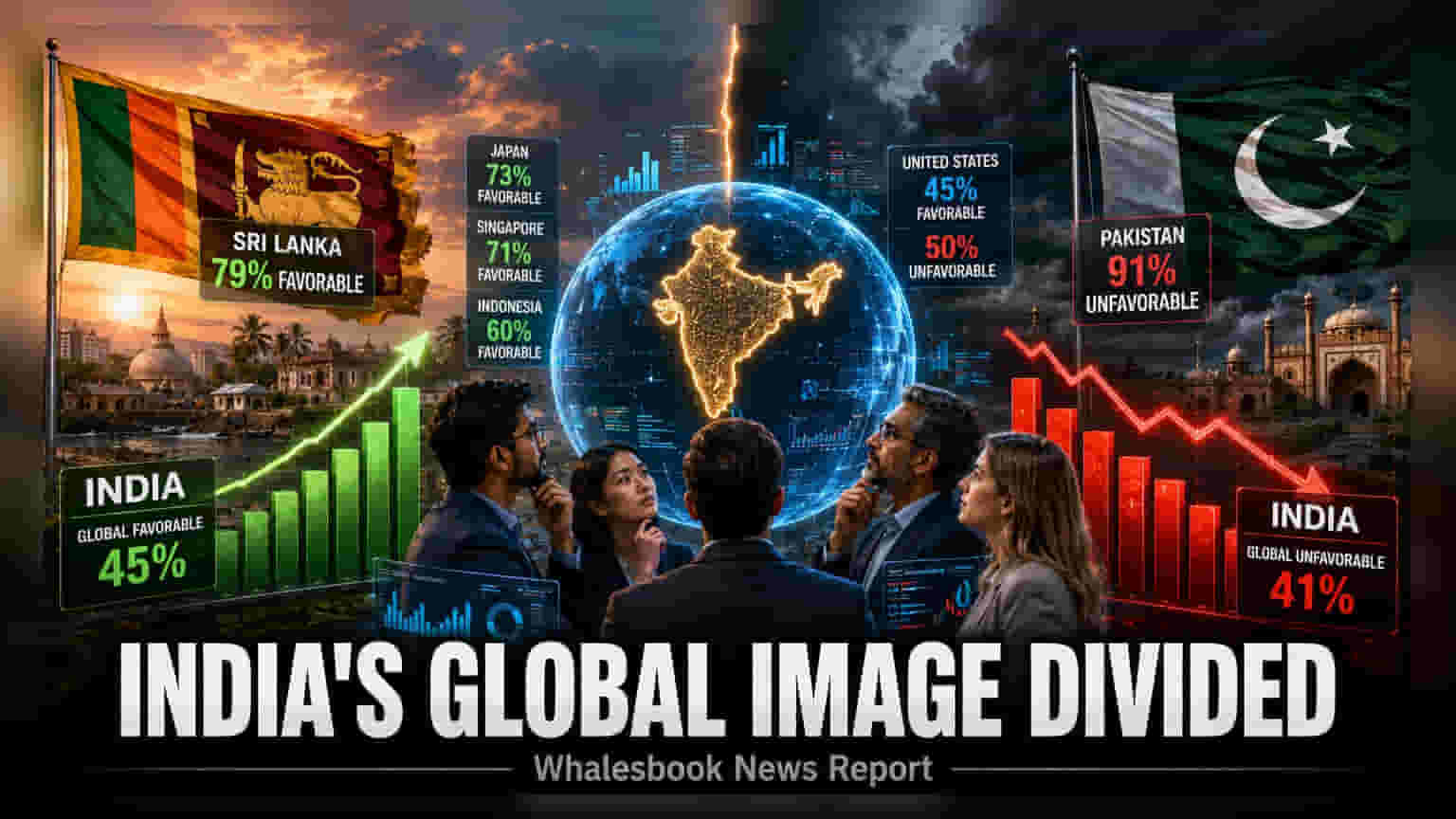
A new Pew Research Center survey across 36 countries shows 45% of respondents have a favorable view of India, against 41% who hold negative opinions. While nations like Sri Lanka show strong support, the US and other regions report mixed sentiments. This international perception landscape is closely tracked by investors as it often influences long-term trade and diplomatic relations.
A comprehensive study by the Pew Research Center, conducted between February and May 2026, reveals a divided global perception of India. Across 36 countries, 45% of the 42,000 respondents hold a favorable view, while 41% express an unfavorable opinion. For investors, these geopolitical trends are essential to monitor, as international relations often impact trade policy, foreign investment flows, and supply chain stability.
Sri Lanka emerged as the country with the strongest positive sentiment toward India, with 79% of respondents viewing the nation favorably. This high level of support is often linked to the financial and credit assistance provided by India during the 2022 economic crisis in the island nation. Conversely, Pakistan remains a stark outlier, with 91% of respondents in the survey expressing an unfavorable view, reflecting long-standing regional tensions.
The sentiment in the United States, a critical partner for India in technology and trade, is currently split. Approximately 45% of Americans view India favorably, while 50% hold an unfavorable view. This indicates a shift in public sentiment that analysts watch closely, as strong bilateral ties are crucial for ongoing cooperation in sectors such as defense, manufacturing, and software services.
Other Asian nations also show varied levels of support. Countries such as Japan, Singapore, and Indonesia generally report positive assessments, which supports the narrative of deepening economic ties in the Indo-Pacific region. However, the survey also highlights that public opinion is not uniform, with some regions expressing skepticism or indifference.
For investors, the key monitorable is not just public opinion but how these perceptions influence diplomatic decision-making. Diplomatic friction can sometimes lead to trade barriers, changes in import-export policies, or delays in project clearances. As India looks to increase its manufacturing footprint and global trade share, stable and positive international relationships remain a foundational support for long-term growth. Investors may track future updates in trade agreements and diplomatic summits to gauge whether these public perception shifts impact business operations on the ground.