

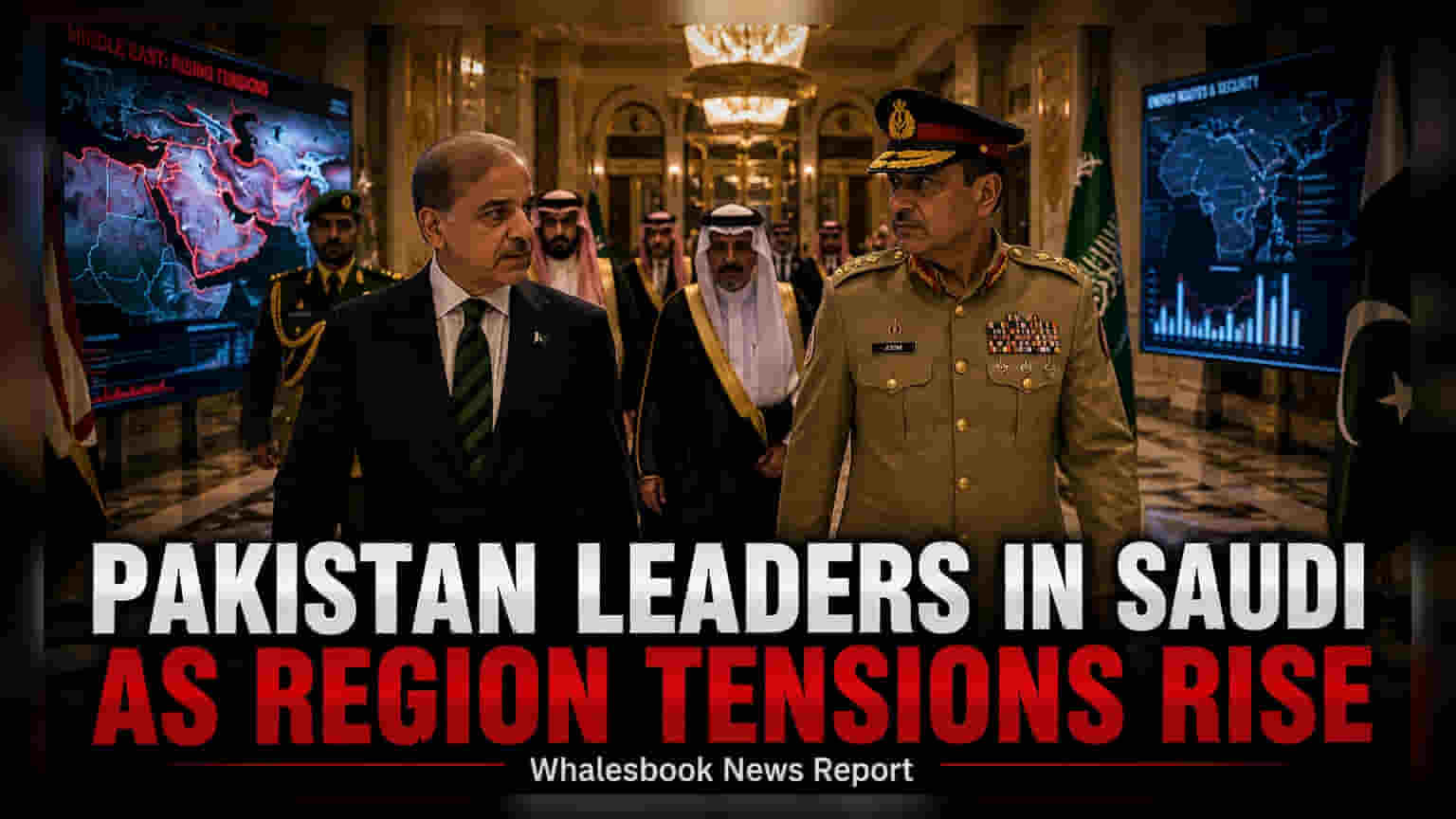
Pakistan Prime Minister Shehbaz Sharif and Army Chief Asim Munir have arrived in Saudi Arabia for a three-day official visit. The delegation aims to strengthen strategic security and economic ties, including the potential discussion of financial support for Pakistan’s struggling economy. Investors monitor such developments for insights into regional stability and energy supply chains in West Asia.
Pakistan’s Prime Minister Shehbaz Sharif, accompanied by Army Chief Field Marshal Asim Munir and Deputy Prime Minister Ishaq Dar, began a three-day official visit to Saudi Arabia on Thursday, August 6, 2026. This high-level delegation is scheduled to hold critical talks with Saudi Crown Prince and Prime Minister Mohammed bin Salman to discuss bilateral relations and regional security.
The visit takes place against a backdrop of intensifying geopolitical instability across West Asia. With conflicts widening in the region, the discussions are expected to cover strategies for enhancing regional security coordination. For observers of the South Asian and Middle Eastern economic landscapes, the trip serves as a significant indicator of diplomatic alignment. Pakistan has frequently acted as a diplomatic conduit in regional affairs, and this visit reaffirms its reliance on Riyadh for both strategic security and financial support.
Economic stability remains a primary focus of the partnership. Saudi Arabia has been a critical provider of financial relief to Pakistan, offering multi-billion dollar loan rollovers and deposit facilities to help the country manage its foreign exchange reserves and meet external debt obligations. The ability of Pakistan to secure ongoing financial support from Gulf nations is a key factor in preventing liquidity crises, which in turn influences regional economic sentiment.
For investors and market participants, this development is relevant for its impact on broader regional stability. While this is not a corporate news event, geopolitical shifts in West Asia are closely monitored due to their potential influence on global oil prices, shipping lanes, and energy import costs for India. Any disruption in the region often creates volatility in energy markets, affecting trade and input costs for various Indian sectors.
The key monitorable for market observers will be any updates on economic aid or investment commitments, as these directly impact Pakistan’s fiscal health. Continued reliance on external bailouts suggests that economic risks in the region persist. Investors typically watch these developments to assess the potential for long-term stability in a region that plays a vital role in global energy and trade flows.