

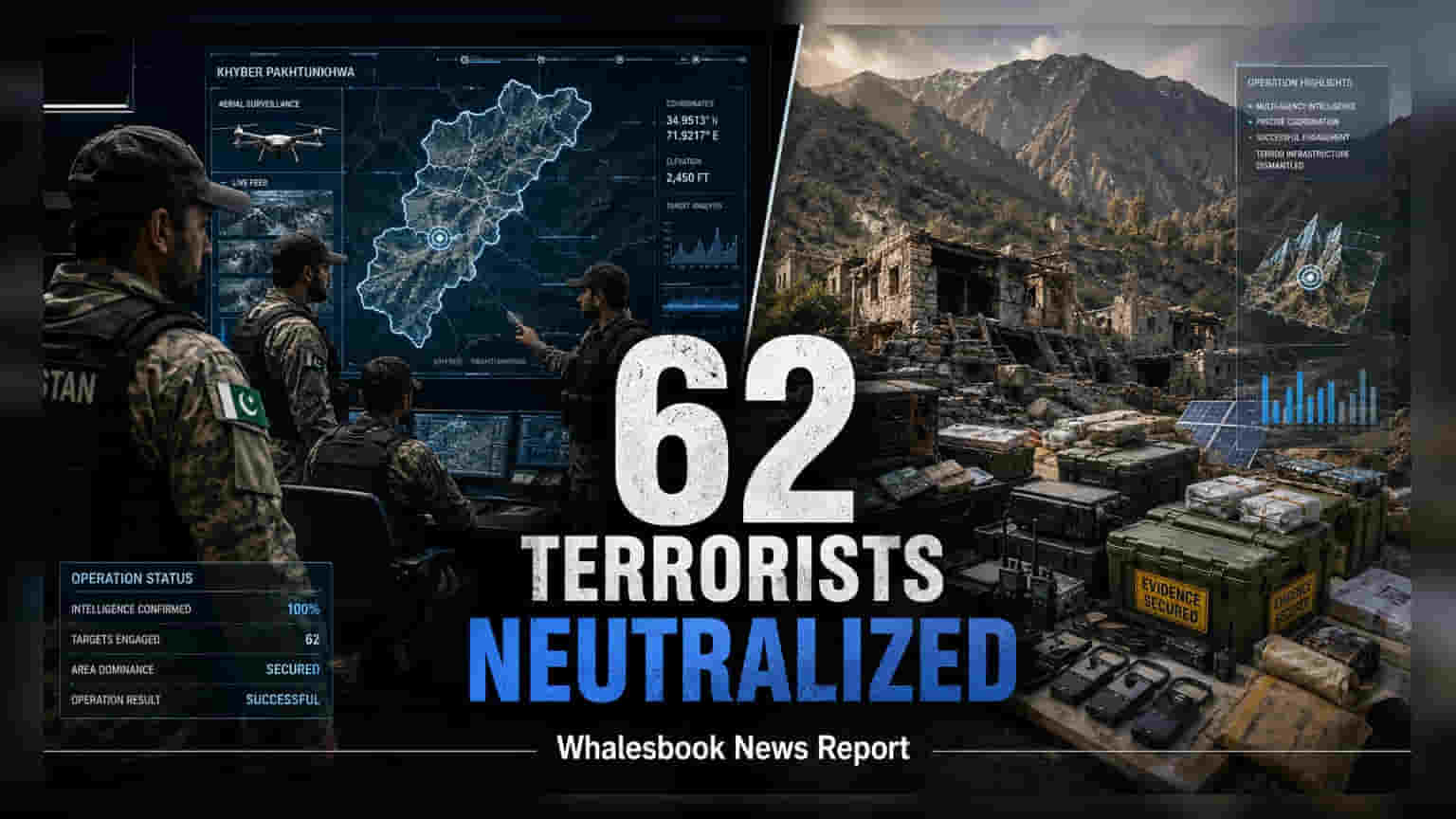
Pakistan's security forces completed a 36-hour counter-terrorism operation in Khyber Pakhtunkhwa, eliminating 62 militants across North Waziristan and Bannu. The intelligence-led campaign utilized aerial surveillance to dismantle militant hideouts. This intensified security push in the northwestern region serves as a key monitorable for regional stability, which is often tracked by observers assessing geopolitical risks in South Asia.
Pakistan's security forces have concluded a 36-hour counter-terrorism operation across the Khyber Pakhtunkhwa province, resulting in the elimination of 62 militants. The campaign, which targeted operatives in the North Waziristan and Bannu districts, concluded on Wednesday. Security officials confirmed the operation was intelligence-driven, focusing on dismantling militant infrastructure in difficult terrain.
In North Waziristan, the operation resulted in the neutralization of 52 militants, including four high-ranking commanders. Security forces utilized advanced aerial surveillance, including quadcopters and drones, to pinpoint hideouts and conduct precise engagements. In the Bannu district, authorities neutralized an additional 10 militants through similar tactical strikes. The operation also involved the recovery of a significant cache of weaponry and ammunition.
These actions represent an intensified security push by the Pakistani government to address militant activity in its northwestern territories. The targeted groups were identified by officials as being linked to the banned Tehreek-e-Taliban Pakistan (TTP), which the state refers to as Fitna al-Khawarij. Reports indicate that security officials have vowed to continue these measures to maintain control over the region.
For market observers and geopolitical analysts, such operations in border regions are monitored as indicators of regional stability. Khyber Pakhtunkhwa has experienced fluctuating security conditions, and intensified counter-terrorism efforts are often viewed through the lens of their impact on local governance and broader regional security dynamics. Investors and analysts generally watch these developments to understand the risk environment in South Asia, particularly regarding cross-border stability and internal security conditions.