

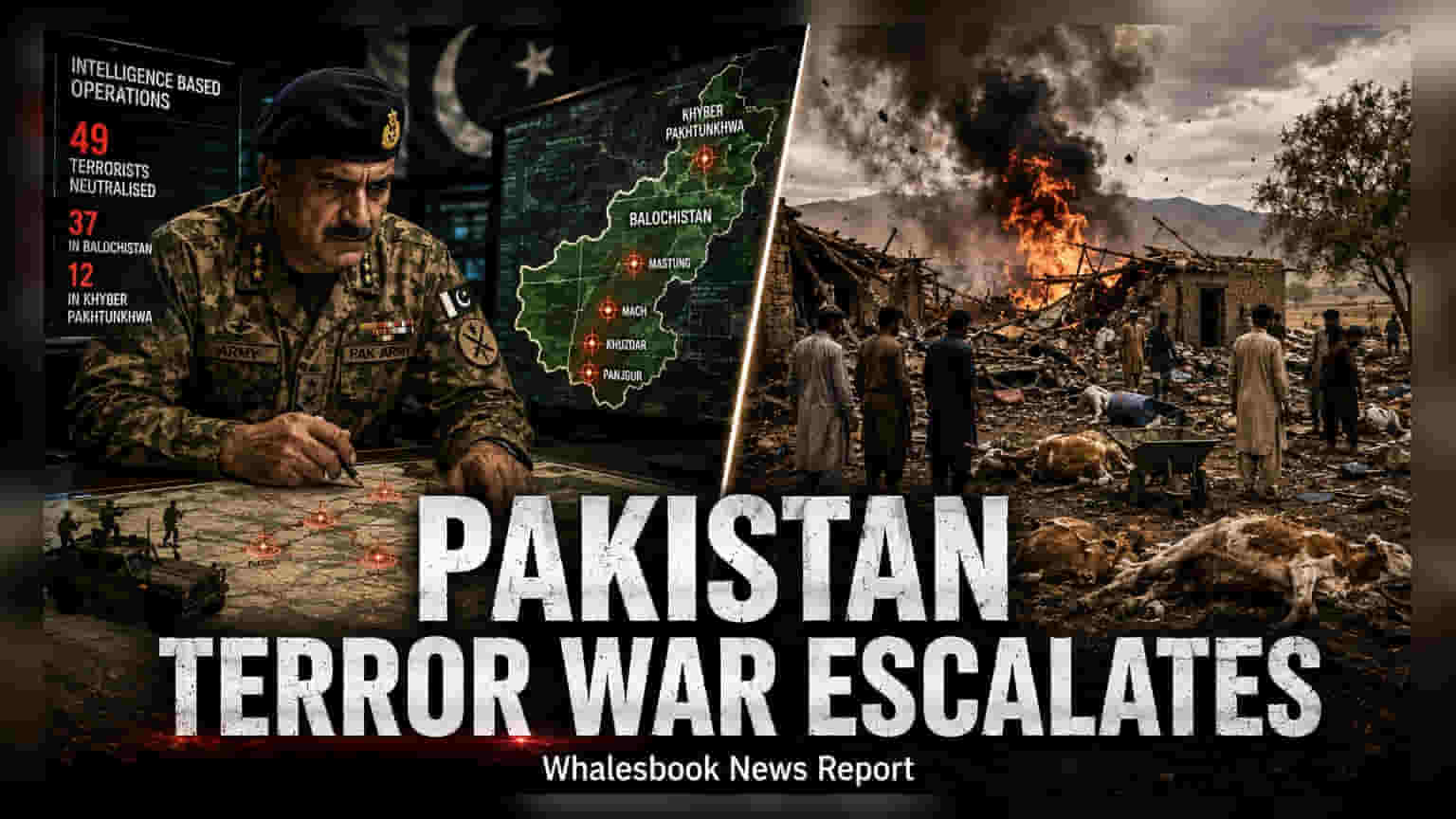
Pakistan’s military reported killing 49 militants in cross-province operations on August 21, 2026, amid rising violence. Concurrently, a separate explosion in Balochistan’s Mastung district killed at least six civilians, further highlighting the deteriorating security environment in the region.
Pakistan's security forces, led by the Inter-Services Public Relations (ISPR), announced the neutralisation of 49 terrorists in intelligence-based operations conducted across the Balochistan and Khyber Pakhtunkhwa provinces. According to the military's media wing, these operations resulted in the death of 37 militants in Balochistan—specifically within the Mastung, Mach, Khuzdar, and Panjgur districts—and 12 in Khyber Pakhtunkhwa, spanning regions such as Bannu, North Waziristan, and Orakzai. The military stated that significant amounts of weapons and explosives were recovered during these actions.
Simultaneously, the security situation in Balochistan faced further strain due to a deadly explosion at a farm in the Mastung district on August 21, 2026. The incident claimed the lives of at least six individuals at the scene, with authorities reporting additional targeted violence involving the shooting deaths of two civilians shortly thereafter. These events collectively underscore a period of intense volatility within the province.
From a regional perspective, the spike in violence is a critical monitorable for observers of South Asian geopolitical stability. Security reports have highlighted a significant rise in terror-related activity in the region, with data indicating a 241% increase in fatalities in Balochistan during July compared to the previous month. The ongoing counterterrorism efforts, often referred to as the National Action Plan, have been intensified in response to these frequent insurgent attacks.
The persistence of such security challenges creates a complex environment for local administration and economic stability. For observers, the primary focus remains on whether these heightened military operations will effectively curb the ongoing insurgent activity or if the regional instability will continue to impact civilian life and governance in these provinces. The situation remains fluid, with security forces continuing clean-up operations across the affected districts.