

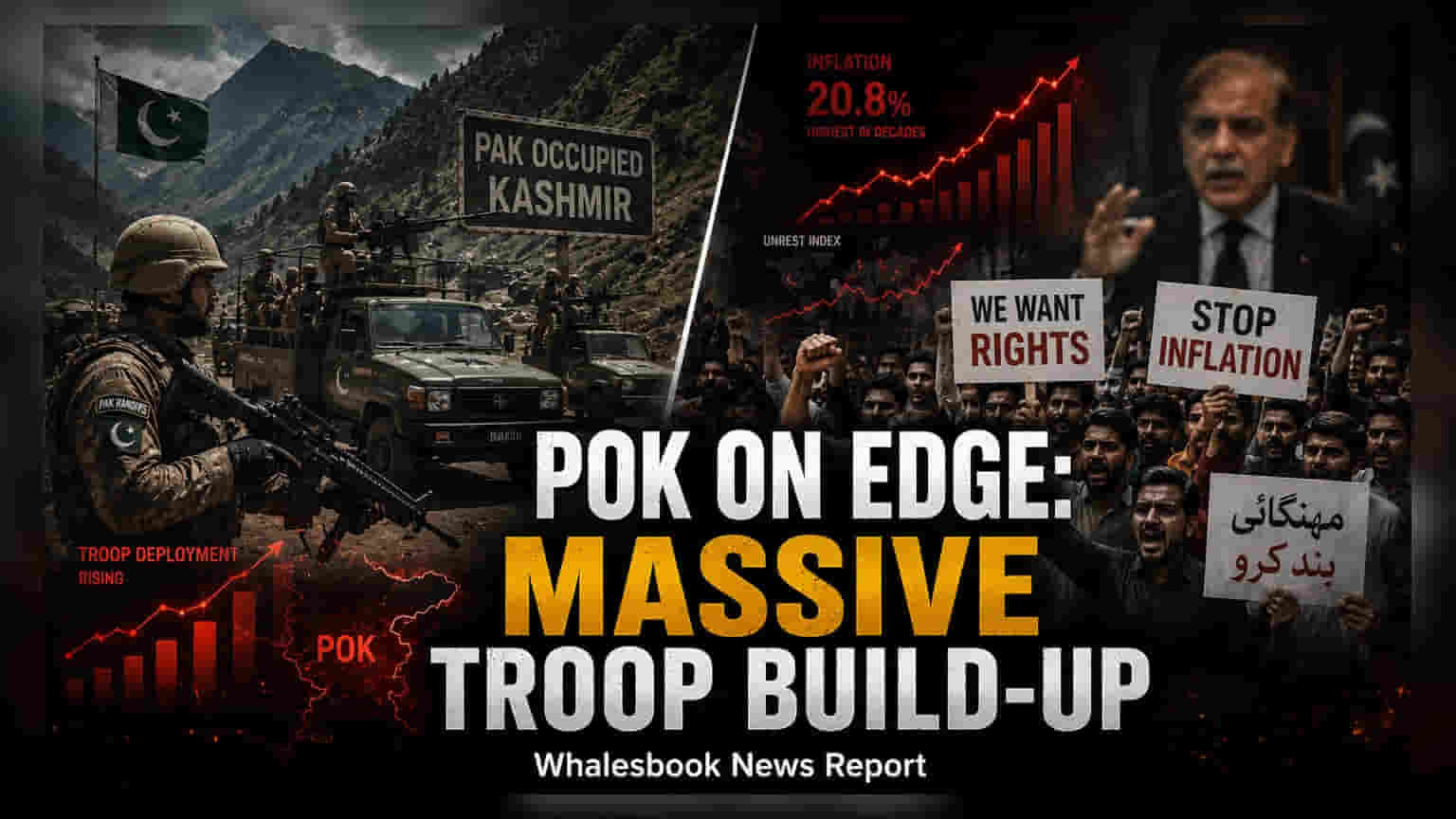
Pakistan has sent 8,000 Rangers and heavy weapons to Pakistan-occupied Kashmir (POK) to suppress widespread anti-government protests. The move follows weeks of violent demonstrations fueled by inflation, unemployment, and complaints of administrative neglect. For investors, the escalating internal instability and the resulting government crackdown in the region underscore the deepening economic and geopolitical risks currently facing Pakistan.
Islamabad has significantly ramped up its security presence in Pakistan-occupied Kashmir (POK), deploying 8,000 additional Rangers and heavy military equipment to the region. The move comes as the government faces intense public anger over economic hardship, specifically record-high inflation, lack of jobs, and what protesters describe as poor governance. The deployment is concentrated in key areas, including Rawalakot and locations near the Line of Control, as authorities move to regain control over regions paralyzed by nearly two weeks of continuous strikes and demonstrations.
Origins of the Unrest and Economic Impact
The current wave of protests began over political grievances, including the decision to reserve 12 seats in the local assembly for refugees from Jammu and Kashmir. Residents argued this would diminish the political voice of local populations. However, the movement quickly expanded into a broad-based protest against the ruling administration. Citizens have cited systemic issues, including high fuel and electricity costs and allegations of corruption, as primary drivers for the unrest. The agitation has led to a near-total halt in daily economic activity, with reports of at least 24 fatalities as clashes between protesters and security forces have intensified.
Government Response and Regional Stability
In response to the demonstrations, the Pakistani government has implemented strict measures, including internet blackouts, the detention of key protest organizers, and the banning of the Joint Awami Action Committee. These actions highlight the mounting pressure on the Pakistani state to maintain internal order. Beyond POK, the country is currently managing multiple security threats, including ongoing insurgencies in the provinces of Balochistan and Khyber Pakhtunkhwa. This multi-front challenge creates a complex environment for the national economy, which is already under significant strain.
International Reaction and Investor Context
India's Ministry of External Affairs has officially responded to the situation, attributing the unrest to the long-term systemic exploitation and denial of rights in the region. The Indian government has called for international attention regarding the use of excessive force, including reported police brutality and restrictions on essential supplies. For global observers and investors, the key monitorable remains the potential for this unrest to exacerbate Pakistan's existing financial vulnerabilities. As the government prioritizes military and security spending to contain internal dissent, concerns regarding the country's fiscal health, debt sustainability, and the ability to maintain consistent economic policy will remain central to any assessment of regional stability.