

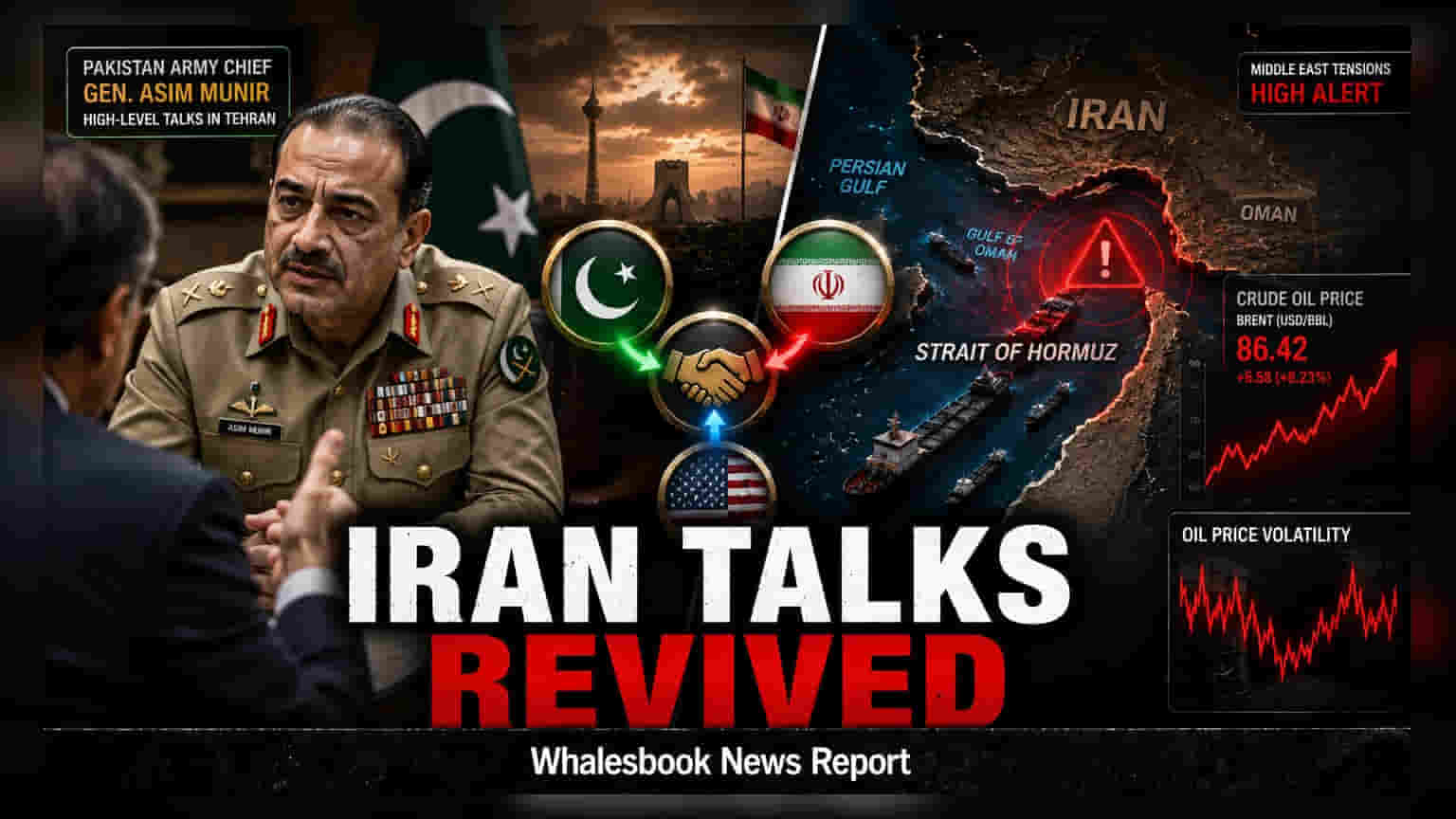
Pakistan's Army Chief, Field Marshal Asim Munir, is traveling to Tehran to attempt to revive stalled US-Iran mediation efforts. The diplomatic push comes as regional tensions threaten stability in the Strait of Hormuz, a critical corridor for global energy supplies. Investors are monitoring the situation closely due to its potential impact on crude oil markets and international trade routes.
Pakistan's Army Chief, Field Marshal Asim Munir, is visiting Tehran to hold high-level discussions with Iranian leadership. This visit is part of a diplomatic initiative to revive peace negotiations between the United States and Iran. The mediation efforts, which Pakistan has been facilitating, hit a roadblock in July 2026 after the collapse of an interim peace agreement signed just one month earlier.
The renewed push for diplomacy arrives at a time of rising uncertainty in the Middle East. With the failure of the June 2026 Memorandum of Understanding, tensions have increased, leading to concerns about potential military escalation. Iran’s leadership has emphasized the need for a path forward to avoid further instability, while international observers and major global powers remain focused on the potential for fresh economic sanctions.
For global markets, the primary risk involves the Strait of Hormuz, a narrow waterway through which approximately 20% of the world's energy supplies must pass. Any disruption in this region creates immediate volatility in global crude oil prices. Shipping companies and energy traders are particularly cautious, as increased regional hostility often leads to higher insurance premiums for vessels traversing these waters, effectively raising the cost of global energy logistics.
Economically, the situation is further complicated by the threat of new US sanctions against Iran. US officials have indicated that failing to reach a deal could trigger severe economic measures. These sanctions, if implemented, would likely deepen Iran's economic isolation and could exacerbate supply chain issues for energy-dependent markets. The market impact is less about the direct stock movement of individual companies and more about the macro-economic risk that sustained regional tension poses to global trade, fuel costs, and inflation.
Investors and market participants should monitor updates on the progress of these talks, as any sign of de-escalation could help stabilize energy prices and shipping routes. Conversely, if diplomatic efforts stall again or if new sanctions are announced, volatility in the energy sector is likely to remain high. The core monitorable for the coming weeks will be the status of security guarantees in the Strait of Hormuz and whether the parties can find common ground to prevent further conflict.