

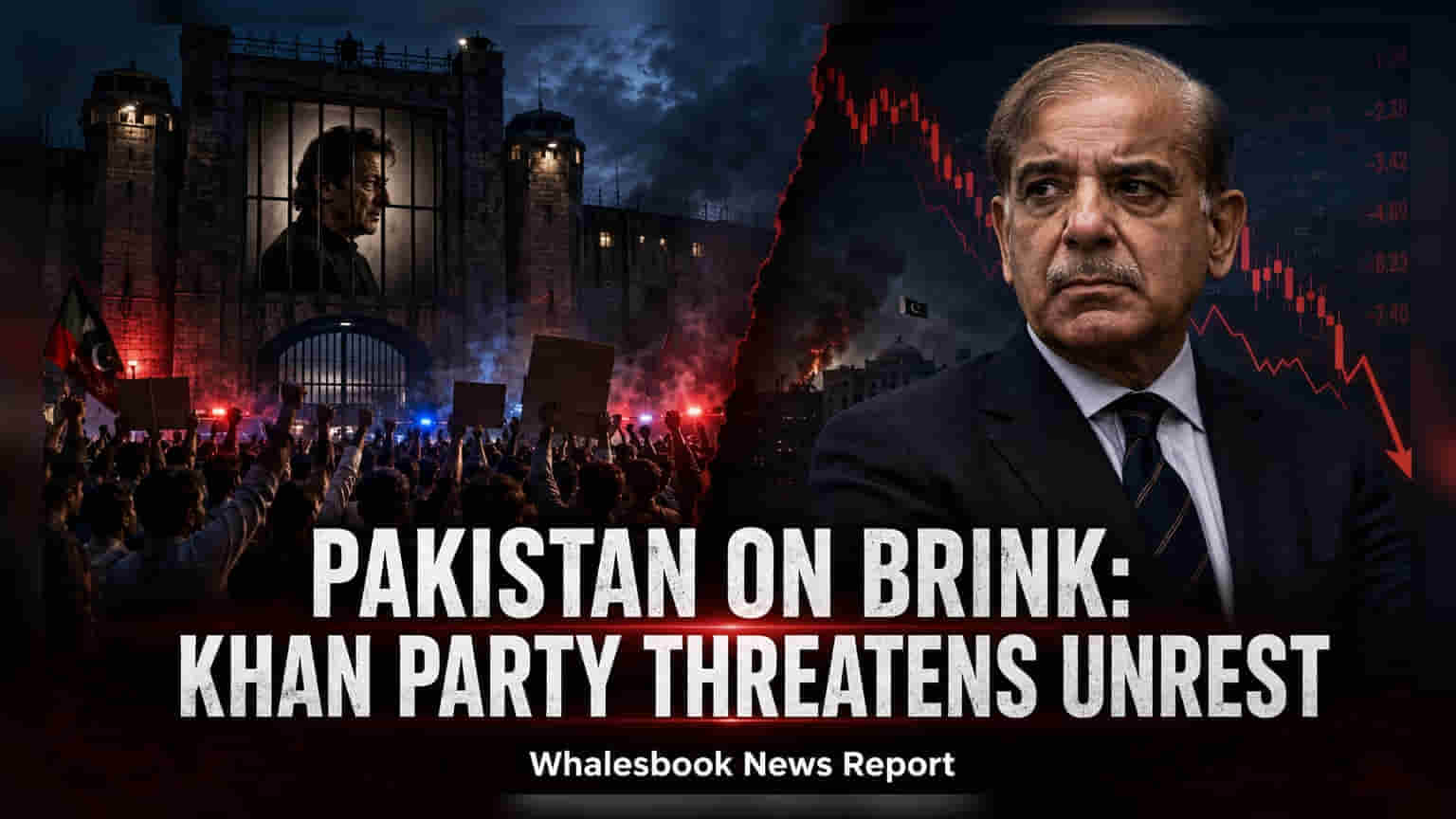
Pakistan’s PTI party has issued an ultimatum to the government, threatening nationwide protests if their parliamentarians are not permitted to visit jailed leader Imran Khan this Thursday. The party cites concerns over Khan’s deteriorating health, specifically an eye ailment. This standoff adds to existing political tensions, raising risks of civil unrest and further economic instability in the country.
The Pakistan Tehreek-e-Insaf (PTI) party has declared it will initiate nationwide protests if its members are denied a meeting with founder Imran Khan at Adiala Jail this week. Sohail Afridi, a senior leader and the Chief Minister of Khyber Pakhtunkhwa, issued the warning on Monday, setting a deadline for the government to allow a delegation of parliamentarians to visit the former Prime Minister on Thursday, August 13, 2026.
The political situation remains tense as the party continues to raise alarms about Khan’s health. Party leaders allege that the 73-year-old leader is suffering from a severe eye ailment and is being denied proper medical care and consistent access to his family and colleagues. In response to these claims, the party has warned that the entire country could see mass demonstrations, using the term "D-Chowk" to describe the scale of the potential protest.
Political and Economic Context
For observers tracking the region, this development marks a continuation of the political friction that has persisted since Khan’s imprisonment began in August 2023. Recent demonstrations held around the third anniversary of his arrest on August 5, 2026, resulted in significant police action and more than 100 arrests, underscoring the volatility on the ground.
From a broader perspective, ongoing political unrest in Pakistan often carries implications for the country's economic environment. With the nation navigating complex negotiations for international financial support, such as programs with the International Monetary Fund, sustained political instability can dampen investor confidence and hinder economic policy implementation. While this event does not directly impact Indian markets, geopolitical analysts monitor such situations for their potential to influence regional stability and long-term economic trends across South Asia.
Government Stance and Potential Risks
The Pakistani government has consistently maintained that access to the jailed leader is managed in accordance with established prison rules and court-mandated procedures, rejecting allegations of intentional neglect. The primary risk for the near term remains the potential for civil unrest, which could lead to disruptions in public order and further government crackdowns on opposition workers.
Investors and regional analysts will be watching the events of this Thursday closely. The outcome of the scheduled meeting request will determine whether the protests proceed as threatened or if a temporary de-escalation occurs. The health of the former leader and the government's response to the demand for medical care remain critical monitorables that could dictate the intensity of the political standoff in the coming days.