

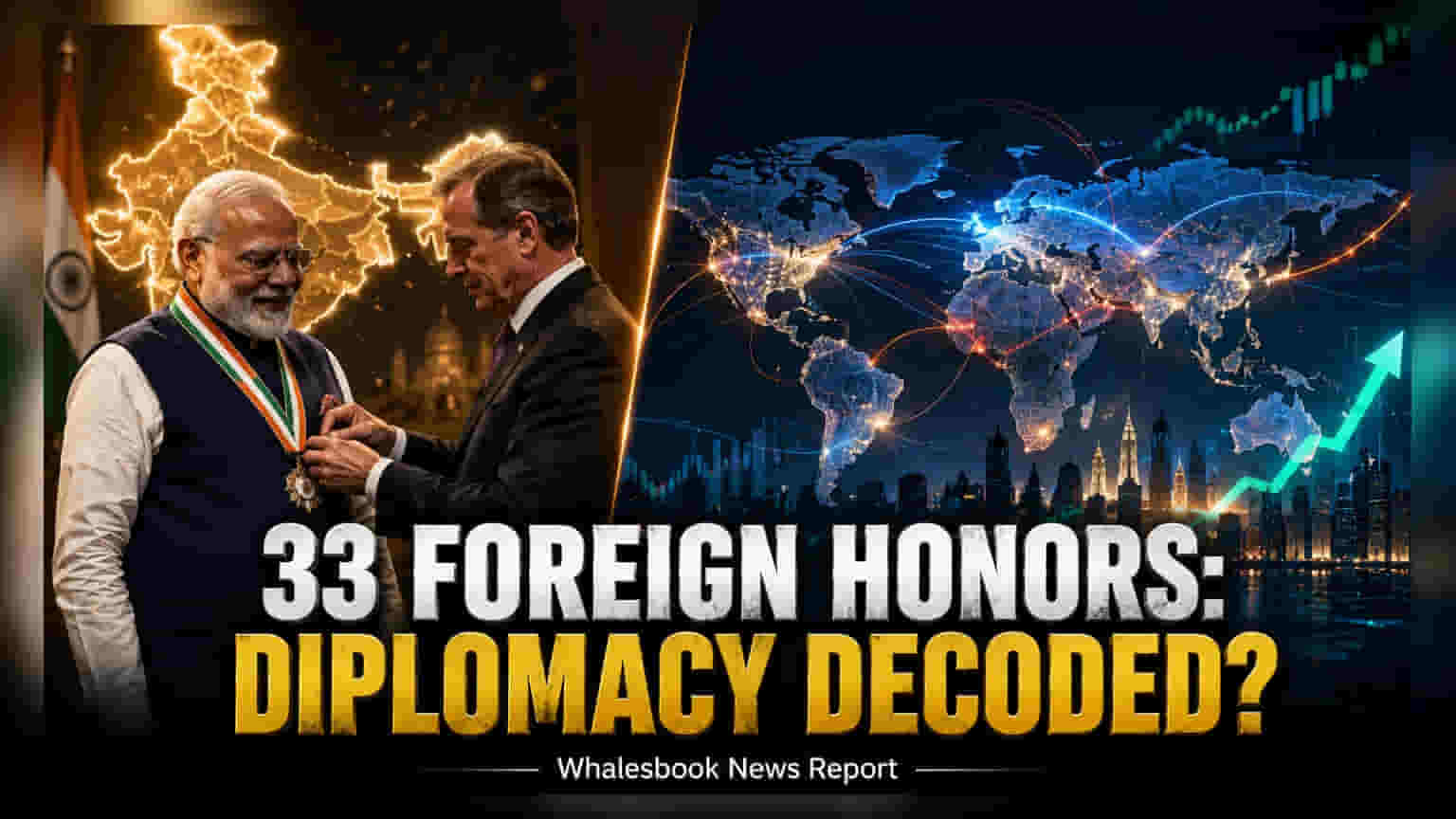
Prime Minister Narendra Modi has received 33 national awards from foreign countries since 2014, marking a significant frequency of international recognition. These honors span diverse geopolitical regions, reflecting both India’s expanding global diplomatic outreach and discussions regarding the strategic intent behind such widespread state accolades.
Since taking office in 2014, Prime Minister Narendra Modi has been conferred with 33 national awards from foreign nations. This high volume of international recognition is unprecedented for a serving head of government and has become a subject of discussion regarding its role in India's diplomatic strategy.
Timeline and Global Distribution of Honors
The pattern of these awards reveals a steady increase over time. The initial phase of his tenure saw high-level recognition from West Asian nations, including Saudi Arabia’s King Abdulaziz Special Sash in 2016, which marked a notable effort to strengthen bilateral relations. By the end of his first term in 2019, honors from countries like the UAE and Russia had established a foundation for these diplomatic exchanges.
The second term witnessed a broader geographical spread, with countries across the Pacific, Middle East, and Europe, such as France, Greece, and Fiji, presenting their highest civilian honors. The pace of these recognitions accelerated significantly during his current third term, with nearly 19 awards presented in a relatively short window by nations across Africa, the Caribbean, and Southeast Asia, including Nigeria, Guyana, and Sri Lanka.
Diplomatic Significance and Strategic Context
The accumulation of these honors is often interpreted as a reflection of India’s growing influence, particularly as the country positions itself as a lead voice for the Global South. For many observer nations, presenting a high-level civilian order is a traditional diplomatic tool used to signify deep bilateral partnership and personal rapport between leaderships.
However, the rapid increase in these awards has also led to questions about the mechanics behind these honors. Critics and analysts suggest that while some awards are clear endorsements of statesmanship and bilateral cooperation, others may be driven by the evolving requirements of international outreach, where diplomatic visibility plays a role in fostering domestic and international goodwill.
Considerations for Foreign Policy Oversight
While personal diplomatic ties can accelerate bilateral trade and strategic cooperation, the Ministry of External Affairs is tasked with maintaining focus on tangible national interests. The strategic benefit of these awards often depends on whether they translate into long-term policy successes, such as increased foreign direct investment, secured energy partnerships, or stronger defense alignments. Investors and policy watchers may continue to monitor whether this high level of international engagement contributes to measurable improvements in India’s economic and strategic standing, or if it primarily serves symbolic diplomatic purposes.