

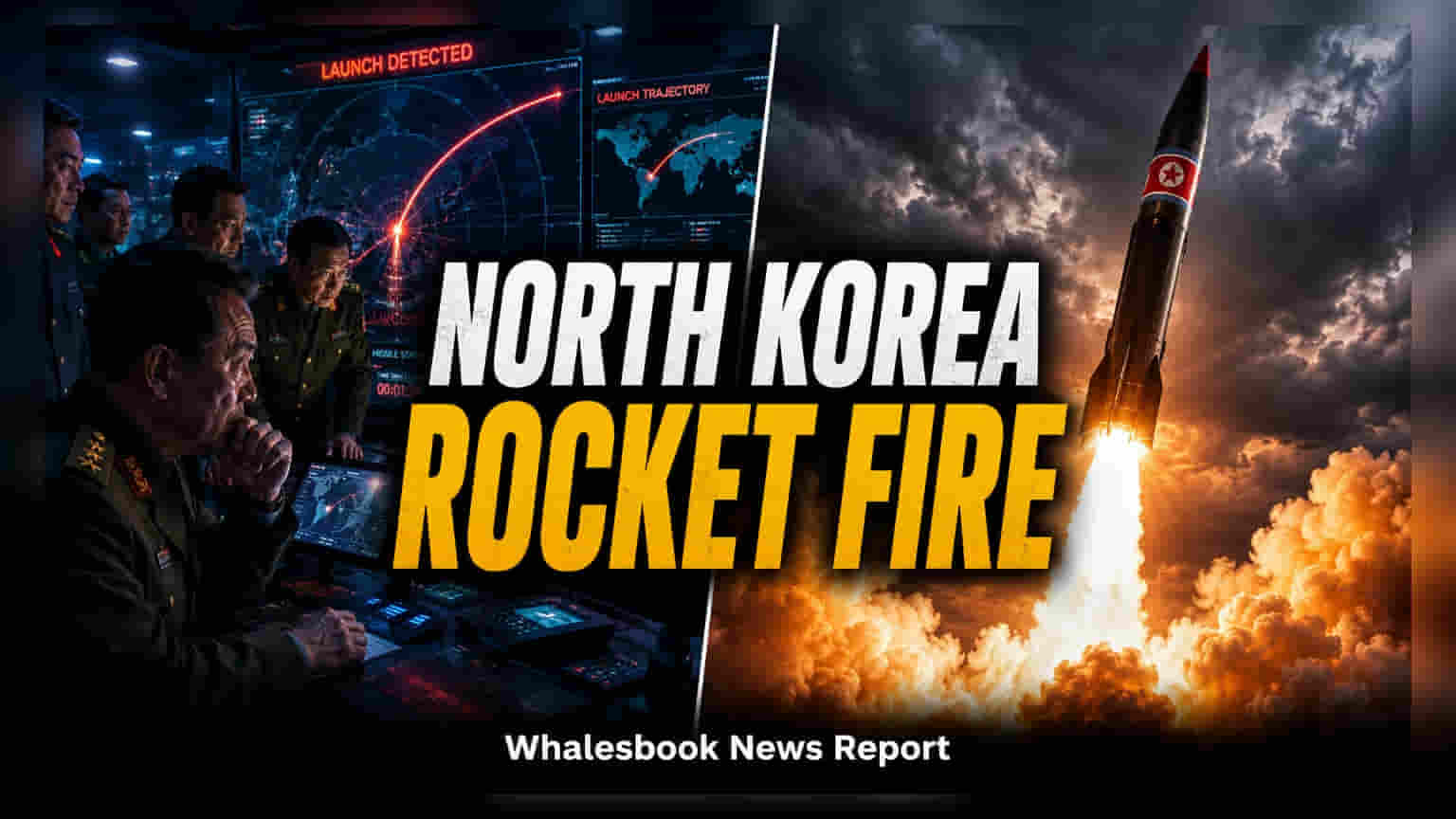
North Korea has fired its second ballistic missile in a week, increasing regional tension before scheduled military drills. While such events often cause temporary volatility in Indian stocks, the primary concerns for investors remain currency fluctuations and potential impacts on global energy prices.
North Korea launched a ballistic missile from the Wonsan region on August 12, 2026, marking its second weapons test in less than a week. The projectile traveled more than 700 km before landing outside Japan's exclusive economic zone. South Korean and Japanese officials have confirmed the launch, and the South Korean government has officially condemned the act as a violation of United Nations resolutions.
Military Drills and Regional Tension
This launch comes just days before the annual "Ulchi Freedom Shield" joint military exercises between South Korea and the United States, scheduled to begin on August 17, 2026. North Korea has a history of responding to these drills with missile tests, frequently describing the exercises as rehearsals for an invasion. The timing of this latest test is widely seen as a direct reaction to these upcoming security activities.
Impact on Indian Investors
For Indian stock market investors, recurring geopolitical tension in East Asia often triggers a short-term "risk-off" reaction. This means investors may briefly shift money from stocks toward safer assets, leading to temporary price swings on the NSE and BSE. Historical data shows that unless such tensions escalate into a direct conflict, these market reactions are typically short-lived.
However, there are specific economic areas investors may monitor. The first is the Indian Rupee. During times of global uncertainty, foreign investors sometimes withdraw capital from emerging markets, which can put pressure on the rupee. The second area is the cost of energy. Regional instability in trade-heavy areas can sometimes cause spikes in global crude oil prices. Since India imports a significant portion of its oil, higher prices can increase the country's import bill and affect inflation, potentially hurting profit margins for oil-dependent companies.
The most important event to watch in the coming days is the start of the military exercises on August 17. The market will likely be looking for any signs of escalation that could transform this routine geopolitical friction into a more serious concern.