

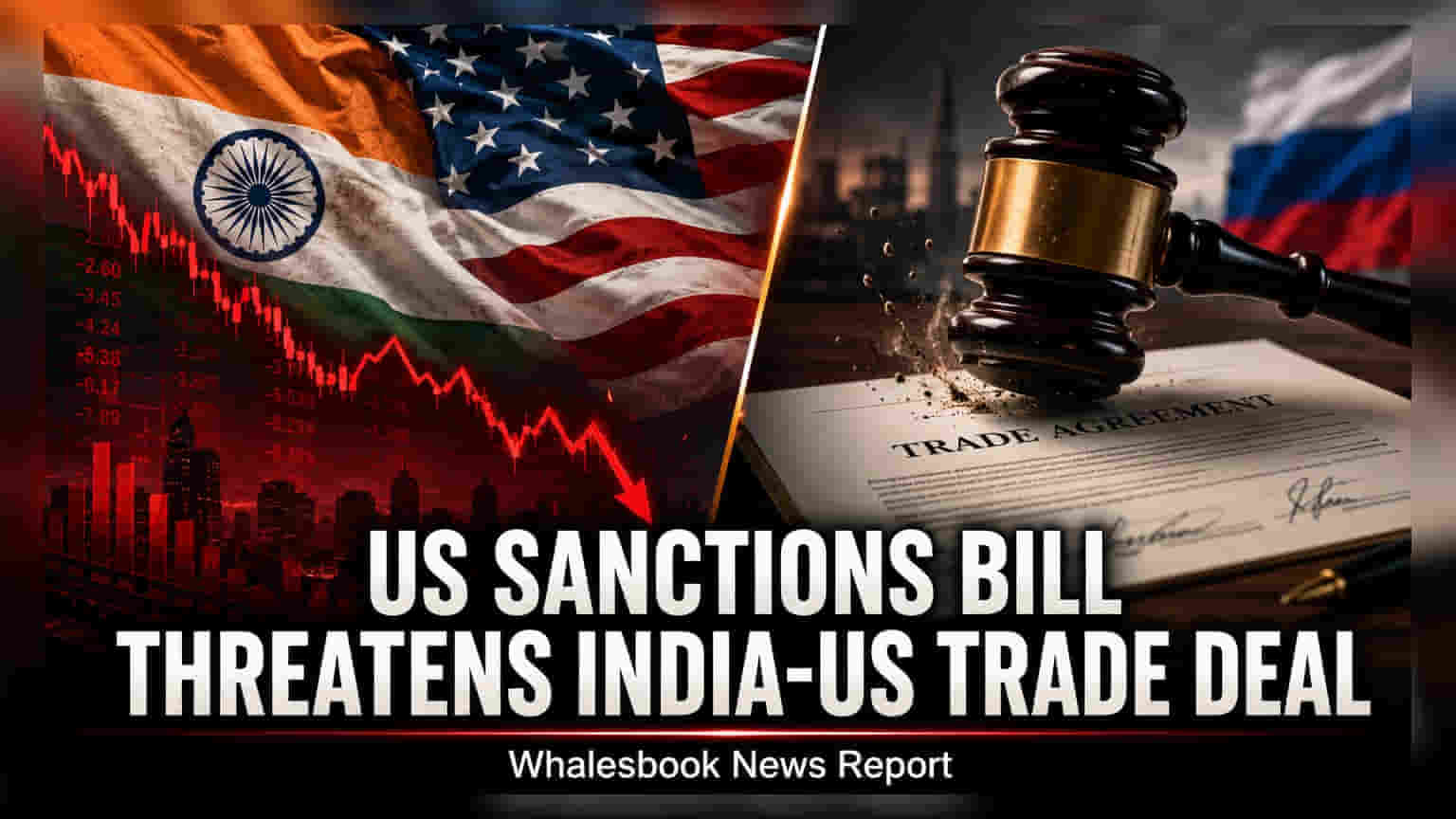
A proposed US Senate bill could introduce tariffs of up to 100% on countries importing Russian oil, complicating ongoing India-US trade negotiations. This geopolitical shift creates uncertainty for Indian exporters and industries that rely on stable bilateral economic ties.
A newly introduced bill in the United States Senate has created a fresh hurdle for ongoing trade negotiations between India and the US. The proposed legislation seeks to impose tariffs of up to 100% on nations that continue to import energy from Russia. This development introduces a layer of geopolitical complexity, as these potential penalties are independent of any specific trade agreements currently being discussed.
Impact on Trade Policy and Strategic Ties
Historically, India and the US have managed to keep trade discussions separate from their differing stances on Russia, acknowledging India's need for energy security. This insulation allowed both nations to focus on building supply chains and enhancing cooperation in sectors like semiconductors and clean energy. The new bill narrows this policy space by introducing a mechanism that could potentially offset the benefits of a trade deal through targeted tariffs. Even if the US President retains the authority to waive these penalties based on national interest, the existence of such a legislative lever increases the unpredictability of the economic environment.
Strategic Importance of a Finalized Agreement
For India, the pressure to conclude a trade agreement has intensified. While sensitive sectors such as dairy, agriculture, and digital trade remain key areas of negotiation, the cost of delaying an agreement has grown. Beyond immediate tariff reductions, a comprehensive deal is seen as a way to formalize the economic relationship, potentially shielding India from volatility caused by shifting American political priorities. In the context of global supply chains shifting away from China, both nations have a mutual interest in strengthening their economic partnership, making a formal agreement a form of strategic insurance.
Monitorables for Investors
Investors in Indian sectors with significant US export exposure—particularly technology, pharmaceuticals, and engineering—should track how this legislation progresses through the US Senate. The primary monitorable is whether Indian negotiators can secure specific safeguard clauses within the bilateral trade framework that provide protection against potential energy-linked sanctions. Additionally, any official commentary from the Indian Ministry of Commerce regarding the impact of this bill on ongoing talks will be crucial for understanding the stability of future US-India economic engagement.