

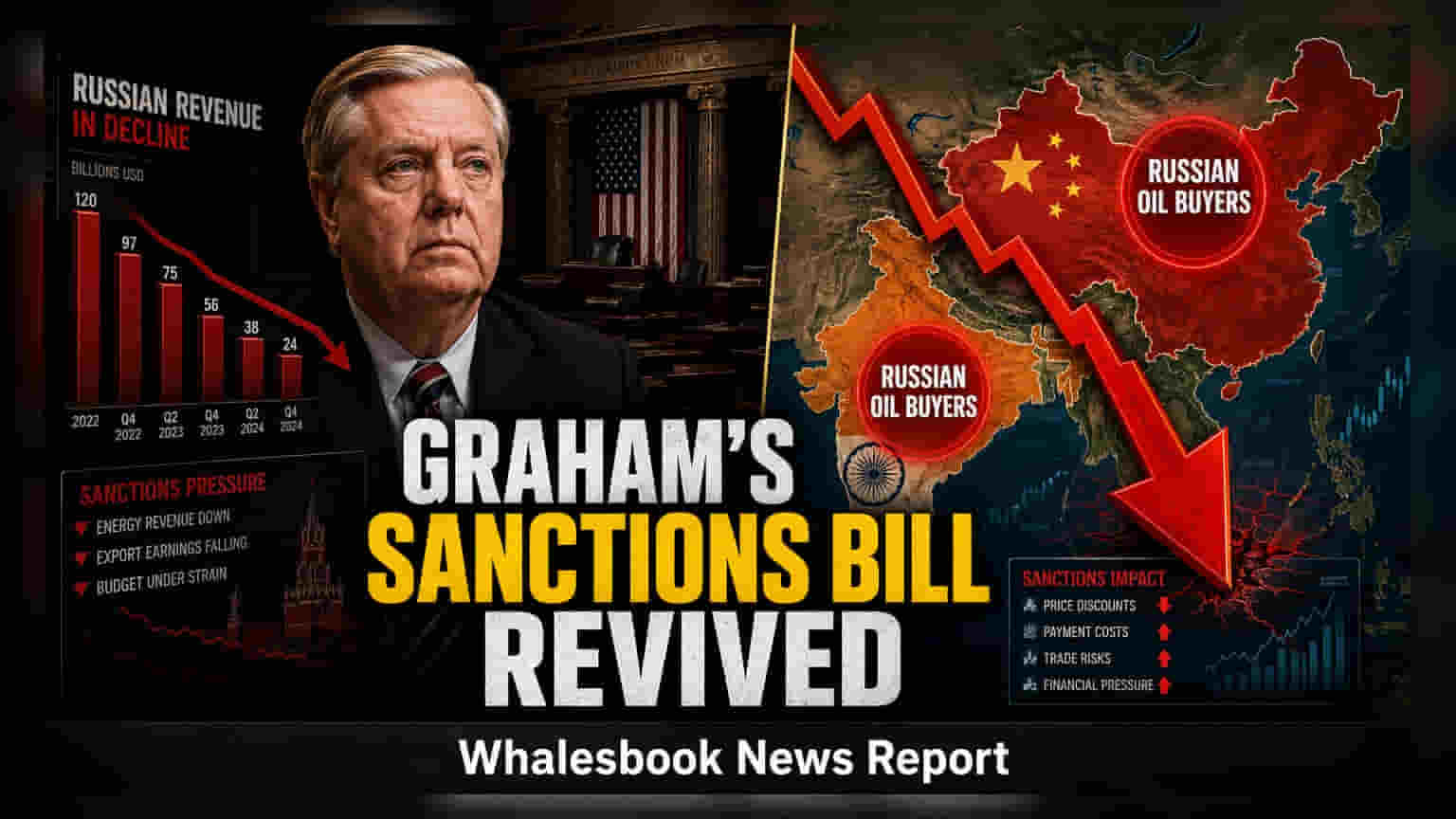
A revived US Senate bill seeks to impose up to 100% tariffs on countries like India and China that continue to purchase Russian oil and gas. The legislation, which honors the late Senator Lindsey Graham, aims to cut off funding for Russia's ongoing war efforts. Investors should track how this potential policy shift impacts energy procurement costs and trade relations between India and the United States.
A bipartisan group of US senators has moved to revive a significant sanctions bill that aims to restrict major global purchasers of Russian energy. The proposed legislation, which honors the late Senator Lindsey Graham, targets nations that maintain significant energy trade with Russia, explicitly naming India and China as primary areas of focus for these potential restrictions.
Proposed Tariff Adjustments and Exemptions
The revised proposal seeks to impose tariffs of up to 100% on Russian oil and gas imports for top-tier buyers. This represents a significant adjustment from earlier versions of the bill, which had initially suggested much higher tariff levels. The legislation includes specific exemptions for countries that can demonstrate their reliance on Russian natural gas is below 15% of their total energy mix and that they are actively working to reduce such imports. These provisions are designed to offer the White House flexibility in applying the sanctions, considering the potential global economic impact of supply disruptions.
Potential Impact on Energy Trade
For Indian markets and energy-dependent sectors, the primary concern lies in how this legislation—if passed—might alter the current energy procurement landscape. India has been a significant buyer of Russian crude oil, taking advantage of discounted market prices to meet its domestic demand. Any move by the US to enforce high tariffs on such imports could potentially force a shift in sourcing strategy or lead to increased costs for Indian refineries. Market observers and energy analysts are likely to monitor whether these potential sanctions lead to higher crude prices or if India will be able to leverage the proposed exceptions for countries demonstrating a roadmap for energy diversification.
Legislative Momentum and Political Context
The bill has gained momentum in the Senate, with Democratic and Republican leaders signaling support for a swift floor vote. Senator Richard Blumenthal and other proponents are framing the passage of this act as a tribute to Senator Graham’s long-term legislative efforts to secure international support for Ukraine. With support from over two dozen senators and clear backing from Senate leadership, the bill is expected to face further debate in the coming weeks. The outcome will depend on the final language of the bill and the extent to which the US administration is willing to pressure strategic partners regarding their energy imports. Investors should keep a close watch on future diplomatic discussions and any official statements from the Ministry of Petroleum and Natural Gas regarding these international trade developments.