

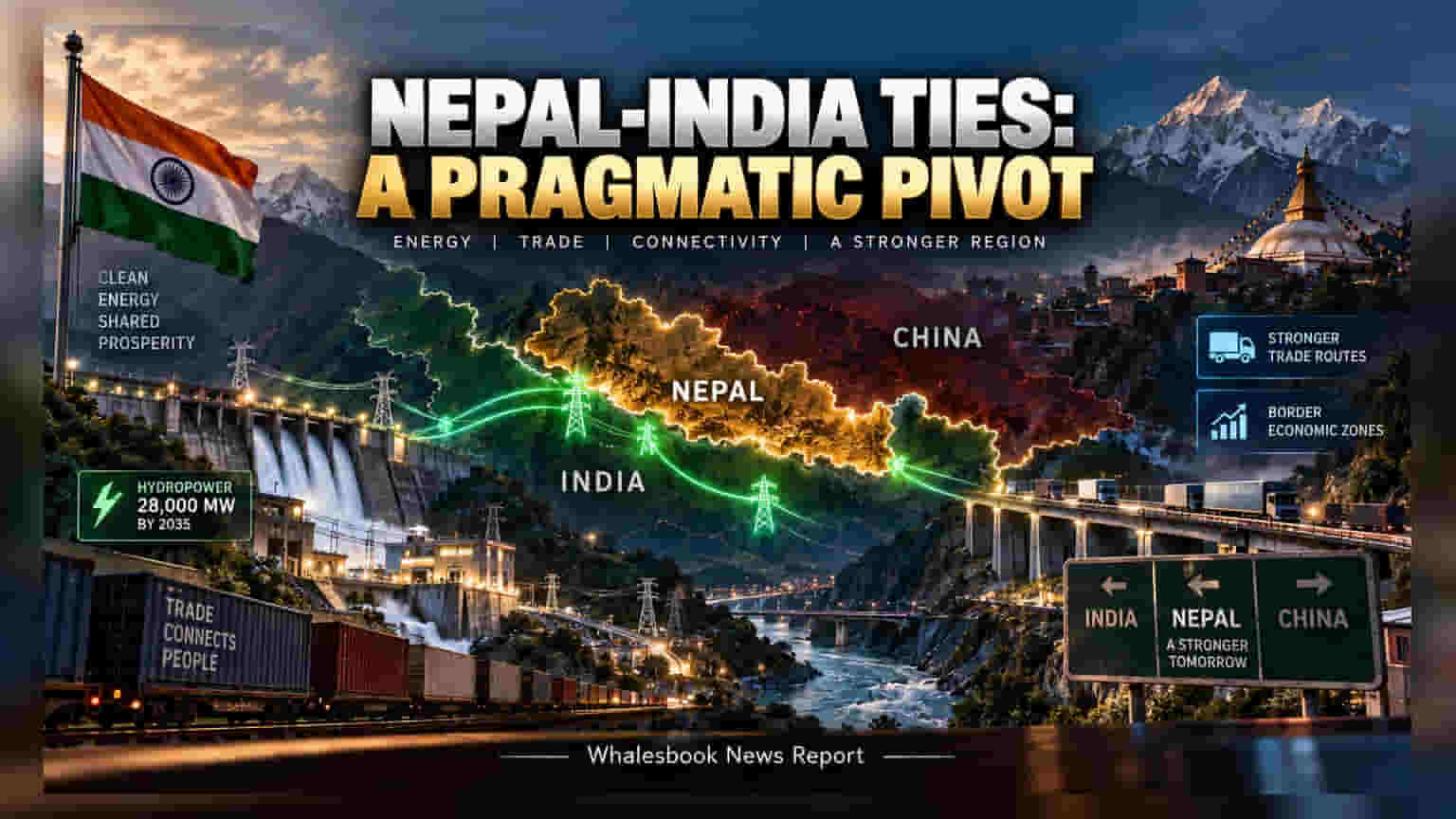
Nepal has announced a strategic shift in its foreign policy, prioritizing trade and connectivity with India over ideological positioning. The new roadmap aims to leverage Nepal's hydropower potential to supply India’s growing electricity demand, targeting 28,000 MW capacity by 2035. Investors may monitor the progress of cross-border energy infrastructure and trade stability, as these could impact regional power supply and logistics-linked industries.
Nepal is actively realigning its diplomatic and economic roadmap with India, emphasizing a pragmatic approach focused on energy security and trade connectivity. This policy shift marks a transition from previous diplomatic postures toward a model of structured economic cooperation. For the Indian market, this development is particularly relevant in the context of the energy and infrastructure sectors.
At the core of this strategy is the development of Nepal’s massive hydropower resources. With a target to reach 28,000 megawatts of generation capacity by 2035, the country aims to become a significant source of clean energy for India. This aligns with India’s domestic goals for industrial decarbonization and the growing demand for renewable power. Several large-scale hydropower projects are already in development, often involving Indian public and private sector companies. The potential for exporting surplus electricity to India and potentially Bangladesh represents a key economic pillar that could stabilize trade balances between the two nations.
Beyond energy, the economic roadmap focuses on strengthening connectivity. This includes developing border-adjacent economic zones and improving logistics corridors. The intention is to integrate the Tarai region—Nepal’s fertile and industrially significant belt—more closely with the Indian economy. By improving the reliability of transport and trade infrastructure, the government aims to lower the costs of doing business and encourage manufacturing investment that seeks to leverage cross-border supply chains.
While the shift toward pragmatism is a positive signal for regional trade, investors should remain aware of historical risk factors. Nepal has experienced frequent political changes and leadership transitions, which have previously led to delays in project execution and policy uncertainty. The speed of infrastructure development, such as cross-border power grids, railways, and pipelines, remains subject to administrative efficiency and political stability in Kathmandu. Furthermore, while the current policy prioritizes economic ties, the geopolitical landscape in South Asia is complex, and maintaining consistent trade relations will require careful navigation of regional dynamics.
The most important monitorables for the market will be the commissioning timelines for key hydropower projects and the progress of inter-governmental power trade agreements. Continued updates on regulatory approvals for cross-border transmission lines and the successful operationalization of new logistics corridors will serve as indicators of whether this policy shift is translating into tangible commercial outcomes.