

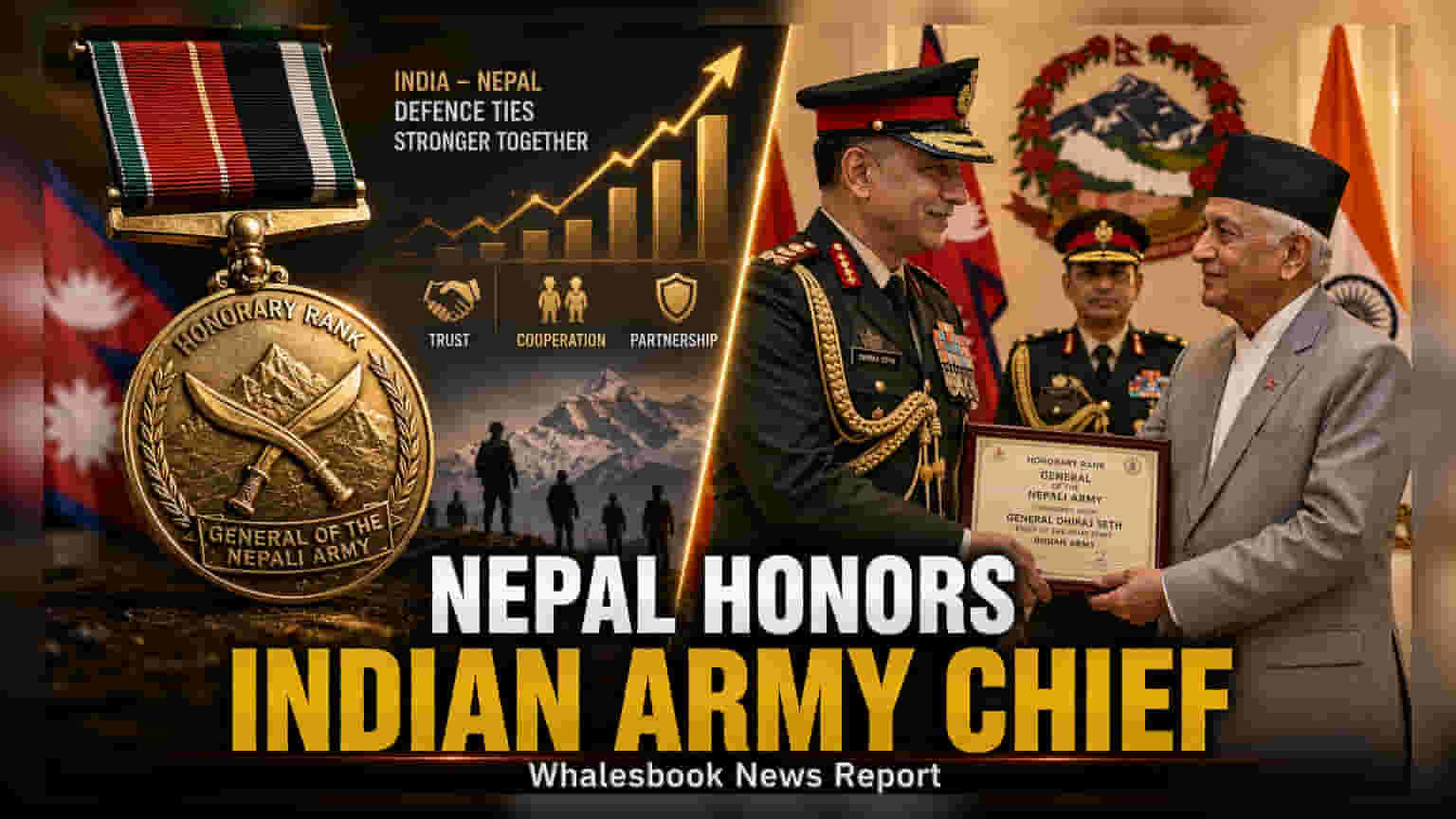
Nepal President Ramchandra Paudel conferred the honorary rank of General of the Nepali Army upon Indian Army Chief General Dhiraj Seth in Kathmandu. This investiture marks a significant moment in the long-standing military tradition between the two nations, aiming to further strengthen defense cooperation and bilateral ties.
Indian Army Chief General Dhiraj Seth was formally conferred the honorary rank of General of the Nepali Army on Monday, August 17, 2026. The investiture ceremony was held at the presidential residence in Kathmandu, with Nepal President Ramchandra Paudel officiating the event.
This tradition of exchanging honorary ranks between the chiefs of the Indian and Nepali armies dates back to 1950. It serves as a symbolic and institutional gesture, reflecting the deep-rooted military camaraderie and the unique defense partnership between the two countries. The recognition is part of a reciprocal arrangement designed to foster mutual trust and professional collaboration.
General Seth is currently on a three-day official visit to Nepal, which concludes on August 19, 2026. He arrived at the invitation of his counterpart, General Ashok Raj Sigdel, the Chief of the Nepali Army. Beyond the ceremonial investiture, the visit is focused on substantive defense engagement. During his stay, General Seth has held discussions with Nepali military leadership to explore avenues for deepening bilateral military cooperation and maintaining strategic alignment between the two forces.
As part of the visit, General Seth also facilitated the handover of military and medical equipment to the Nepali Army, aimed at supporting their operational capabilities. This collaboration highlights the ongoing exchange in defense logistics and training, which is a key component of India-Nepal strategic relations.
From a broader perspective, such high-level military interactions are significant for regional stability. While this event is diplomatic and strategic rather than financial, maintaining strong defense ties with neighboring countries is often monitored for its role in ensuring border security and regional cooperation, which form the backdrop of the macro-environment for investors.
The next steps in this engagement will include continued dialogues between the two military establishments to implement the discussed cooperation initiatives. Investors and observers interested in geopolitical stability often track such high-level exchanges, as they provide a signal of the continuity and strength of bilateral relationships.