

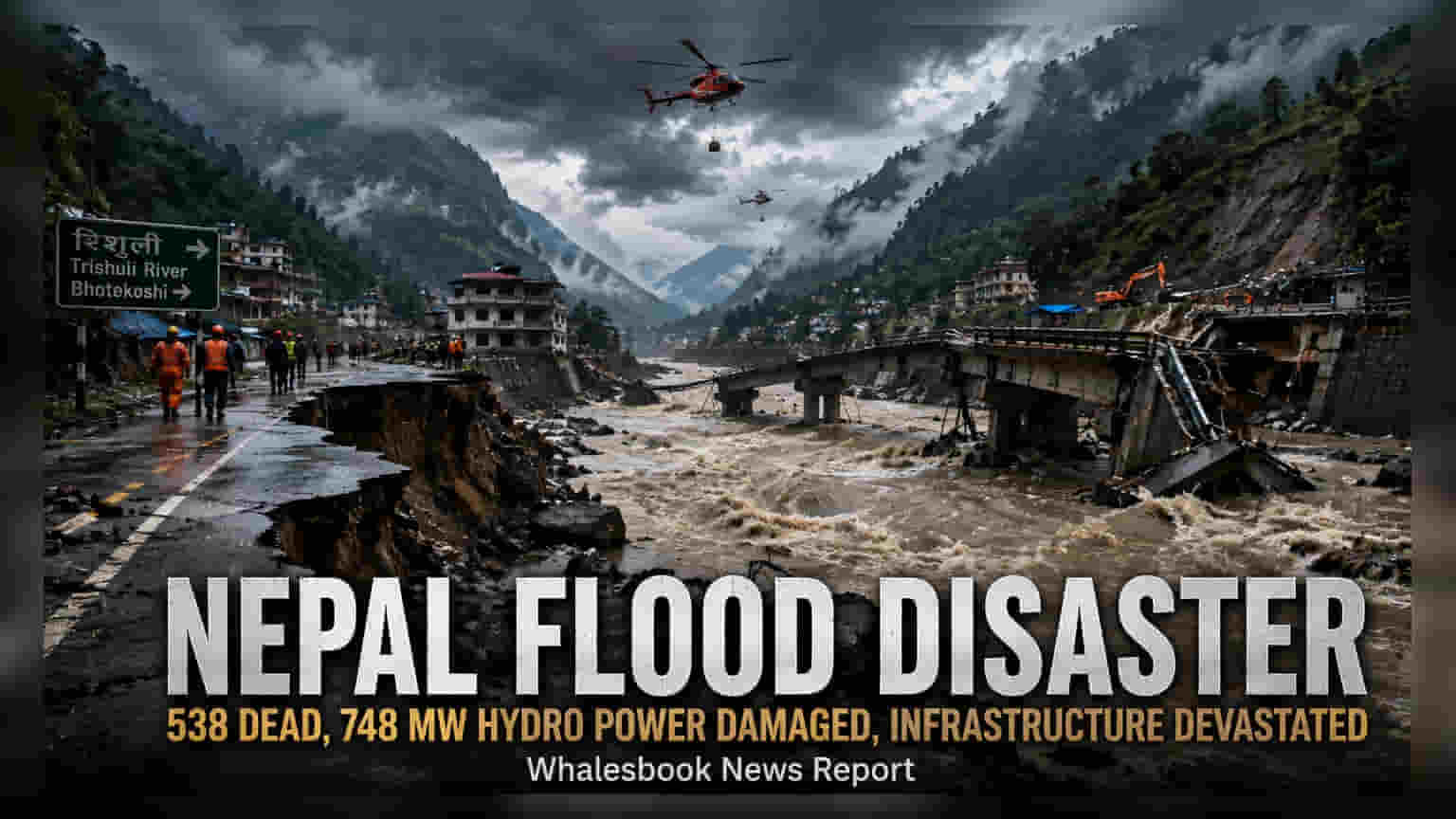
Devastating flash floods in Nepal, triggered by a glacial collapse, have claimed 538 lives and caused extensive damage to critical infrastructure. The disaster has impacted approximately 748 MW of hydropower capacity, leading to volatility on the Nepal Stock Exchange and raising concerns for companies with assets in the region.
A massive glacial collapse near the Nepal-Tibet border has triggered catastrophic flash floods, causing widespread destruction across Nepal. As of August 28, 2026, the official death toll has climbed to 538, with rescue operations for hundreds of missing individuals entering their third day. While 85 Indian nationals have been successfully evacuated, the humanitarian and economic fallout continues to grow as the region deals with the aftermath of the Bhotekoshi and Trishuli river basin overflows.
Infrastructure and Power Sector Impact
The most significant economic concern stems from the destruction of vital infrastructure. Reports indicate that hydropower projects with a combined capacity of 748 MW have been damaged. This level of destruction in the hydropower sector, a backbone of Nepal's energy grid, has raised concerns about immediate power supply disruptions and the long-term cost of rebuilding these facilities. Roads and bridges essential for trade and connectivity have also been severely affected, hampering relief efforts and potentially disrupting supply chains.
Market and Investor Context
The Nepal Stock Exchange (NEPSE) has experienced sharp volatility following the disaster. Investors are particularly focused on the insurance and hydropower sectors, which face the brunt of the infrastructure damage. Claims related to damaged assets are expected to impact the financial performance of regional insurers in the coming quarters. While Indian companies with operations in Nepal, such as major FMCG players, have not yet reported material financial hits, the disruption to distribution networks and potential raw material supply lines remains a key area for shareholders to monitor.
Future Risks and Monitoring
Authorities remain on high alert, warning of the risk of secondary flash floods due to unstable debris dams left behind by the initial collapse. These geologically unstable conditions mean that the risk profile for projects and businesses operating in these Himalayan corridors remains elevated. Investors are tracking the speed of restoration for critical infrastructure and whether the Nepali government will require additional funding or regional assistance for reconstruction. The ability of utility companies to restore power generation capacity without significant cost overruns will be a primary indicator of how quickly the sector can recover from this disaster.