

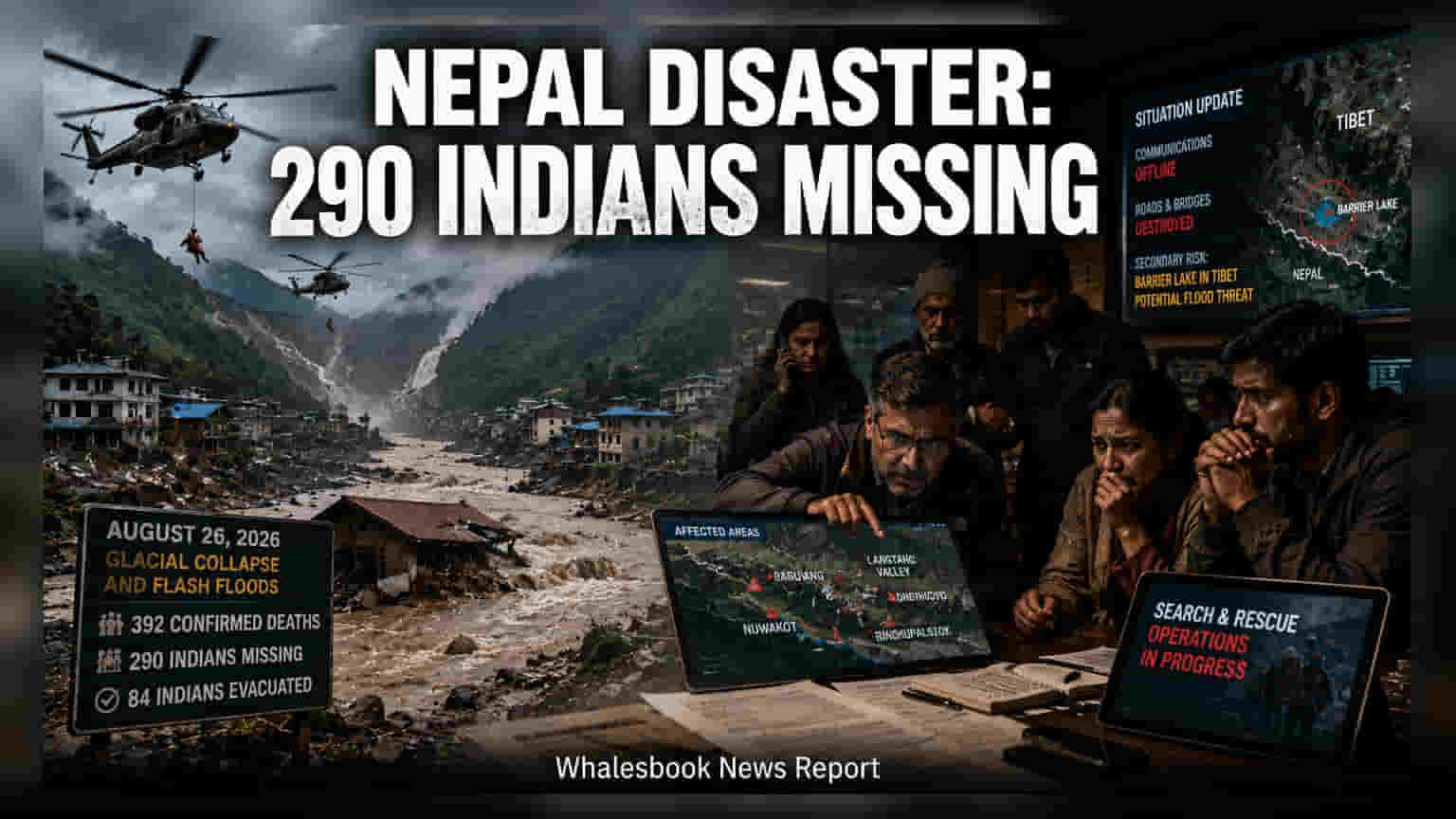
A glacial collapse near the Nepal-Tibet border has left 290 Indian nationals missing as search operations face severe hurdles. While 84 individuals have been rescued, including workers from the Trishuli-I hydropower project, authorities are now bracing for potential secondary flooding due to a newly formed barrier lake in Tibet.
The humanitarian crisis following a catastrophic glacial collapse near the Nepal-Tibet border has deepened as search and rescue teams struggle to reach remote areas. As of August 28, 2026, the Indian Ministry of External Affairs confirmed that 290 Indian nationals remain uncontactable. The disaster, which occurred on August 26, has already resulted in 392 confirmed deaths, with the vast majority reported in Nepal.
Rescue teams have successfully evacuated 84 Indian citizens so far. Among those accounted for are 63 workers employed at the Trishuli-I hydropower project, which was directly impacted by the flash floods. The destruction of critical infrastructure, including roads and bridges, has significantly hampered the ability of emergency responders to access the hardest-hit regions. Communication networks remain largely offline in these zones, preventing many families from establishing contact with their relatives.
Escalating Secondary Risks
While the primary flood event has caused widespread devastation, the situation remains fluid due to the threat of secondary disasters. Authorities have identified the formation of a large barrier lake in Tibet, located near the Chhochen and Purepu Tsangpo rivers. Experts warn that if this lake breaches, it could release millions of cubic meters of water downstream, potentially triggering further floods in areas already struggling to recover.
Operational Challenges
Search efforts are currently battling extremely difficult conditions. The terrain is covered in thick mud and heavy debris, making the movement of heavy machinery nearly impossible. The ongoing risk of secondary landslides further complicates the safety of rescue workers. The Indian government is coordinating closely with Nepali authorities to establish safe evacuation corridors as soon as weather and terrain conditions allow.
The most important monitorable for those with relatives in the region is the stabilization of infrastructure and the outcome of ongoing search operations in remote districts. Government agencies have advised families to rely on official communications from the Ministry of External Affairs and local state disaster management cells for verified updates, as the situation in the mountainous terrain remains volatile.