

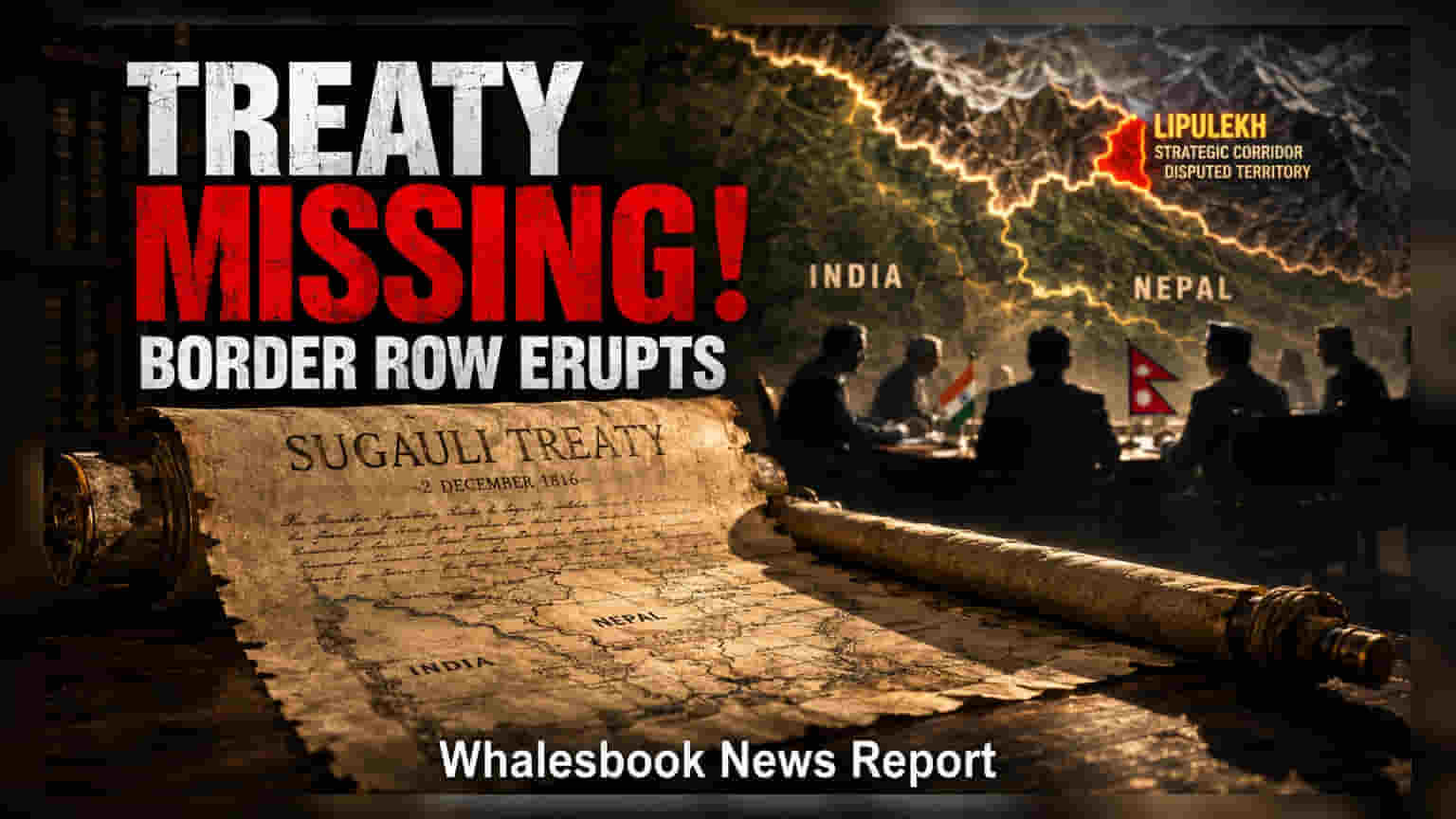
Nepal’s government has admitted it cannot confirm the location of the original 1816 Sugauli Treaty during an ongoing border dispute with India. The diplomatic impasse regarding the Lipulekh region, coupled with the absence of foundational historical documents, highlights a challenge for current boundary negotiations. Analysts often monitor such geopolitical developments for their potential impact on regional trade and diplomatic stability.
Nepal’s government has officially acknowledged that it cannot confirm the whereabouts of the original 1816 Sugauli Treaty, a fundamental document that historically established the border between the Kingdom of Nepal and British India. Foreign Minister Shisir Khanal confirmed this status to the House of Representatives on August 10, 2026, amid rising tensions regarding territorial claims in the Lipulekh, Limpiyadhura, and Kalapani regions.
The Sugauli Treaty remains the primary reference point for demarcating the western border between Nepal and its neighbor. The inability to produce the original document complicates diplomatic efforts to resolve the current border disagreement, which has been further strained by infrastructure developments and trade route agreements involving the contested zones. The government stated that while various records exist in the National Archives, the status of the official original document remains unknown.
This incident mirrors a similar situation that occurred in 2016, when Nepal’s Eminent Persons' Group and subsequent parliamentary inquiries were unable to locate the original 1950 Treaty of Peace and Friendship. The recurring difficulty in locating these key historical papers adds a layer of uncertainty to diplomatic discussions, as both nations look to these documents to support their respective territorial assertions.
For regional analysts and those monitoring the Himalayan geopolitical landscape, the absence of original historical records presents a notable challenge for formal negotiations. While this development is purely a diplomatic and political matter, border-related tensions are frequently tracked because they can influence the environment for regional trade, bilateral economic cooperation, and the timeline for cross-border infrastructure projects. The uncertainty surrounding these historical documents may extend the period required for a resolution, keeping the issue as a point of contention in bilateral relations.